

By Wisdom Deji-Folutile
Nigerian vehicle owners have adopted several practices to adapt to the new economic realities caused by fuel subsidy removal, FTN finds.
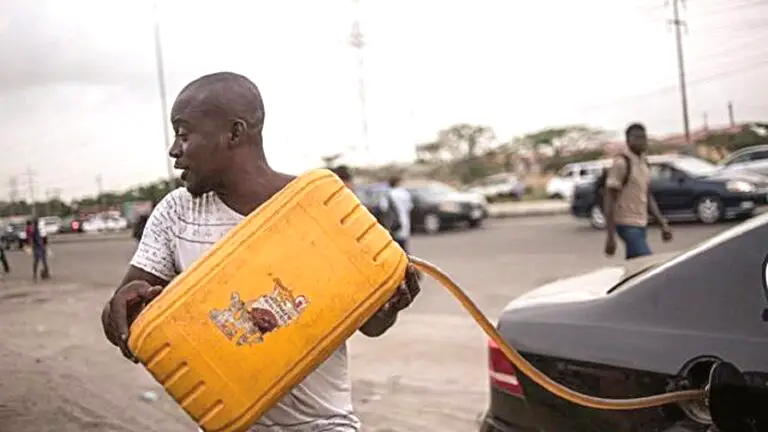
In May 2023, President Bola Tinubu in his inaugural speech announced the total removal of fuel subsidy, which caused the pump price of Premium Motor Spirit (PMS), also known as petrol, to skyrocket.


Prior to the subsidy removal, FTN reports that fuel was being sold for as low as N187 per litre, with the national average teetering at N250. However, following the removal, the pump price of petrol jumped to between N488-517. On July 18, another revision saw prices rise further to N617.
The effects of subsidy removal dealt a solid blow to Nigerians. Transporters, pedestrians, and generator users have found it challenging to conduct life as usual since the price revisions.
The price revisal reflected in the drop in average daily petrol consumption in June. Down from a daily average of 66.9 million litres, daily petrol consumption now sits at 48.43 million litres, according to figures from the Nigerian Midstream and Downstream Petroleum Regulatory Authority (NMDPRA).

Vehicle owners have also told FTN that the effects of the petrol price increases have been destabilising.
Vehicle modifications, reduced transit
Highlighting the effect of the price revisions on his finances, Okeolu, a car owner working in Lagos, explained to our correspondent that his spendings on petrol for transportation and power have more than tripled since the announcement on May 29.
“It used to take me about 7,000 to fill my tank back in 2022. After the increase, I was still managing myself when the cost of filling my tank went up to about 15,000 or so. Since the latest revisal, I haven’t filled my tank. I haven’t even attempted to fill it once since this new increase,” he shared.
To stave off the effects of the price increase, Okeolu has reduced his daily transit to the office, and friendly visits.
“If you are not giving me money, I am not coming to see you. I don’t care if it is a naming ceremony or a wedding party,” he humorously said.
Meanwhile, other Nigerian vehicle owners are considering more drastic solutions to the new economic realities.
One Dr. Robinson, a veterinarian practising in Ibadan, told our correspondent that he sent his vehicles to his mechanic’s shop, hoping the technician could make it “fuel-efficient”.
“I just told him to remove anything in the car that can make it burn more fuel,” he said.
For the vet doctor, this included taking out Air Conditioning from his vehicle, amongst other things.
Checks by FTN revealed that vehicle owners seeking to modify their cars for fuel efficiency often do so by removing excess weight from the vehicle. Asides from making the car lighter so that the engine burns less fuel to move the vehicle, roof boxes on minibuses and heavier build cars are also removed to reduce drag.
Another vehicle owner and avid churchgoer, Dr. Ayodeji, explained to FTN that his family is mulling the possibility of attending church service online as a way to save fuel costs.
“Before the (first) subsidy increase, it used to take about N3000 fuel to go to church and return every Sunday,” he explained.
That figure amounts to N12,000 monthly. But after the first round of pump price increase, Ayodeji explained that the cost of their weekly church trips skyrocketed to N9,000.
“Every month will cost about N40,000 or so. You can imagine just 4 Sundays. I am now considering a balance that can save us money. Maybe going to a closer parish to worship once or twice a month, and doing an online service so that we can keep the cost down,” he said.
Use your car to carry passengers, vehicle owners say
Another way vehicle owners are coping with fuel hikes is by moonlighting as transporters, findings by FTN revealed. Some, on their way to work, carry passengers along their axes and on the way back to their abode as well. Such individuals then use the proceeds of this “side hustle” to save fuel.
Farouq, a media practitioner living in Northern Nigeria, advised other vehicle owners to do the same.
“Parking your car and using taxi is not economical. It doesn’t save you anything abeg.”
“Buy fuel and get passengers along your way (to the office). That way you get to your destination and still recoup your money and earn,” he expressed.
FTN understands that drivers are also taking other drastic decisions to save fuel while driving, some of which could be dangerous.
For instance, a video trending on Twitter a few weeks ago revealed a driver shutting off the engine of his vehicle in the middle of road transit.
Great..
Unfortunately for others.. pic.twitter.com/SV6oxDEuKR— Paul Bem (@Paul_bem) July 20, 2023
Todimu, a telecoms worker who goes to Lagos Island every week for work, also explained to our correspondent that she has noticed her driver placing the gear at Neutral on multiple occasions since the fuel hike.
READ ALSO: NDLEA clamps down on Lagos clubs over drug dealings
“I never told him to attempt it and I don’t even understand the mechanics behind it. But I’ve seen him put the gear on neutral when we are going down a slope or moving in slow traffic. He then uses the handbrake instead of brake pads. I am the one buying the fuel but he still does these things to try and save fuel because it is expensive,” she said.
The action Todimu is describing, which is the same as the one in the video above, is known as coasting.
Many drivers swear by the cost-efficiency of coasting. A car engine’s rpm (revolutions per minute) increases as you press the accelerator, which burns more fuel. As a result, coasting should mean pressing the accelerator less, which should mean burning less fuel.
Another rising alternative adopted by Nigerian vehicle owners is natural gas. Compressed Natural Gas, a fossil fuel substitute for gasoline (petrol), diesel fuel or propane/LPG, is now being heavily considered as a viable way of avoiding the exponential increase in petrol cost.
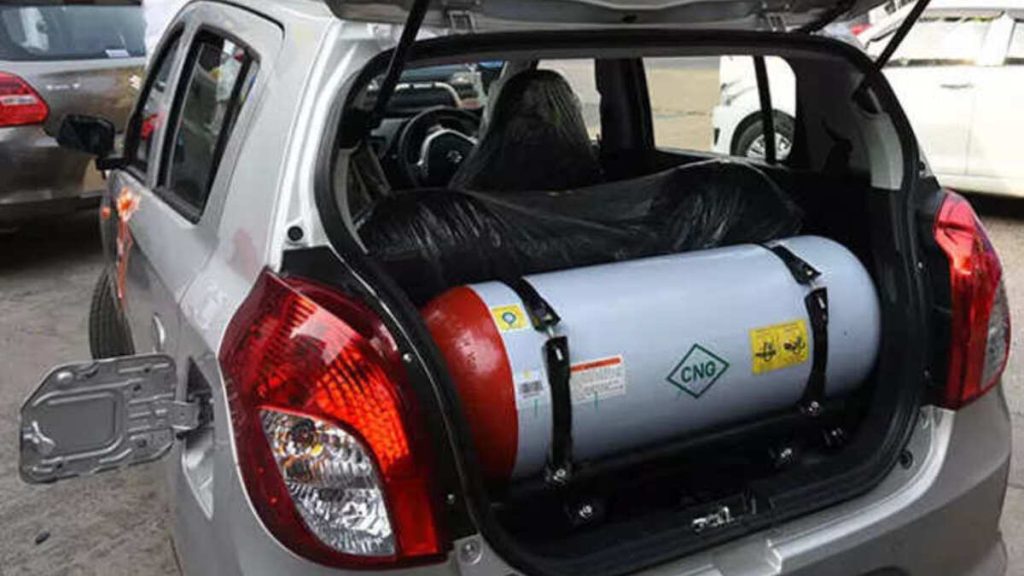
According to experts, converting a petrol vehicle to one powered by Compressed Natural Gas can cost up to N200,000 – N300,000 to achieve. Experts also note that CNG is a cleaner alternative to petrol, as its combustion does not produce greenhouse gases.
However, a June report by Independent notes that only about 200 cars have been converted to CNG engines in the country.
Safety cannot be bought – FRSC warns Nigerians
The Federal Road Safety Corps told our correspondent that some of the measures taken by vehicle owners to conserve fuel amid price increases are “very dangerous and hazardous”.
The Corps Public Education Officer (CPEO), Bisi Kazeem, told FTN that all such efforts are rather compounding issues.
“We sympathise with Nigerians on the increment in fuel price. But at the same time, safety is something one cannot buy. And that is why we are saying that all these measures that are taken momentarily should be stopped forthwith.
“Driving on neutral gear is very dangerous. It can seize and your brake can fail. It is very dangerous and hazardous. All these hasty and momentary actions are rather compounding the issues. It could even damage your vehicles and cause loss of control, and when that happens, there is bound to be a crash,” he said.
Mr. Kazeem also noted the dangers of car owners modifying their vehicles as a result of the fuel hike. Speaking concerning the reports of car owners transforming their metro.
“For those ones that are trying to change to gas or other means, I think it is too hasty. Let the government come out with the wherewithal and the expertise so that we don’t get it done with people that don’t know what to do. We advise Nigerians that the best way, for now, is to cut travel where necessary. Rather than undertaking all these panicky measures,” he said.
Concerning how Nigerians can adapt to the new fuel prices, Kazeem said that cutting unnecessary movement is the most efficient decision for now.
Experts kick back against “tried and tested” fuel-saving tactics
Nathan Dale, an auto expert who has worked in the industry for over a decade, explains that the assumption that coasting a vehicle consumes less fuel is a false one.
“Many drivers, particularly those who are used to driving cars from the ’70s and ’80s or even earlier, will swear that putting the car into neutral while going downhill or coming to a standstill will reduce fuel consumption because the rpm is lower. This is not true, certainly not of modern vehicles. Simply leaving the car in gear and coming to a stop – without labouring the engine – means you won’t be using any fuel at all,” he said.
RAC Limited, a British automotive services company in operation since 1897, also explains that coasting is a dangerous idea.
“It used to be quite a common practice to try to save fuel by taking your car out of gear when driving down hills and slopes, but the fuel system in modern cars means that coasting is no longer beneficial to energy efficiency. Not only that, it’s also unsafe as you don’t have full control over the car when it’s in neutral. It means you can’t suddenly accelerate out of a sticky situation and you lose engine braking, running the risk of overheating the brakes when going downhill,” the official website explains.
 We do everything possible to supply quality news and information to all our valuable readers day in, day out and we are committed to keep doing this.
Your kind donation will help our continuous research efforts.
-Advertisement-

-Want to get the news as it breaks?-