


The year 2026 is a pre-election year in Nigeria. As usual, politicians have begun to make moves towards realizing their ambitions. In this piece, Eboselume documents the opinions of Nigerians, relaying their fears and hopes concerning this new development ahead of 2027.
“They are birds of the same feather!”
This was the declaration of Madam Veronica. Fondly monikered so by her customers and friends, she is a trader at the Isheri market, OPIC. When asked about her views on the current state of massive party defections amongst the Nigerian political class, she said it was obvious that “Nigerians have been left to their fate.


Lawal Badmus,, another respondent, likened the current Nigerian political landscape to a “dog-eat-dog world.” In his very words, he said, “Only the strong survive in our present-day politics. To survive, the feeble must join the bus or else get crushed by the bus.” He went further to state that the current politicians in Nigeria have very few moves and are bound to repeat their moves over and over again. While making reference to some prominent politicians.
Read Also: Dalung: Politically, Tinubu is a dwarf when Compared with Sardauna, Awolowo
The sentiment of Mr. Badmus raised pertinent questions communicated a consistency of skepticism among everyday Nigerians. Upon its reversal from military rule in 1999, Nigeria embraced the concept of democracy. And at the crux of its tenets is the operation of a multi-party system. Now, even though the Nigerian constitution has made some provisions through which politicians and other state actors can decamp, concerns have been raised about knowing where to draw the line, especially in a bid to ensure that Nigeria doesn’t dissolve into a one-party state.

What our politicians say vs what they are doing
As stated earlier, the buildup to the 2027 general elections has witnessed an unprecedented rate of party defections. It is almost no longer news to hear the defection of a governor, legislator, or top party leader today.
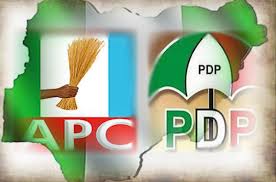
To put things into proper context, FTN reveals that of the 109 senators in the Federal Republic of Nigeria, 73 of them belong to the ruling All Progressives Party. As a matter of fact, recall that FTN published a story revealing how two senators from the People’s Democratic Party decamped during a plenary session on the 4th of August 2026. Put differently, it is safe to say that the APC controls about 67% of the seats in the red chamber.
A similar pattern has also been witnessed in the House of Representatives. In the green chamber, the ruling All Progressives Congress oversees approximately 242 members out of 360, with other parties maintaining a measly 118 population. Again, in an institution that operates by the principle of simple majority rule in the passage of bills and laws, the APC controls another 67% of seats.
In addition, the states are not left to the growing influence of the ruling party. At the moment of filing this report, about twenty-nine governors belong to the All Progressives Congress, with other parties maintaining just five states within the country. Recently, in an interesting wave of events, we witnessed a defection by the Kano State Governor and twenty-one lawmakers from the New Nigeria Peoples Party (NNPP) to the APC. Despite citing internal party conflicts as the reason for cross-carpeting, Nigerians have equally come out to ask if this same reason applies to the likes of Governor Agbu Kefas of Taraba State, Governor Caleb Mutfwang of Plateau State, and many others who decided to dump their previous parties for the All Progressives Congress.
However, despite the backdrop of telling events, many politicians have refuted the postulation of Nigeria descending into a one-party state.
Some bigwigs in the political landscape of Nigeria have equally maintained that they will remain with their parties. This has done little to reduce side-talk and accusations of lip service. An example of this case is the current Minister of the FCT, Mr. Nyesom Wike. According to the Governor of Oyo State, Mr. Seyi Makinde, Mr. Nyesom Wike said in a private meeting that “he was willing to hold the People’s Democratic Party for Mr. Bola Tinubu in 2027.” In the words of Governor Makinde, this disclosure by the Minister was unnecessary, shocking, and not in conformity with the tenets of democracy. He went further to assert that he will do everything within his power to ensure that Nigeria remains a multi-party state by not supporting Mr. Nyesom Wike. From this revelation, Nigerians can only wonder how many other ‘Wikes’ abound in other opposition parties.
What can Nigerians make out of this?
FTN reached out to political commentators to make sense of the current state of Nigeria’s political landscape and offer insight into future expectations.
Steve Ede, a political analyst and development practitioner based in Abuja, said that Nigerian politicians seem to be only loyal to personalities rather than to ideologies. He also opined that some defections are merely an attempt to avoid the harsh whip of the law, calling politics a game of “perks and risks”.
“ In Nigeria, politicians often avoid the path of risk; hence, we see desertion manifesting as defection. The Abacha days seem to be replaying in a supposed democratic setting, where loyalty to the person in power was a way to escape individual risk,” he said.

Using former Delta State Governor Ifeanyi Okowa’s defection as an example, Ede accused the president of “deploying the antics of perks and the weapon of moral indecency”. In November 2024, the former Governor was invited by the Port Harcourt office of the Economic and Financial Crimes Commission (EFCC) for questioning over alleged mismanagement and diversion of funds amounting to N1.3 trillion.
Okowa defected from the PDP to the APC a few months later in April 2025.
“The idea is to quiet alternative voices. The rhythm of a one-party state may subtly be possible to sell when the deity, who wants his own kind of worship and avoids other melodies apart from his soundtrack, remains. But the music will be stopped if someone different steps in,” Ede said.
On the other hand, Mr. David Azubuike, a mass communication scholar and researcher based in Ogun State, believes that the massive party defections Nigerians are witnessing are simply a ploy by politicians to attain their ambition and remain in power.
“I think it’s just a case of ‘If you can’t beat them, you join them.” Most of these sitting Governors who recently defected to the ruling party have come out to endorse the economic reforms of the President, which they attribute to their defections. However, I don’t believe that’s the case. I feel these Governors are desperate to remain in power (not just as governors, but as senators after the expiration of their respective tenures), and they feel that the ruling party can help them achieve that aim.
He went further to state unequivocally that Nigerians have become wiser and will not approach the polls in 2027 on the grounds of party affinity but on individual credibility and antecedents.
Azubuike said, “There have been public resolutions and even analyses that the massive defections will have a significant impact on the general elections outcome, as it is believed that the Governors could mobilise electorates in favour of the ruling party. However, I don’t think that would be the case at all. The average Nigerian can now see beyond political parties; people now analyse candidates, not parties. For instance, I’m not a fan of the All Progressives Congress (APC), but I’m supporting Senator Olamilekan Solomon ahead of the Ogun State Governorship elections. So, the defections may not really make much of a difference.”

Azubuike’s position on the possibility of Nigeria becoming a one-party state is optimistic.
“A one-party system goes against the democratic system that we practice. So, there’s no chance of that happening. Yes, we may have a party dominating, especially in the legislative houses, but I see no chance of operating a One-party system,” he said.
The Nigerian elections will hold on Saturday, February 20, 2027, while the Governorship and State Houses of Assembly elections hold March 6, 2027. According to the official timetable by the Independent National Electoral Commission (INEC), Political parties are expected to conduct their primaries between July 1 and September 30, 2026, to select candidates for all the elective positions.
Until then, Nigerians will have to wait and see.
 We do everything possible to supply quality news and information to all our valuable readers day in, day out and we are committed to keep doing this.
Your kind donation will help our continuous research efforts.
-Advertisement-

-Want to get the news as it breaks?-