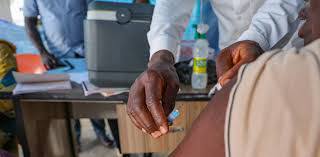

As global health financing faces uncertainty following drastic cuts in U.S. aid, experts at the Universal Health Coverage (UHC) Forum in Nigeria have stressed that the reduction in donor funds should be viewed as an opportunity for the country to take charge of its own health financing.
On February 6, 2025, health professionals and development experts gathered for an in-depth discussion on the implications of the U.S. government’s decision to cut assistance, and the way forward for Nigeria’s health sector in light of these challenges.


The freeze on aid by the Donald Trump-led U.S. administration has placed several vital healthcare initiatives at risk, with experts highlighting the far-reaching consequences for developing nations like Nigeria.
The U.S. decision to cut back on support from the U.S. Agency for International Development (USAID), reduce staff, and withdraw from the World Health Organization (WHO) has created alarm across global health sectors.
“The massive cuts threaten humanitarian programmes worldwide and will affect lives of aid recipients, including those in Nigeria,” said Dr. Gafar Alawode, Programme Director of Development Governance International and Co-Convener of the UHC Forum Nigeria.

“However, this presents an opportunity for Nigeria to look inward and explore sustainable methods for health financing,” he added.
Chief Mrs. Moji Makanjuola, veteran journalist and Co-convener of the UHC Forum, opened the discussion by expressing her regret over Africa’s reliance on foreign aid.
She remarked that, despite Nigeria’s abundant resources, the nation has been plagued by mismanagement, corruption, and a lack of accountability in the healthcare system.
“The time has come for Nigeria to develop a financing mechanism for its health sector that does not rely on donors,” she said. She also urged Nigerian leadership to prioritize the institutionalization of transparency and innovation in resource management.
Dr. Magda Robalo, Chair of the Steering Committee for UHC2030, noted that the current global health financing crisis should be seen as an opportunity for change, encouraging African countries to take ownership of their health systems. “We need to turn this crisis into a great opportunity. Stakeholders must push for more money for health, and governments must commit to sustaining national initiatives like Nigeria’s National Health Sector Renewal Investment,” she urged.
Professor Rob Yates, a renowned Universal Health Coverage advocate, echoed the sentiment, pointing out that Nigeria’s dependence on aid was no longer a sustainable strategy.
“Universal Health Coverage cannot be achieved through foreign aid alone. Nigeria must increasingly rely on domestic public funding to finance its health needs,” he emphasized, calling on political leaders at all levels to prioritize health for their constituents.
Dr. Amina Aminu Dorayi, Country Director of Pathfinder International, shared her perspective on how donor funding could be more effectively utilized, provided it is aligned with national priorities. “Donor funds should complement national spending and be used strategically to catalyze greater public investments,” she said.
Dr. Dorayi also advocated for the use of data to drive evidence-based decisions and emphasized the importance of involving all stakeholders in the transition to domestic health financing.
Nigeria Governors Forum (NGF) Secretariat representative, Dr. Chinekwu Oreh, also addressed the forum, outlining the NGF’s efforts to track government commitments to health financing.
She noted that, despite the fiscal constraints, the NGF is pushing for improved efficiency in resource allocation and better implementation of health programs across states.
Dr. Anne Ogoh, Director of Policy at the Private Sector Health Alliance of Nigeria, spotlighted the importance of involving the private sector in funding health.
READ ALSO: My health improved after I left office as President – Buhari
“Private corporate organizations and high-net-worth individuals have the potential to play a significant role in financing healthcare in Nigeria. We must increase collaborations to improve the impact of private-sector contributions,” she emphasized.
In a similar vein, Dr. Muhammed Mustapha Lecky, Chairman of the Health Sector Reform Coalition, underscored the importance of innovative financing, specifically the Basic Healthcare Provision Fund (BHCPF).
He pointed to studies showing how Nigeria could generate substantial health funding without the need for new taxes, through the strategic utilization of existing taxes on alcohol, tobacco, and sugar-sweetened beverages. “These taxes alone could generate over N200 billion for the health sector,” he stated.
The consensus among panelists was clear: Nigeria must move beyond its dependence on foreign aid and harness its own resources to fund health.
Experts agreed that this shift requires political will, a commitment to reform, and the mobilization of critical stakeholders, including governments, civil society, and the private sector.
 We do everything possible to supply quality news and information to all our valuable readers day in, day out and we are committed to keep doing this.
Your kind donation will help our continuous research efforts.
-Advertisement-

-Want to get the news as it breaks?-