

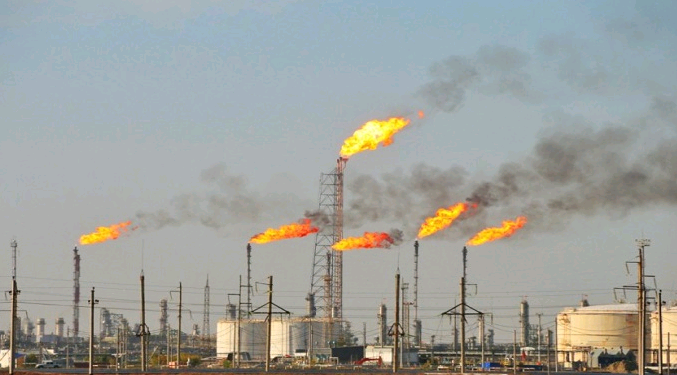

Nigeria recorded progress in its energy transition drive as gas flaring fell to 7.16% in July 2025, even as average daily gas production rose to 7.59 billion standard cubic feet per day (BSCFD), according to the Nigerian Upstream Petroleum Regulatory Commission (NUPRC).
The Commission said the development reflects “sustained production growth alongside a steady decline in flaring,” reinforcing its commitment to achieving a zero-flare target by 2030.
Production growth
NUPRC data showed that July’s gas production figure represents an 8.58% increase from the 6.99 BSCFD recorded in 2024 and a 9.84% rise compared to 2023’s 6.91 BSCFD.


Gas utilisation was split across export (35.88%), domestic supply (27.82%), and field/plant operations (29.13%). Contract type breakdown showed Marginal Sole Risk operators contributed 63% of output, followed by PSCs (24%), JVs (10%), and other Sole Risk producers (3%).
Flaring reduction
Despite the production growth, flaring dropped further to 7.16% in July, down from 7.55% in 2024 and 7.38% in July 2023. The Commission attributed this to ongoing initiatives such as the Nigerian Gas Flare Commercialisation Programme (NGFCP), its Decarbonisation Blueprint, and integration of the Upstream Petroleum Decarbonisation Template (UPDT).
Domestic supply, Gas-to-Power performance
The Domestic Gas Delivery Obligation (DGDO) achieved 72.5% performance in July, improving from 71.8% in June. DGDO performance has remained above 70% throughout 2025.

READ ALSO: 23,659 Nigerians currently missing, says ICRC
Gas-to-Power supply also strengthened, with deliveries rising 3.48% month-on-month to 862.86 million standard cubic feet per day (MMSCF/D), the highest level in three months.
Global context
The update comes weeks after the World Bank’s Global Gas Flaring Tracker Report showed Nigeria posted a 12% rise in flaring volume in 2024—the second-largest increase globally. The report noted that facilities operated by NNPCL and smaller producers accounted for most of the flaring.
NUPRC reiterated its commitment to cutting routine flaring to zero by 2030 and slashing methane emissions by 60% by 2031 as part of a gas-led energy transition strategy.
 We do everything possible to supply quality news and information to all our valuable readers day in, day out and we are committed to keep doing this.
Your kind donation will help our continuous research efforts.
-Advertisement-

-Want to get the news as it breaks?-