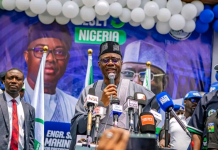


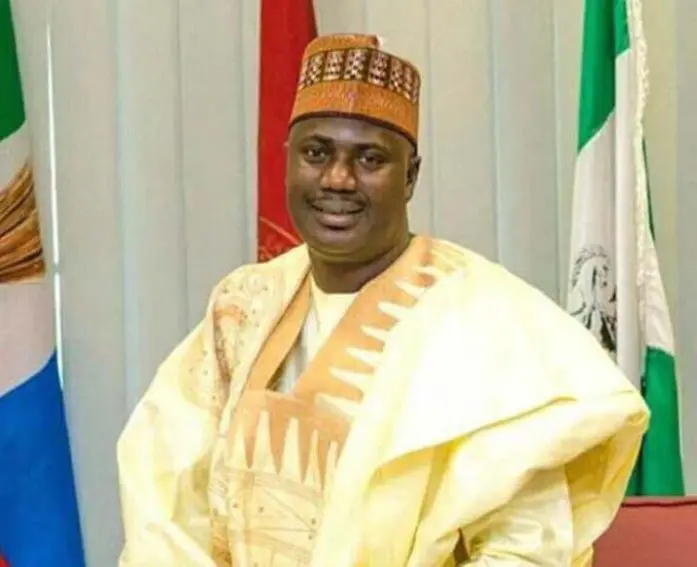
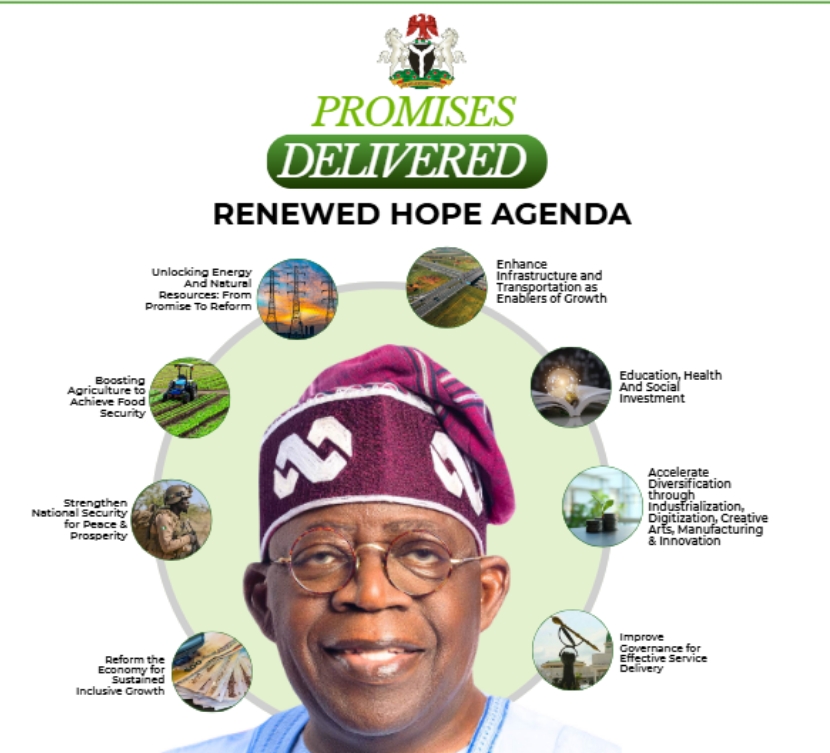
Members of the joint Senate and House of Representatives Committees on Agricultural Production on Tuesday queried the Minister of State for Agriculture and Food Security, Senator Aliyu Sabi Abdullahi, over the whereabouts of 2,000 tractors launched by the Federal Government under the Renewed Hope Agricultural Mechanisation Programme.
The lawmakers raised the issue during the minister’s appearance before the committees to defend the ministry’s 2026 budget proposal.
President Bola Ahmed Tinubu had on June 23, 2025 commissioned the tractors alongside other agricultural implements at the National Agricultural Seeds Council in Sheda, Abuja, as part of efforts to modernise farming and strengthen national food security.


However, nearly eight months after the official launch, the tractors are yet to be deployed nationwide.
Raising concern, a member of the House of Representatives from Rivers State, Awaji Inombek, asked the minister to explain why the tractors had not reached farmers months after being unveiled by the president.
Responding, Abdullahi said the delay was intentional, stressing that the government was determined to avoid the mistakes that plagued previous tractor distribution schemes.

He explained that the tractors were procured under a three-component Renewed Hope Agricultural Mechanisation Programme, with one component already operational through the Belarus Mechanisation Programme.
According to the minister, the Federal Government acquired 2,000 tractors of different capacities, including 75-horsepower and 85-horsepower units, combined harvesters, over 9,000 agricultural implements and 12 mobile workshops.
“The question of what is happening to the tractors is a very valid one,” Abdullahi said, noting that measures were being put in place to ensure the equipment does not end up abandoned or allocated to non-farmers, as experienced in the past.
He recalled that previous interventions often saw tractors diverted to individuals without farming activities, forcing genuine farmers to pay high fees for access, while many machines later became non-functional.
Abdullahi said President Tinubu had directed that the current programme must ensure tractor services are made accessible to farmers at minimal cost and as close to their locations as possible.
To achieve this, he disclosed that the Bank of Agriculture has been mandated to manage the process and has already advertised the programme, targeting young Nigerians, women in agriculture and other agricultural practitioners.
“Thousands of applications have been received and are currently undergoing due process,” he said.
The minister explained that the plan is to establish Agricultural Mechanisation Service Centres across the six geopolitical zones, where successful operators would access financing to provide tractor services to farmers on a pay-per-use basis.
Under the model, farmers with small or medium-scale holdings will be able to hire tractor services, while operators will be responsible for maintenance and repairs.
Abdullahi stressed that the government has moved away from direct allocation of tractors to individuals, a practice he said contributed to Nigeria having over 7,000 dysfunctional tractors.
He added that spare parts have been supplied for the newly procured tractors, while young Nigerians are being trained to handle maintenance and repairs.
The minister assured lawmakers that the rollout of the tractors would begin gradually as the rainy season approaches.
“Our target is to ensure that as the rainy season approaches, we begin a phased deployment of the tractors,” he said.
READ ALSO: NDLEA Officer killed in Bonny Island drug raid
He noted that the ministry’s strategy aligns with the food security emergency declared by President Tinubu, aimed at scaling agricultural production and strengthening farmers’ resilience.
On budget performance, Abdullahi said personnel expenditure under the 2025 budget was largely implemented, but capital project execution has been constrained by delayed releases, with about 30 per cent of the capital allocation—estimated at N18 billion—yet to be released.
Chairman of the House Committee on Agricultural Production and Services, Bello A. Ka’oje, warned that reduced funding could undermine food security efforts and economic recovery if not urgently addressed.
Similarly, Chairman of the Senate Committee on Agriculture, Production and Rural Development, Saliu Mustapha, urged the Federal Government to prioritise adequate funding and timely release of resources to the agricultural sector.
He noted that allocation to the agriculture ministry declined from N2.22 trillion in 2025 to N1.45 trillion in 2026, warning that insufficient funding could worsen food insecurity and slow economic growth.
 We do everything possible to supply quality news and information to all our valuable readers day in, day out and we are committed to keep doing this.
Your kind donation will help our continuous research efforts.
-Advertisement-

-Want to get the news as it breaks?-