




With less than a year to the 2027 presidential election, Northern Nigeria has once again become the focal point of intense political calculations as major contenders and their parties position themselves for what is expected to be a fiercely contested race.
Recent political exchanges among influential Northern leaders have reignited debate over who can command the region’s vast voting population, a question widely regarded as central to determining the outcome of the next presidential election.
The conversation gained momentum after former Kano State Governor, Rabiu Musa Kwankwaso, rejected claims by former Borno State Governor, Ali Modu Sheriff, that Northern voters would not support Labour Party’s Peter Obi.


Sheriff, during an interview on Channels Television’s Politics Today, maintained that Obi could not secure Northern backing, but Kwankwaso dismissed the assertion, insisting that no politician had the authority to speak for the entire region.
Political observers, however, believe the disagreement extends beyond Obi’s prospects, reflecting a broader struggle over who can fill the political vacuum left by former President Muhammadu Buhari.
Buhari’s political legacy under scrutiny
For years, Buhari’s perceived electoral dominance in Northern Nigeria has been symbolised by the popular expression “Buhari’s 12 million votes,” often cited as evidence of an unrivalled political base capable of determining presidential elections.

But a closer examination of Nigeria’s electoral history suggests the narrative may be more myth than permanent political reality.
Official election figures show Buhari secured more than 12 million votes in the 2003 presidential election against then-President Olusegun Obasanjo before his support dropped significantly in the 2007 contest against the late Umaru Musa Yar’Adua.
His electoral strength rebounded in 2011 and eventually propelled him to victory in 2015 following the historic merger that produced the All Progressives Congress (APC), bringing together the Congress for Progressive Change (CPC), Action Congress of Nigeria (ACN), All Nigeria Peoples Party (ANPP) and factions of the All Progressives Grand Alliance (APGA).
Political analysts argue that Buhari’s victories reflected not only his personal popularity but also the strength of strategic alliances that expanded his support beyond the North.
A changing Northern electorate
Observers say treating the North as a single voting bloc ignores the region’s long history of political diversity.
From the rivalry between the Northern People’s Congress (NPC) and Aminu Kano’s Northern Elements Progressive Union (NEPU) during the First Republic to the emergence of various political platforms in later years, Northern politics has consistently reflected competing interests and ideologies.
Today, differences among states such as Kano, Kaduna, Borno, Plateau, Benue and Kogi have become even more pronounced, shaped by security challenges, economic realities, religion, ethnicity and rapid urbanisation.
Growing cities such as Abuja, Kaduna and Ilorin have also produced younger voters whose political priorities increasingly revolve around employment, economic opportunities, governance and technology rather than traditional political loyalties.
No automatic political inheritance
Political historians maintain that Nigeria’s electoral history offers little evidence that political influence can simply be transferred from one leader to another.
While Buhari commanded widespread support across large sections of Northern Nigeria, analysts argue that his popularity was built on a unique combination of personality, timing, credibility and political circumstances that cannot easily be replicated.
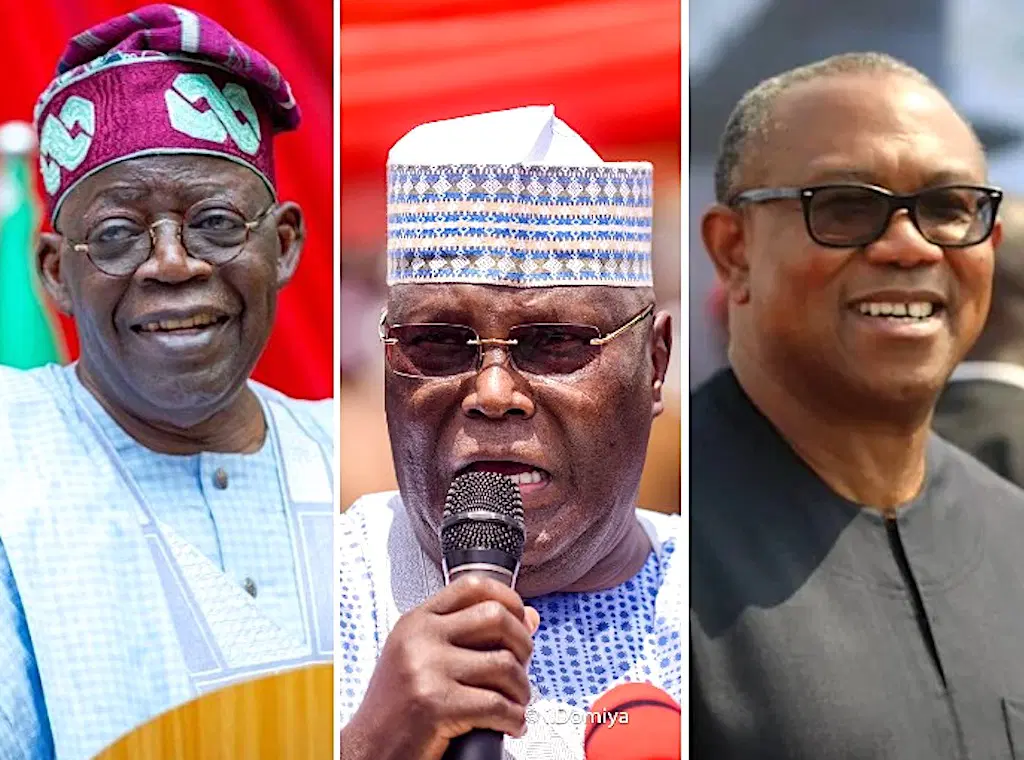
The outcome of the 2023 presidential election appears to reinforce that view, with Northern votes split among President Bola Tinubu, former Vice President Atiku Abubakar, Kwankwaso and Peter Obi, rather than rallying behind a single candidate.
Race for the North intensifies
As campaigns gradually gather momentum, each major political platform is developing strategies aimed at winning over Northern voters.
The ruling APC is expected to rely on incumbency, governance record and its nationwide political structures.
Opposition parties are banking on public dissatisfaction over economic hardship and insecurity to strengthen their appeal, while emerging political alliances hope to attract younger and urban voters seeking alternative leadership.
Political analysts believe the biggest challenge confronting all presidential hopefuls is the growing complexity of Northern politics.
Rather than responding to a single political narrative, voters across the region are increasingly making choices based on governance, security, economic conditions and local realities.
The debate triggered by Kwankwaso and Sheriff, analysts say, underscores a new political reality: no individual can credibly claim ownership of Northern Nigeria’s electoral destiny.
With 2027 approaching, the decisive question may no longer be who inherits Buhari’s legendary political base, but who can convince millions of Northern voters that they offer the most credible solution to the region’s economic and security challenges.
 We do everything possible to supply quality news and information to all our valuable readers day in, day out and we are committed to keep doing this.
Your kind donation will help our continuous research efforts.
-Advertisement-

-Want to get the news as it breaks?-