




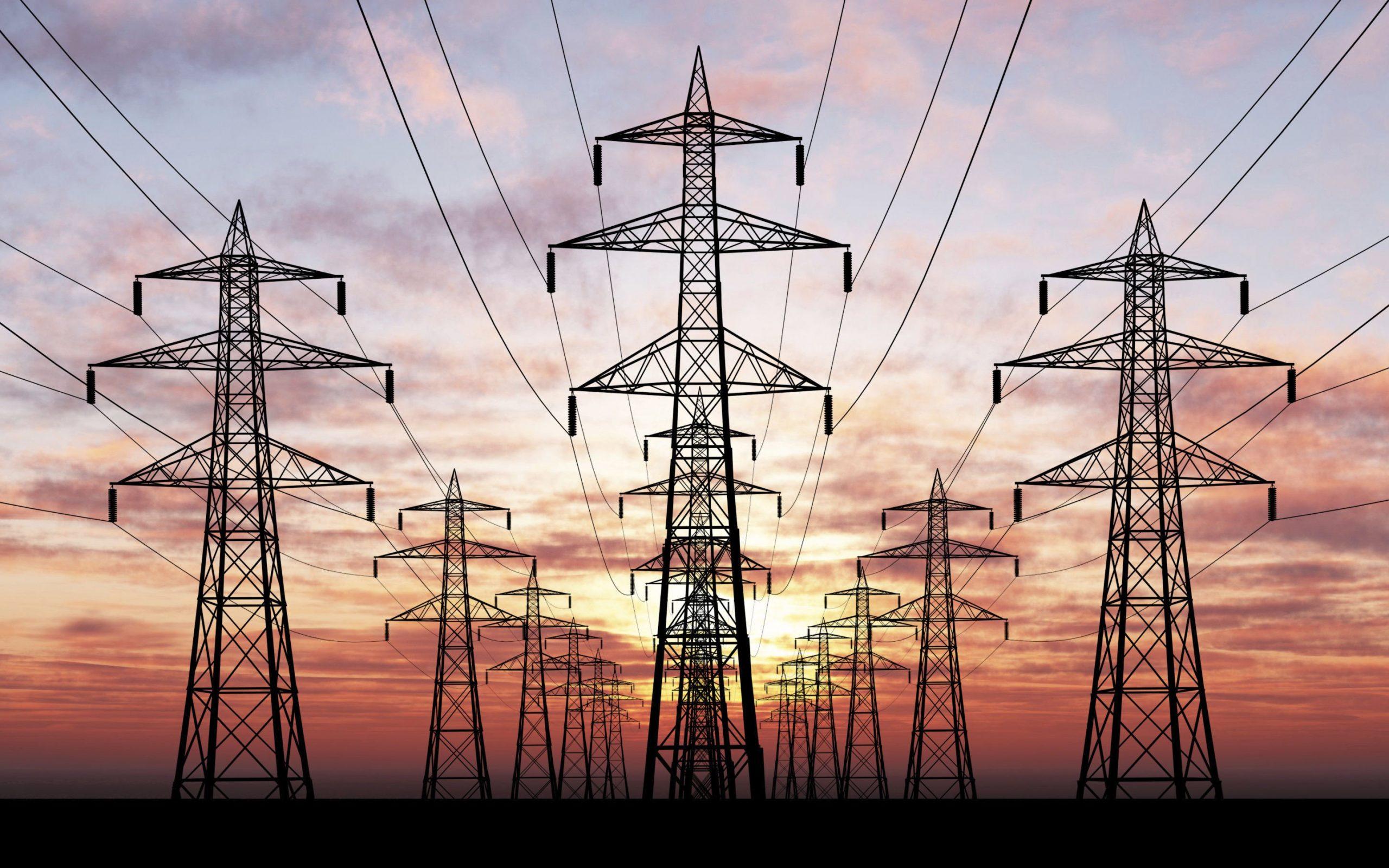

Despite more than ₦10 trillion committed to Nigeria’s electricity sector over the past 13 years through interventions, guarantees, metering programmes and infrastructure projects, power supply has remained largely stagnant, with average generation still hovering around 4,500 megawatts (MW).
The Federal Government, however, says it has begun a comprehensive overhaul of the sector aimed at addressing decades of structural challenges and restoring investor confidence.
Speaking on the government’s reform agenda, Minister of Power Joseph Tegbe said the administration was implementing measures to reposition the electricity industry after years of underperformance.


According to him, the reform programme includes a nationwide technical audit of transmission infrastructure, harmonisation of federal and state electricity regulations, grid stabilisation projects, improved sector liquidity, strategic asset optimisation and the rollout of a national super grid.
He expressed optimism that within the next two to three years Nigerians would witness a stronger electricity grid, fewer technical losses, improved market discipline and wider access to reliable power.
Years of spending, little improvement
An analysis of government interventions since the privatisation of the power sector in November 2013 shows successive administrations have injected huge sums into the industry without achieving the expected improvement in electricity supply.

Among the major interventions are the ₦213 billion Nigerian Electricity Market Stabilisation Facility, the ₦701 billion Payment Assurance Guarantee for power generation companies, more than ₦200 billion under the National Mass Metering Programme, the ₦700 billion Presidential Metering Initiative, the €2.3 billion Siemens Presidential Power Initiative, as well as over $2.4 billion in World Bank and African Development Bank-supported projects.
Government has also launched the ₦4 trillion Presidential Power Sector Debt Reduction Programme to address mounting liabilities across the electricity value chain.
Yet electricity generation remains far below national demand, which industry experts estimate at more than 30,000MW.
According to the Nigerian Electricity Regulatory Commission (NERC), average available generation capacity in the first quarter of 2026 stood at 4,457.96MW, while actual average hourly generation was 4,112.72MW, well below the Federal Government’s target of 6,000MW.
Debt dispute deepens
The liquidity crisis in the sector has also intensified, with the Association of Power Generation Companies (APGC) claiming government owes electricity producers about ₦6.2 trillion in unpaid obligations.
The association said the figure comprises ₦4 trillion accumulated between 2015 and 2024 and another ₦2.2 trillion incurred in 2025.
The Federal Government, however, disputed the amount.
Minister of Finance and Coordinating Minister of the Economy, Taiwo Oyedele, recently said a reconciliation exercise reduced verified liabilities from about ₦4 trillion to ₦3.3 trillion.
But APGC Executive Director, Dr Joy Ogaji, insisted generation companies were excluded from the reconciliation process.
She questioned how the government arrived at the figure, noting that GenCos alone owe gas suppliers nearly ₦4 trillion.
According to data from the Nigerian Bulk Electricity Trading (NBET) Plc, government received electricity subsidy invoices worth ₦1.859 trillion between April 2025 and April 2026 but paid only ₦76.95 billion, leaving outstanding obligations of roughly ₦1.78 trillion.
Government turns to bond market
To improve liquidity, the Federal Government has begun raising funds through the domestic bond market under the Presidential Power Sector Debt Reduction Programme.
Officials said about ₦333 billion has already been paid to electricity generation companies, while a new ₦729 billion bond has been issued to finance additional settlements.
The latest issuance follows an earlier ₦501.02 billion bond floated this year.
Government believes the initiative will restore confidence in the Nigerian Electricity Supply Industry, attract fresh investment and improve financial stability across the sector.
Experts call for deeper reforms
President of the Nigeria Consumer Protection Network, Kunle Olubiyo, argued that continued government involvement in electricity financing has encouraged inefficiency and inflated claims within the industry.
He called for full privatisation of the sector, saying it would reduce waste, improve operational efficiency and ultimately lower electricity costs.
Olubiyo urged government to divest its remaining interests in electricity distribution companies, privatise the Transmission Company of Nigeria (TCN) and focus primarily on regulation and policy.
Similarly, President of the Chartered Institute of Power Engineers of Nigeria (CIPEN), Engr. Israel Abraham, blamed the industry’s slow progress on poor leadership.
According to him, the highly technical nature of the electricity sector requires competent professionals to drive reforms and manage key institutions.
Government promises turnaround
Despite the persistent challenges, Tegbe maintained that the Tinubu administration has laid the foundation for long-term reforms through the implementation of the Electricity Act, expansion of state electricity markets, accelerated metering, transmission upgrades and efforts to clear legacy debts.
He disclosed that electricity generation has recently crossed 5,000MW consistently over the past two weeks, describing it as an early sign that ongoing reforms are beginning to produce results.
The minister acknowledged that significant work remains but said improving generation, transmission, distribution and market sustainability simultaneously remains the government’s priority as it seeks to build a more reliable and financially stable electricity industry.
 We do everything possible to supply quality news and information to all our valuable readers day in, day out and we are committed to keep doing this.
Your kind donation will help our continuous research efforts.
-Advertisement-

-Want to get the news as it breaks?-