




The Osun State Government has rejected allegations by the Economic and Financial Crimes Commission (EFCC) that about ₦11 billion was looted from state coffers, describing the claim as false and politically motivated.
The government accused the anti-graft agency of attempting to justify what it called the unlawful freezing of one of its bank accounts with allegations that cannot be substantiated.
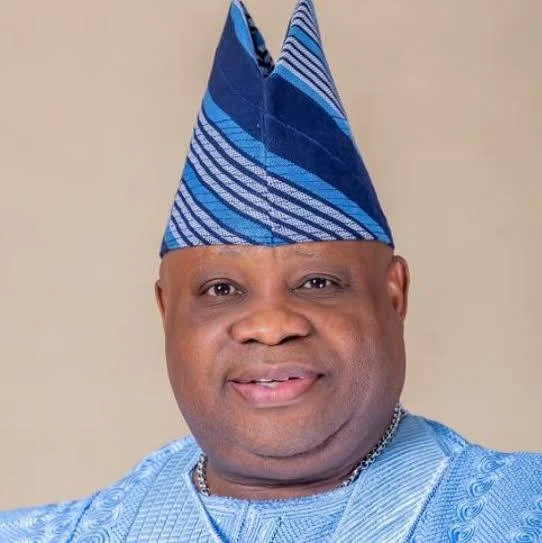
In a statement issued on Thursday by the Commissioner for Information and Public Enlightenment, Kolapo Alimi, the state insisted that no public funds had been diverted, stressing that available resources had been channelled into infrastructure, workers’ welfare and other development programmes.


According to the government, the account restriction was orchestrated to frustrate the payment of palliatives promised to workers amid the country’s economic challenges.
“The real reason the commission froze the state account on the order of Gboyega Oyetola was to stop the payment of palliatives which the state government promised workers some months ago,” the statement said.
Despite the restriction, the government disclosed that it had successfully paid the approved palliatives to state workers after concluding negotiations with labour unions.

It noted that the intervention was part of its cost-of-living support measures and not the first such relief package provided under the current administration.
Rejecting the EFCC’s allegation of financial misconduct, the state maintained that it had consistently prioritised public service delivery over mismanagement of funds.
“We don’t loot public funds in Osun State; we deliver public goods and services,” the statement added.
The government argued that there were no excess funds available for diversion because revenues had been committed to executing major infrastructure projects, improving workers’ welfare and financing programmes across key sectors.
It further accused the EFCC of conducting what it described as a politically motivated investigation aimed at undermining the administration.
According to the statement, senior government officials have been subjected to repeated interrogations since March 2026 without any evidence linking them to financial crimes.
“The EFCC has been conducting a witch-hunting investigation since March 2026 without any indicting evidence against top officials,” the government alleged, adding that the repeated invitations were intended to distract officials from governance.
The state also questioned the anti-graft agency’s decision to freeze a government account instead of pursuing established legal procedures if it genuinely possessed evidence of wrongdoing.
“Assuming but not conceding that the EFCC has any evidence of looting as posited, there are established procedures for bringing suspects to book instead of a politically motivated and unlawful freezing of government accounts without recourse to the rule of law,” the statement said.
Describing the corruption allegations as an afterthought, the government maintained that the EFCC was attempting to defend an action that had attracted widespread criticism.
“It is sad that a commission will lie to destroy the image of a state to cover up an illegal action that has backfired. This alibi from the commission is an afterthought and cannot stand the test of truth in reality and the court of public opinion,” it stated.
The latest response comes a day after the EFCC said it froze one of the Osun State Government’s accounts as part of an ongoing investigation into the alleged diversion of about ₦11 billion in Ecology Funds, Intervention Funds and Federation Account Allocation Committee (FAAC) allocations.
The commission had said the restriction was imposed after investigators observed what it described as suspicious transfers from the account into several corporate entities, insisting the action was necessary to preserve public funds while investigations continue.
 We do everything possible to supply quality news and information to all our valuable readers day in, day out and we are committed to keep doing this.
Your kind donation will help our continuous research efforts.
-Advertisement-

-Want to get the news as it breaks?-