
The Federal Government has unveiled a new agricultural mechanisation framework aimed at transforming farming into a more technology-driven and commercially viable sector, with plans for a tractor assembly plant capable of producing up to 4,000 units annually.
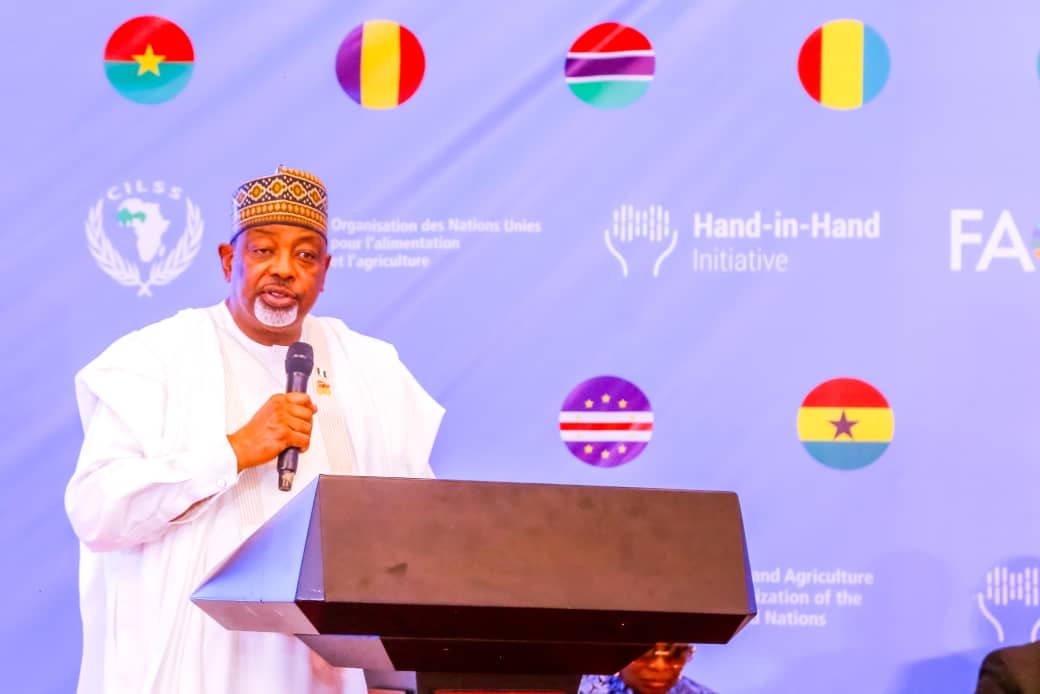
The Minister of Agriculture and Food Security, Senator Abubakar Kyari, announced the National Agricultural Mechanisation Policy and the National Agricultural Mechanisation Investment Strategy in Abuja on Wednesday during a high-level policy dialogue on the future of mechanised farming in Nigeria.
The initiative is part of the Federal Government’s broader efforts under President Bola Tinubu’s Renewed Hope Agenda to raise agricultural productivity, strengthen food security and attract private investment into the sector.


Kyari said the new framework would move agricultural mechanisation away from a system largely dependent on government procurement towards an investment-led model in which private capital, technology, entrepreneurship and skills can drive the expansion of mechanised farming.
He said, “Our responsibility as a ministry is to translate that vision into policy architecture, institutional coherence and practical pathways for investment and delivery.”
According to the minister, Nigeria must build an agricultural ecosystem where farmers can access modern equipment without necessarily having to purchase expensive machinery themselves.

He said the government was therefore working towards a “Mechanisation-as-a-Service” model under which farmers would be able to access machinery at the point and time they require it.
The proposed approach covers more than tractor deployment, with the minister listing land preparation, planting, irrigation, crop protection, harvesting, processing, storage, logistics and transportation among the areas targeted for mechanisation.
4,000-Tractor Plant Planned
Kyari disclosed that the Federal Government had already begun the procurement and deployment of 2,000 tractors, alongside more than 9,000 implements and spare parts, under the Renewed Hope National Agricultural Mechanisation Programme.
He added that the investment strategy provides for the establishment of a major tractor assembly facility with an annual production capacity of between 2,000 and 4,000 tractors.
The proposed plant is expected to deepen local manufacturing capacity, reduce dependence on imported agricultural machinery and create employment opportunities along the agricultural and industrial value chains.
The minister also urged young Nigerians and women to take advantage of the opportunities that the emerging mechanisation economy could create.
“Our youths must not stand at the edge of the mechanisation economy. They must own, operate, innovate and lead it,” Kyari said.
His comments place youth participation at the centre of the government’s mechanisation agenda, particularly as the sector increasingly requires technicians, equipment operators, entrepreneurs, engineers and technology-driven agricultural businesses.
FG Links Mechanisation To Food Security
The minister said food security should be treated as a national economic and sovereignty issue, stressing that agriculture must become more productive and resilient.
He argued that mechanisation should not be viewed simply as the distribution of tractors, but as part of a wider system capable of improving production from the farm through processing and eventual delivery to consumers.
Borno State Governor, Babagana Zulum, also stressed the need for Nigeria to embrace modern agricultural practices, saying mechanisation must be accompanied by smarter approaches to farming.
“We must build the agriculture of tomorrow. Agriculture must be mechanised and smart,” Zulum said.
The policy comes against the backdrop of concerns over Nigeria’s heavy food import dependence and losses occurring across the agricultural value chain.
The Federal Government has previously highlighted the country’s annual food import bill of more than $10 billion, while agricultural exports remain comparatively low.
Post-harvest losses also continue to undermine farmers’ earnings and food availability, with estimates indicating that a substantial proportion of agricultural produce is lost before reaching consumers.
Investment Push Gains Momentum
The mechanisation strategy is expected to complement other Federal Government initiatives designed to draw private capital into agriculture and strengthen food production.
Among them is the Special Agro-Industrial Processing Zones programme, which is seeking to attract billions of dollars in investment into agro-processing, exports and value addition.
The government has also approved a N250 billion facility for the Bank of Agriculture to expand financing for smallholder farmers at single-digit interest rates.
 We do everything possible to supply quality news and information to all our valuable readers day in, day out and we are committed to keep doing this.
Your kind donation will help our continuous research efforts.
-Advertisement-

-Want to get the news as it breaks?-