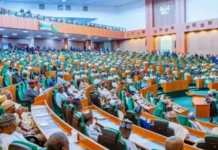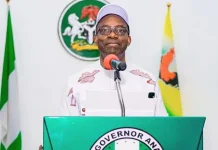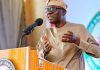

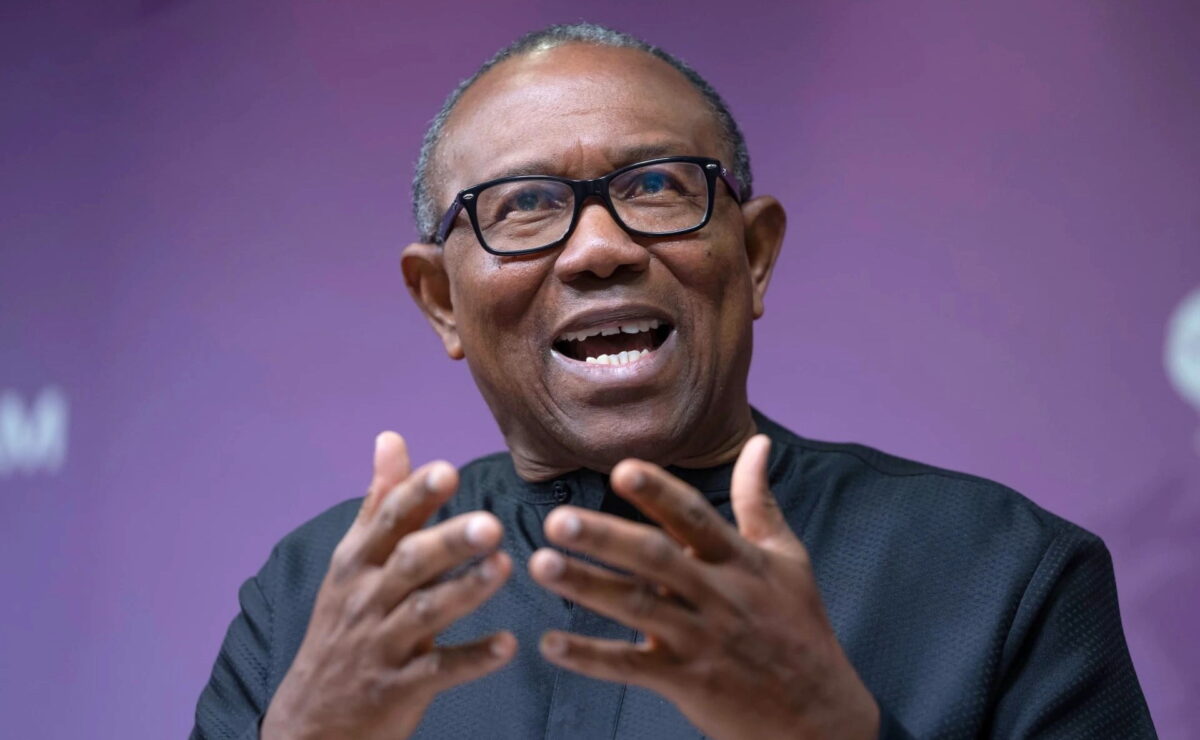
Presidential contenders for the 2027 general elections have disagreed over how Nigeria should tackle insecurity, fuel subsidy, policing and economic hardship, with the differences emerging during a debate at the 66th Annual General Conference of the Nigerian Bar Association in Port Harcourt, Rivers State.
Peter Obi of the Nigeria Democratic Congress, Omoyele Sowore of the African Action Congress, Donald Duke of the People’s Redemption Party and Adewale Adebayo of the Social Democratic Party participated in the debate, while former Rivers State governor and African Democratic Congress vice-presidential candidate, Rotimi Amaechi, also presented his views.


The debate, held under the theme, “Beyond Limits: Redefining the Practice of Law,” provided a platform for the politicians to outline their positions on some of the major issues expected to shape the 2027 presidential election.
The Chief of Staff to President Bola Tinubu, Femi Gbajabiamila, also defended the Federal Government’s reforms, particularly its moves towards establishing state police.
Obi links insecurity to poverty
Obi argued that Nigeria’s insecurity could not be effectively addressed without tackling poverty, unemployment, corruption and weaknesses in the country’s security architecture.

The former Anambra State governor called for a comprehensive review of Nigeria’s security strategy and advocated what he described as a “human security” approach.
“You need to do a comprehensive overhaul or study of our strategy to a security problem today. You need to audit the architecture that is driving that strategy and look at security from a human security perspective,” he said.
According to Obi, reducing poverty and unemployment would help curb criminality, while corruption and diversion of public resources must also be addressed.
“The more you pull people out of poverty, the more you reduce insecurity. It is a known fact everywhere,” he said.
He also called for improved coordination among security agencies, better welfare and staffing for personnel, as well as greater support for local vigilantes and communities.
Obi identified intelligence gathering as one of the major weaknesses in Nigeria’s security system.
“As it were, the intelligence aspect of our security is very, very weak,” he said.
He further advocated a shift from a consumption-driven economy to a production-based economy, particularly through investment in agriculture, to create jobs and reduce poverty.
“Nigeria is not a poor country. Nigeria is poor because those of us who are leaders are stealing the wealth of Nigeria and driving Nigeria into poverty,” Obi said.
Sowore rejects subsidy removal
Sowore took a different position on fuel subsidy, promising that he would not remove it if elected president.
He argued that the removal of petrol subsidy had benefited political elites and governors rather than ordinary Nigerians.
“The question about subsidy is, who are you subsidising? You are subsidising the elites. You are subsidising the governors,” Sowore said.
He accused successive governments of removing the subsidy while promising that Nigerians would eventually enjoy improved economic conditions.
“I will not remove subsidy because the poor in Nigeria need to be subsidised instead of the rich,” he said.
Sowore also criticised the records of former political officeholders, including Obi and Amaechi, challenging them to account for their performance while in government.
He accused Amaechi of failing to deliver meaningful infrastructure during his tenure as Rivers governor and criticised Obi’s administration in Anambra over alleged prolonged strikes by lecturers and doctors.
On insecurity, the AAC candidate proposed a three-stage strategy beginning with what he described as stopping the “bleeding” through improved funding, equipment and welfare for security agencies.
He advocated an internationally standardised security system and proposed the deployment of technology, including drones, to strengthen national security.
Sowore also proposed a N500,000 minimum wage and pledged free education, one million public homes, job creation and a transition from a fossil-fuel-dependent economy to a green economy.
He described terrorism in Nigeria as an “industry” and an “industrial complex”, arguing that insecurity could not be effectively addressed without confronting the alleged involvement of influential political figures.
Amaechi backs intelligence gathering
Amaechi said addressing economic hardship and strengthening intelligence gathering were central to tackling insecurity.
He argued that governments must create an economy capable of putting money in the pockets of citizens.
“If today lawyers can’t pay their salaries, if you’re not careful, some lawyers will become criminals because crime pays,” Amaechi said.
The former Rivers governor said the administration of former President Muhammadu Buhari strengthened regional intelligence cooperation by working with neighbouring countries, including Chad and Benin Republic, to identify criminals.
Drawing from his experience as governor, Amaechi said effective intelligence gathering had enabled him to monitor criminal activities and movements across Rivers State.
“When I was governor, I knew where everybody was. I knew who was doing what, who entered a hotel and came out of a hotel, and where he went to. And that information was passed to me every day. And I knew what to do,” he said.
Amaechi also cited his administration’s infrastructure projects, including schools and roads, while defending his record after Sowore criticised his performance in office.
He pointed to the Lagos-Ibadan and Abuja-Kaduna railway projects and urged Nigerians to assess political candidates based on their records.
On the proposed opposition coalition, Amaechi said performance should determine who emerges as the candidate.
“Coalition should be based on performance,” he said.
He subsequently challenged Sowore to show what he had achieved in public office.
Sowore responded by criticising the records of politicians who had previously held government positions, arguing that they should account for their past performances before seeking power again.
Duke questions existence of subsidy
Duke faulted the Federal Government’s position on petrol subsidy, arguing that Nigeria did not operate a genuine subsidy regime.
“You can’t remove what doesn’t exist. I postulate there is nothing like fuel subsidy,” he said.
The former Cross River governor argued that Nigeria should use its crude oil resources to make petroleum products more affordable and increase economic productivity.
He said crude oil produces several petroleum products, including petrol, diesel and aviation fuel, and argued that Nigeria should not compare the cost of products refined from its own natural resources with prices in countries that import raw materials.
Duke also questioned the transparency of crude-for-product swap arrangements previously used by the country.
“When we were doing swaps, we said about 300,000 barrels of oil in exchange for petrol; no one ever mentioned the by-products. No one knows what went to. That’s why I believe it’s the biggest scam that has been perpetrated in this country,” he said.
He maintained that energy should be made readily available because it is central to economic productivity.
“For me, the overall essence of government is productivity of its people. So if that is the vision or the mission statement of government, all the factors that have to do with productivity must be made abundantly available,” Duke said.
He also rejected concerns that cheaper petrol would encourage smuggling into neighbouring countries, arguing that Nigerians should not be made to pay more because of weaknesses in border control.
Adebayo backs policing at all levels
Adebayo advocated decentralised policing, arguing that Nigeria’s federal structure should permit the Federal Government, states and local governments to establish their own police forces.
He said the issue should be viewed from the perspective of constitutional powers and federalism.
“It is a principle of law that the sovereignty of Nigeria is divided between federal, state and local. The legislative power includes the power, or should include the power, to police,” he said.
According to him, any level of government with the power to make laws should also have the capacity to establish a police force to enforce those laws.
“If I can make laws, I should be able to create police to enforce my law. No level of government should depend on another level to enforce its own law,” Adebayo said.
He declared his support for policing at all three levels of government.
“I support police at every level of government. Federal, its own police. State, its own police. Local government, its own police. Because that is how it should be in federalism,” he said.
Adebayo described the current proposal for state police as “a trick” by President Tinubu.
Presidency defends state police reform
Speaking in a keynote address titled “Policing in Transition”, Gbajabiamila defended the Federal Government’s move towards state police and outlined safeguards he said were necessary to prevent abuse.
He said the administration had decided to confront the weaknesses associated with Nigeria’s centralised policing structure.
“Centralised policing without safeguards will bring about more chaos,” Gbajabiamila said, adding that the proposed system was designed to address existing imbalances.
He stressed that Nigerians should receive equal protection regardless of their background.
According to him, Nigeria currently has about one police officer for every 650 people, compared with an international benchmark of one officer to 450 people.
He noted that the situation was further complicated by the number of police officers deployed for administrative and escort duties.
Gbajabiamila also stressed the importance of training, professionalism and effective oversight under any new policing arrangement.
He raised the question of who would police the police and argued that governors should retain executive authority without being allowed to use police powers against political opponents.
He also said police officers who refuse unlawful orders should be protected, insisting that such safeguards must be backed by strong institutions.
The debate highlighted the wide differences among major political figures seeking to influence Nigeria’s political direction ahead of the 2027 elections, particularly over the economy, fuel pricing, security and the structure of policing.
 We do everything possible to supply quality news and information to all our valuable readers day in, day out and we are committed to keep doing this.
Your kind donation will help our continuous research efforts.
-Advertisement-

-Want to get the news as it breaks?-