
The Association of Communication Scholars & Professionals of Nigeria (ACSPN) has raised concerns over the growing threat of artificial intelligence, deepfakes and digital disinformation to Nigeria’s electoral process ahead of the 2027 general elections.


National President of ACSPN, Professor Rotimi Williams Olatunji, raised the concerns on Wednesday in Abuja while delivering his opening remarks at the association’s 13th Annual Conference held at the National Open University of Nigeria.
The conference has the theme, “Media, Technology and Elections in Africa: Navigating Digital Disruption and the New Dynamics of Electoral Communication.”

Olatunji described the theme as both an academic subject and a national and continental imperative, stressing that Africa had already entered the digital electoral era.
He said Nigeria, as Africa’s largest democracy, must take the lead in deploying technology capable of strengthening rather than weakening constitutional democracy.
According to him, artificial intelligence, social media, algorithms, data-driven political communication, influencers and other emerging technologies are rapidly changing how citizens receive information, engage political actors and form political opinions.
He, however, warned that the opportunities presented by digital technology were accompanied by serious risks, particularly the growing use of AI-generated content to manipulate voters.
“One of the most urgent concerns is the emergence of AI-enabled disinformation, particularly deepfakes involving synthetic audio, video and images capable of impersonating candidates, electoral officials and institutions,” he said.
Olatunji warned that the challenge was no longer simply the spread of false information but the growing difficulty citizens may face in distinguishing authentic content from fabricated material.
He described the development as a “crisis of electoral truth”, noting that fabricated statements, manipulated videos suggesting electoral malpractice and false voting information could spread across millions of digital networks within hours.
He therefore called for preparations to begin well ahead of the 2027 election campaign.
“We therefore cannot afford to wait until the 2027 election campaign before preparing our response. This conference is a call to action,” Olatunji said.
He proposed an integrated electoral information integrity framework involving the Independent National Electoral Commission (INEC), political parties, media organisations, technology platforms, civil society organisations and communication scholars.
He said such a framework should include stronger verification mechanisms, rapid fact-checking, responsible political advertising, institutional communication, AI-content detection, media literacy and trusted channels through which voters could authenticate electoral information.
The ACSPN president stressed that technology alone could not address what he described as fundamentally social and communicative challenges.
He called for greater investment in media literacy to enable citizens to identify manipulation and participate responsibly in the digital public sphere.
Olatunji also urged communication scholars to move beyond documenting digital disruption and produce research capable of influencing policy and professional practice.
He said research outcomes should be translated into policy briefs, communication strategies, professional training, voter education tools, early-warning systems and other practical interventions.
According to him, electoral integrity cannot be the responsibility of a single institution.
“INEC cannot do it alone. Government cannot do it alone. The media cannot do it alone. Technology companies cannot do it alone. Civil society and academia cannot do it alone. It requires collective responsibility,” he said.
Olatunji further advocated intelligent and proportionate regulation of technology, anchored on transparency, accountability and media literacy.
He cautioned against measures that could unnecessarily restrict legitimate political expression, criticism and satire, saying the objective should be to build a resilient democracy rather than a censored one.
ACSPN honours communication pioneers
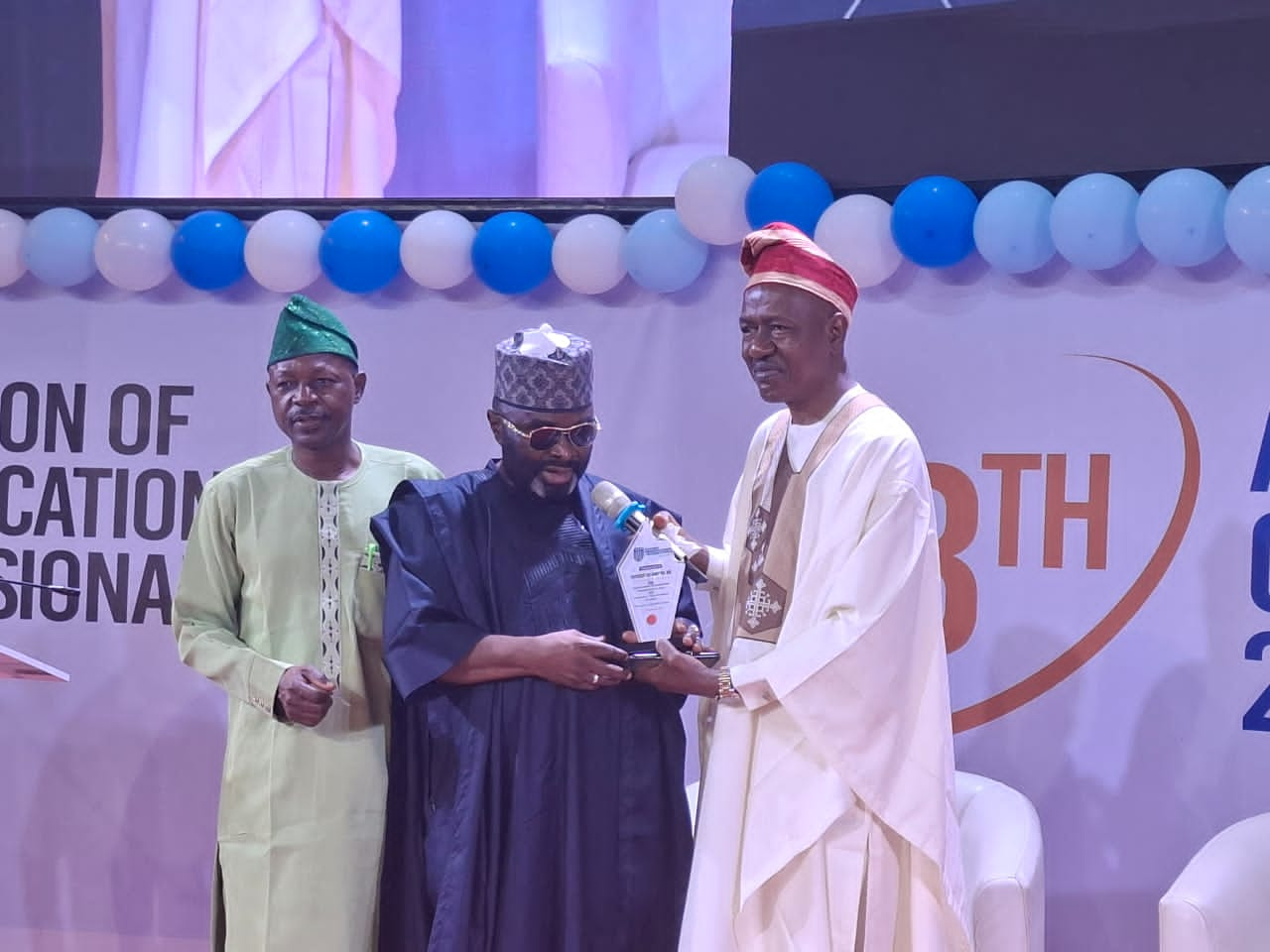
The association also introduced the ACSPN Fellowship and Special Awards at the 2026 conference to recognise individuals who have made outstanding contributions to communication scholarship, professional practice and national development.
The Posthumous Fellowship Award will honour pioneering members, including the late Professor Lai Oso, Foundation President of ACSPN and former Dean of the School of Communication at Lagos State University, as well as the late Professor Dayo Alao, former Vice-Chancellor of Adeleke University.
The association will also recognise living pioneers and leaders, including Professor Idowu Sobowale, Professor Nosa Owens-Ibie, Professor Umaru Alhaji Pate, Professor Stella Okunna, Lanre Idowu, Dapo Olorunyomi and Professor Rotimi Olatunji.
Olatunji said the awards were designed to honour scholarship, professional excellence, service and commitment to the advancement of communication in Nigeria.
He also highlighted the importance of collaboration between communication scholars and media practitioners as Nigeria approaches the 2027 elections.
He described scholarship and professional practice as “the two strong wings of one bird”, stressing that both sectors must work together to strengthen public communication.
The ACSPN president called for journalists who understand data and artificial intelligence, editors capable of identifying digital manipulation, media organisations committed to verification and scholars whose research can be translated into accessible public knowledge.
He said the association’s goal was to ensure that discussions generated at the conference moved beyond the auditorium and translated into policies, professional practices and partnerships capable of strengthening democracy.
“The future of electoral communication is already here,” Olatunji said, urging stakeholders to confront the emerging challenges with responsibility, ethics and courage.
 We do everything possible to supply quality news and information to all our valuable readers day in, day out and we are committed to keep doing this.
Your kind donation will help our continuous research efforts.
-Advertisement-

-Want to get the news as it breaks?-