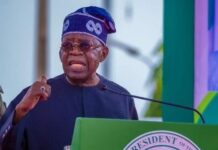



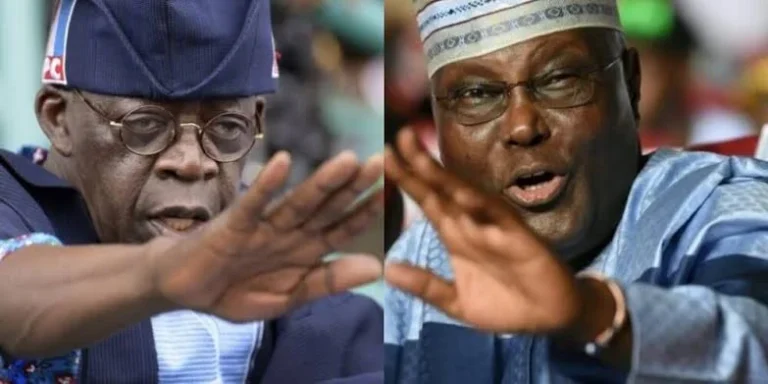
Fresh questions have emerged over the scale and value of lobbying expenditure associated with President Bola Ahmed Tinubu’s administration and former Vice President Atiku Abubakar in the United States.
Documents filed under the United States Foreign Agents Registration Act, FARA, reportedly show that engagements linked to the Federal Government and Atiku amount to about $10.2 million.
At an exchange rate of N1,400 to the dollar, the figure translates to approximately N14.28 billion.


The amount has triggered debate over the opportunity cost of political and government spending at a time when businesses, households and public institutions across Nigeria continue to face severe financial pressures.
One illustrative calculation suggests that N14 billion, if divided into N250,000 packages, could provide capital for about 56,000 microenterprises.
However, that does not mean such an intervention would automatically create 56,000 sustainable businesses. The actual impact would depend on whether the money was distributed as grants, loans or equity, the sectors targeted, administrative costs, business survival rates and other factors.

The comparison nevertheless highlights the broader question of whether large sums committed to lobbying abroad could generate greater economic value if invested in critical domestic sectors.
Tinubu Administration’s Engagement
The Federal Government’s engagement with Washington-based DCI Group reportedly began in December 2025.
Under the arrangement, the firm was retained to assist the Nigerian government in communicating its policies and actions to United States policymakers, particularly concerning the protection of Christian communities and securing continued American support for Nigeria’s counter-terrorism efforts.
The contract reportedly carried a monthly retainer of $750,000.
The initial six-month agreement was valued at $4.5 million, with an automatic renewal that could raise the total value to $9 million. Nigeria reportedly paid $4.5 million upfront for the first six months.
The engagement came amid heightened international scrutiny of Nigeria’s security situation and concerns over the country’s image in Washington.
Supporters of the arrangement could therefore argue that the expenditure has diplomatic and security objectives that cannot be measured solely in monetary terms.
Atiku’s Lobbying Contract
Atiku, meanwhile, reportedly engaged Washington-based Von Batten-Montague-York, L.C. under a $1.2 million, 12-month agreement earlier in 2026.
Documents filed with the US Department of Justice indicated that the firm’s assignment included strengthening Atiku’s engagement with US policy circles and countering narratives associated with the Nigerian government.
The filing also reportedly covered engagement with members of Congress and executive-branch officials, as well as strategic advice on policy positioning.
In July, reports indicated that the firm had circulated historical US Department of Justice records relating to a 1993 drug-trafficking asset-forfeiture case linked to Tinubu among members of the Trump administration, Congress and senior congressional staff.
More than 60 pages of documents were reportedly submitted.
Combined, the two engagements account for about $10.2 million, according to the reported filings.
At N1,400 to the dollar, that amounts to approximately N14.28 billion.
What N14bn Could Finance
The scale of the expenditure becomes clearer when compared with alternative uses.
If N14 billion were divided into N250,000 packages, it would amount to 56,000 interventions.
At N500,000 per beneficiary, the figure would support 28,000 interventions, while N1 million packages would provide financing for 14,000 businesses.
At N5 million per enterprise, about 2,800 businesses could receive the equivalent amount, while N10 million packages would cover approximately 1,400 enterprises.
The comparison does not establish that these businesses would succeed, but it demonstrates the scale of the capital involved.
This is particularly significant given the importance of micro, small and medium enterprises to Nigeria’s economy and the persistent difficulty many businesses face in accessing affordable financing.
The World Bank has previously identified access to finance as a major constraint for Nigerian MSMEs and approved a $500 million financing package aimed at expanding financing opportunities for the sector.
Education Also In Focus
Education provides another basis for assessing the opportunity cost.
Using tuition figures cited for Lagos State University, Ojo, N14 billion could theoretically cover annual tuition for about 155,555 students paying N90,000.
For students paying N190,000, the same amount could cover tuition for approximately 73,684 students.
The figure could also support hundreds of thousands of students through monthly allowances under the Nigerian Education Loan Fund scheme, depending on the duration and structure of the intervention.
At LASU, the calculation suggests that tens of thousands of students could potentially receive both tuition support and allowances from an amount equivalent to the reported lobbying expenditure.
Similar calculations were made using tuition levels at Olabisi Onabanjo University, Ago-Iwoye, where fees reportedly range from N190,000 to N350,000.
Again, the figures are illustrative and do not suggest that the money would necessarily be redirected to education or that such an intervention would automatically solve the sector’s challenges.
Opportunity Cost Debate
An economic expert, who spoke on condition of anonymity, questioned the wisdom of committing such sums to lobbying while basic infrastructure, social services and access to capital remain major concerns across the country.
The expert also questioned the practice of taking domestic political disputes to foreign governments and institutions, arguing that such actions could carry reputational implications beyond their financial cost.
For the expert, Nigerian political actors should establish clearer boundaries and resolve more domestic political disputes through institutions within the country.
Executive Director of the Rule of Law and Accountability Advocacy Centre, Okechukwu Nwanguma, approached the issue from the standpoint of accountability.
According to him, the key issue is the opportunity cost of the expenditure.
“In a country where millions are struggling with unemployment, inadequate healthcare, deteriorating schools, insecurity and collapsing infrastructure, every billion naira of public money spent on lobbying abroad must be justified against what that money could have achieved at home,” he said.
Nwanguma said Nigerians had a right to ask what measurable benefits the reported spending had produced.
He, however, distinguished between Atiku’s reported spending and government expenditure.
According to him, a politician using legitimately acquired private funds for lobbying raises questions around disclosure and legal compliance, but the standard should be considerably higher where taxpayers’ money is involved.
He called for disclosure of who was paid, the amounts involved, the purpose of the expenditure, the procurement process and the measurable objectives expected from the engagements.
“You cannot repeatedly tell Nigerians that there is no money while billions are available for expenditures whose public value has not been convincingly demonstrated,” he said.
The Missing Measure
The strongest justification for lobbying is that its benefits may not immediately appear as financial returns.
For the Federal Government, influencing policymakers in Washington could potentially affect diplomatic relations, security cooperation, foreign policy and access to influential decision-makers.
For Atiku, the objective is primarily political and reputational, with the potential to influence how he is perceived within American policy circles.
 We do everything possible to supply quality news and information to all our valuable readers day in, day out and we are committed to keep doing this.
Your kind donation will help our continuous research efforts.
-Advertisement-

-Want to get the news as it breaks?-