


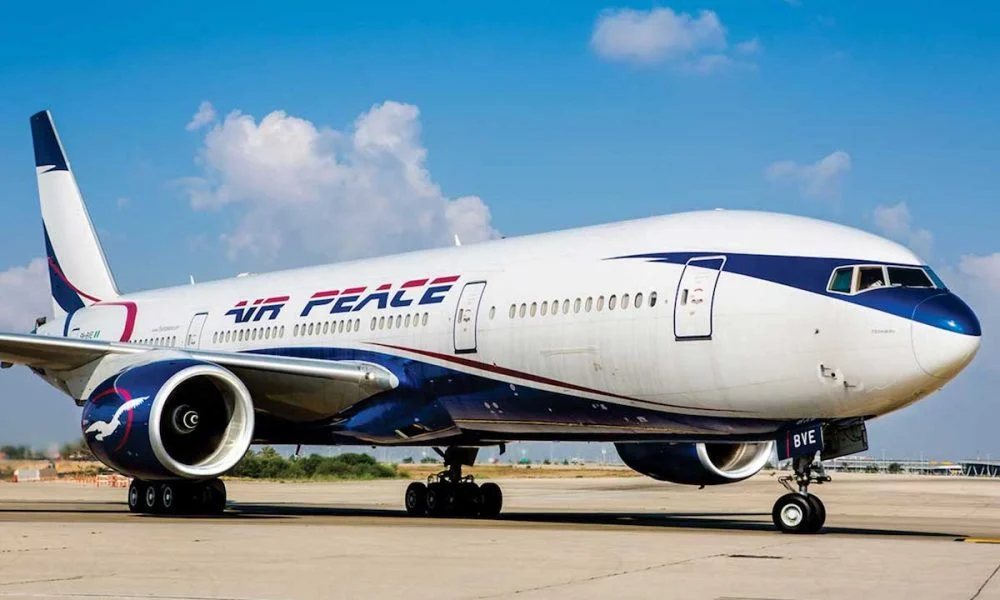

The Federal Government is considering sanctions against airlines over persistent delays and cancellations that have continued to disrupt domestic air travel in Nigeria.
The move follows data from the Nigerian Civil Aviation Authority (NCAA), which showed that 4,765 of the 7,961 flights scheduled for August 2026 were delayed.


The figure means nearly six out of every 10 scheduled domestic flights failed to operate on time during the month.
Air Peace and United Nigeria Airlines recorded some of the highest delay rates, with 71 per cent and 76 per cent of their flights respectively affected.
Speaking with DAILY POST, NCAA Director of Public Affairs and Consumer Protection, Michael Achimugu, said the regulator had begun taking steps to address the situation.

He said the NCAA had met with Air Peace, United Nigeria Airlines and Max Air over the delays and issued stern warnings to the affected airlines.
Achimugu also advised passengers to consider alternative carriers where possible.
“When one airline is continuously misbehaving, buy tickets on another airline and make your flight,” he said.
The development has renewed concerns about the reliability of domestic air travel, particularly as passengers continue to contend with high airfares.
An aviation industry expert, Capt. John Ojikutu, attributed the recurring delays and cancellations to weak enforcement of existing regulations and poor business planning by airlines.
Ojikutu, Chief Executive Officer of Centurion Aviation Security and Safety Consult, said regulations designed to protect passengers were already in place, but questioned the effectiveness of their enforcement.
“The regulation is there to protect the customer. What is the enforcement? That’s what you should be asking,” he said.
“Regulation is already there. What is the effectiveness of the enforcement on the airline? That is where the problem is,” he added.
He said passengers generally knew where to report violations and expected regulatory authorities to act when complaints were made.
“The most important part is that the customer themselves, they know they are right. They know whom to report to. If you report, then you expect the regulatory agency to take action on the airline,” Ojikutu said.
The aviation expert also recounted a personal experience in which he had to board an aircraft three times before another aircraft was eventually provided.
“We boarded three times and the aircraft could not go until another aircraft came from wherever,” he said.
Ojikutu argued that airlines also needed to match aircraft size and route frequency with actual passenger demand.
“You must have a business plan before you go there. How credible is your business plan, especially when you are going to NCAA?” he asked.
He questioned the viability of airlines operating several daily flights between Lagos and Abuja without sufficient passenger traffic to sustain such operations.
“You want to be running to Abuja three, four times in a day. Where is the passenger? How many passengers are you looking for? How many passengers are going to Abuja in a day?” he asked.
According to him, airlines should explore routes with adequate passenger demand instead of concentrating their operations on the Lagos-Abuja corridor.
Ojikutu also cited the former Nigerian Airways model, where larger aircraft served major routes while smaller aircraft connected regional destinations to major airports.
He said the approach could help distribute passenger traffic and reduce unhealthy competition on major routes.
“But now all these airlines, when they come in, they go and buy big aircraft. When you buy big aircraft that is going to carry about a hundred and something, and you do not have the passengers, you do not have 50 passengers to carry, you are going to ruin at the last,” he said.
He further called for airlines to establish operational bases outside Lagos and for airports to be categorised according to passenger traffic, with corresponding charges.
He suggested that routes linking cities such as Kaduna, Jos, Minna and Sokoto could feed passengers into major airports, rather than having airlines concentrate heavily on Lagos and Abuja.
Ojikutu also expressed concern over the short operating lifespan of some Nigerian airlines, which he linked partly to inadequate business planning.
“What is the life span of all these airlines? Their life span is very short,” he said.
He urged the NCAA to ensure that airlines present credible and sustainable business plans before commencing operations.
“And all these things are caused because there is no business plan. And the NCAA is not helping them to get their business plan correct,” Ojikutu said.
 We do everything possible to supply quality news and information to all our valuable readers day in, day out and we are committed to keep doing this.
Your kind donation will help our continuous research efforts.
-Advertisement-

-Want to get the news as it breaks?-