





The Federal Government has commenced a six-week review of Nigeria’s 2025 tax reforms to identify implementation gaps, clarify ambiguities and address unintended consequences that have emerged since the laws came into effect.
The review will examine key aspects of the tax regime, including Value Added Tax thresholds, withholding tax, capital gains treatment and multiple taxation, with recommendations expected to feed into the Finance Bill 2027.
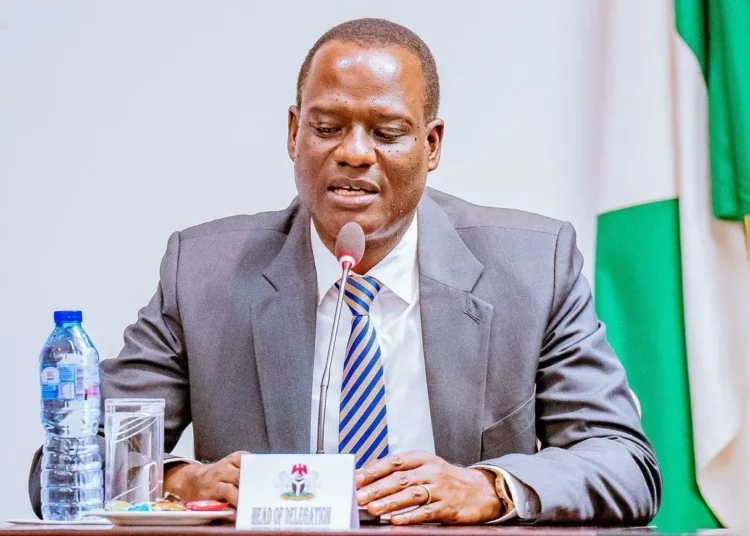
The Minister of Finance and Coordinating Minister of the Economy, Taiwo Oyedele, disclosed this on Thursday in Abuja while inaugurating the Technical Subcommittee on Fiscal Policy and Tax Reforms.


Oyedele, who chairs the Presidential Fiscal Policy and Tax Reforms Committee, said the implementation of the new tax laws had highlighted areas requiring clarification, refinement and further intervention.
“The real test begins when the law meets the economy, as businesses interpret it, administrators implement it, investors respond to it, and citizens experience it,” he said.
The Nigeria Tax Act 2025, Nigeria Tax Administration Act 2025, Nigeria Revenue Service (Establishment) Act 2025 and Joint Revenue Board (Establishment) Act 2025 became fully operational on January 1, 2026.

Oyedele said the government had moved from fundamental tax restructuring to a phase of continuous improvement, stressing that the review was not designed to overturn the 2025 reforms.
He said the objective was to retain the core principles of the reforms while responding to problems identified during implementation and changing economic conditions.
According to him, the Finance Bill 2027 should address areas where implementation had exposed ambiguities, unintended consequences and unnecessary compliance burdens while improving Nigeria’s investment environment and competitiveness.
The review will also cover broader fiscal issues, including public financial management, debt, transparency, capital markets and cross-border capital flows.
Oyedele said the government received 134 submissions from across the country following its request for public input, alongside additional submissions made in hard copy.
Among the preliminary issues raised by stakeholders were calls for clearer and simpler VAT thresholds, withholding tax rules and capital gains treatment.
Stakeholders also proposed stronger measures against multiple taxation, improved coordination among revenue authorities, greater digitalisation and data sharing to reduce repeated requests for information already available to government agencies.
Other recommendations included stronger taxpayer protections, quicker refunds, safeguards for small businesses and policies to improve investment and competitiveness in sectors such as mining, renewable energy, healthcare and capital markets.
Oyedele directed the subcommittee to consider the economic consequences of proposed changes, particularly their impact on low-income households, workers and businesses.
He also warned that overly complicated tax rules could increase compliance costs and create opportunities for arbitrary interpretation.
“Complexity is itself a tax; it raises compliance costs and creates room for discretion and arbitrage,” the minister said.
Beyond the Finance Bill 2027, the committee will review the Deduction of Tax at Source Regulations 2024 and prepare revised withholding tax regulations.
It will also review the Companies Income Tax (Significant Economic Presence) Order 2020 and develop an updated framework consistent with the new tax laws and international practices.
Oyedele said withholding tax should continue to serve as an advance-payment and compliance mechanism rather than becoming an additional cost to businesses.
He warned that withholding funds from companies for prolonged periods could be particularly costly in an economy where businesses already face high financing expenses.
The minister gave the subcommittee six weeks to complete its work and submit its recommendations.
The committee comprises representatives of relevant government institutions and business and professional bodies, including the Federal Ministry of Justice, Nigeria Revenue Service, Joint Revenue Board, Nigeria Customs Service, Central Bank of Nigeria, Debt Management Office, Budget Office of the Federation and Nigerian Investment Promotion Commission.
Other members include representatives of SMEDAN, the Manufacturers Association of Nigeria, Nigerian Economic Summit Group, Nigerian Bar Association, Association of National Accountants of Nigeria, Chartered Institute of Taxation of Nigeria and Institute of Chartered Accountants of Nigeria.
Representatives of NACCIMA and the major accounting firms Deloitte, EY, KPMG and PwC are also members.
The committee is chaired by the Permanent Secretary of the Federal Ministry of Finance, with the Chairman of the Tax Advisory Committee, Albert Folorunsho, serving as co-chair.
Folorunsho said the panel would seek technically sound and practical recommendations that respond to the realities facing taxpayers, businesses and government.
 We do everything possible to supply quality news and information to all our valuable readers day in, day out and we are committed to keep doing this.
Your kind donation will help our continuous research efforts.
-Advertisement-

-Want to get the news as it breaks?-