




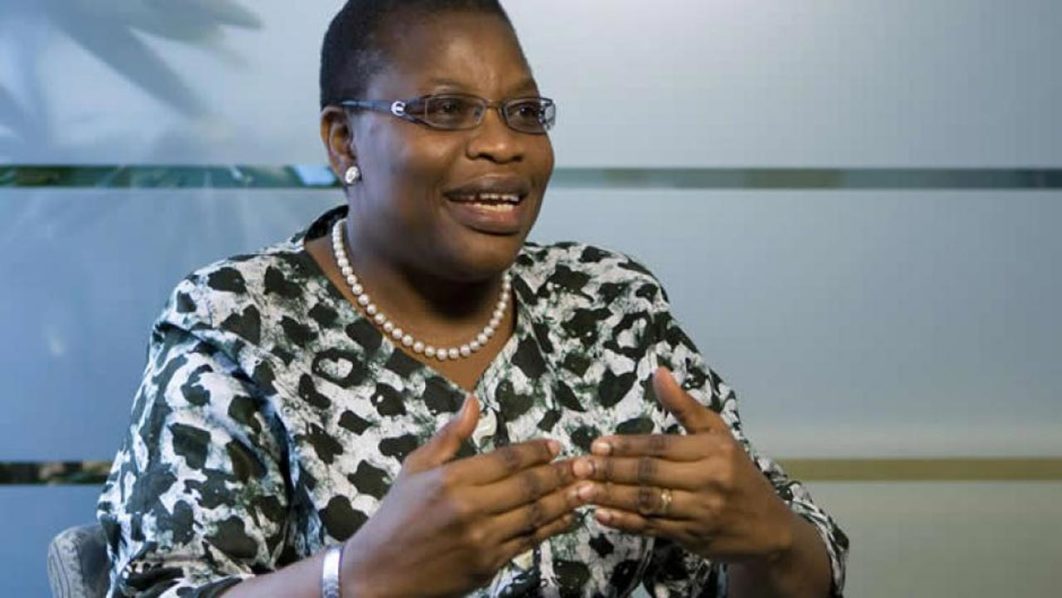

Former Minister of Education, Obiageli “Oby” Ezekwesili, has urged African governments to strengthen foundational learning, remove barriers to secondary education and enforce laws prohibiting child marriage to protect girls across the continent.
Ezekwesili, founder of Human Capital Africa (HCA), made the call in a statement issued on Sunday to mark the 2026 International Day of the Girl Child, warning that child marriage continues to undermine girls’ rights and Africa’s human capital development.
She cited UNICEF’s 2026 estimates, which indicate that approximately 650 million women and girls alive today were married before the age of 18, while more than 12 million girls are married annually worldwide.


According to the figures, sub-Saharan Africa has the highest prevalence of child marriage globally, at 31 per cent.
In Nigeria, she said, 23.6 million women and girls were married before turning 18, the highest number in West and Central Africa.
Ezekwesili highlighted the severity of the problem in Jigawa State, where 78 per cent of women aged 20 to 49 were reportedly first married before 18, while 63 per cent of women left school to marry.

She warned that the economic consequences of child marriage extend beyond the immediate impact on affected girls, citing a report by Columbia University that includes analysis by the Center for Global Development.
According to her, the analysis estimates that child marriage could result in annual losses of up to $175 billion through reduced productivity and increased health risks, with cumulative losses approaching $2.5 trillion by 2040.
She also expressed concern that declining foreign aid, weakening international commitment to women’s rights and rising conflicts could undermine efforts to reduce child marriage.
However, Ezekwesili said progress was achievable, noting that an estimated 68 million child marriages had been averted over the past 25 years through interventions including girls’ education, legal reforms and social protection.
She cited evidence suggesting that each additional year of secondary education reduces a girl’s likelihood of marrying before 18 by at least five percentage points.
In Niger, she said, the removal of direct costs associated with middle school for rural girls was linked to a 19-percentage-point reduction in the probability of marriage for each additional year of secondary education.
Ezekwesili argued that improving foundational literacy and numeracy must form part of efforts to prevent child marriage, warning that girls who struggle to read at an early age face a greater risk of falling behind academically and eventually leaving school.
She cited estimates indicating that 89 per cent of children in sub-Saharan Africa experience learning poverty, meaning they cannot read and understand a simple text by the age of 10.
“A girl cannot stay in secondary school if she never learned to read,” she said, stressing that access to schooling must be matched by actual learning outcomes.
The HCA founder called on African governments to make foundational learning a child-protection priority, ensure that every girl can read with comprehension by age 10, and adopt proven teaching approaches such as structured pedagogy and Teaching at the Right Level.
She also urged governments to remove school fees and other expenses, including the costs of uniforms and transportation, that prevent girls, particularly those in rural communities, from progressing to secondary education.
Ezekwesili further called for the enforcement of 18 as the minimum legal age of marriage in every state and community, with traditional and religious leaders involved in the effort.
She said African governments and philanthropists must increase domestic funding for girls’ education as international assistance declines.
She also advocated the publication of data tracking girls’ learning outcomes, transition to secondary school and child marriage rates to strengthen accountability.
Ezekwesili, who serves as the civil society representative on the steering committee of the African Union’s Decade of Accelerated Action for the Transformation of Education and Skills Development in Africa (2025–2034), said girls’ learning and school retention should be central to measuring the initiative’s success.
She added that the Columbia University report had set a target of reducing global child marriage prevalence from one in five girls to one in seven within five years.
“Africa can lead the way to that target, but only if we treat every girl’s classroom as the place where her childhood is protected,” she said.
Ezekwesili, a former vice-president for Africa at the World Bank, maintained that every girl should have the opportunity to learn and fulfil her potential rather than be forced into early marriage.
 We do everything possible to supply quality news and information to all our valuable readers day in, day out and we are committed to keep doing this.
Your kind donation will help our continuous research efforts.
-Advertisement-

-Want to get the news as it breaks?-