




The Crude Oil Refiners Association of Nigeria (CORAN) has backed the Federal Government’s plan to sell crude oil to domestic refineries through forward contracts but opposed a proposed petrol price ceiling without a clear plan for recovering excess costs.
CORAN’s spokesperson, Eche Idoko, said forward sales could provide refiners with more reliable feedstock supplies and reduce exposure to fluctuations in international oil prices.


However, he stressed that the arrangement must be transparent, commercially sustainable and accessible to both large and smaller refineries.
Speaking on the proposed N1,350-per-litre ceiling on ex-gantry or landing costs, Idoko questioned how the government arrived at the figure and who would bear the difference if refining costs exceeded the limit.
“How was that figure determined? Who bears the difference when production costs exceed the ceiling, and how will the shortfall be recovered?” he asked.

He warned that, without a clear recovery mechanism, the policy could reintroduce price regulation or subsidy through the back door.
The Federal Government had said it was negotiating the ceiling under a price-modulation arrangement intended to shield consumers from sharp fluctuations in crude oil prices and exchange rates. Under the proposal, refiners and importers would initially absorb costs above the limit and recover the shortfall when market conditions improved.
Finance Minister Taiwo Oyedele also announced plans for forward crude sales to domestic refineries, saying the measure could help shield pump prices from global market volatility as production increased and previously committed crude became available.
Idoko, however, questioned whether major industry groups had endorsed the arrangement and how it would be administered. He also called for safeguards to ensure smaller and modular refineries were not disadvantaged.
“I have consistently advocated affordable crude access for all domestic refineries, including modular refineries, not just the big operators,” he said, adding that the framework should be coordinated by the Nigerian Upstream Petroleum Regulatory Commission and the Nigerian Midstream and Downstream Petroleum Regulatory Authority.
The debate comes amid concerns over crude availability for domestic processing. Oyedele recently said Nigeria’s daily production of about 1.8 million barrels did not mean the Federal Government had an equivalent volume available for domestic allocation because of production-sharing contracts, joint ventures, production costs and royalties.
“The reality is that today we do not have up to 700,000 free crude to give anyone, including Dangote,” the minister said during an interview on Channels Television’s Politics Today.
Meanwhile, Petroleumprice.ng Chief Executive Officer Jeremiah Olatide welcomed the proposed forward sales, saying they could ease pressure on refiners and improve their bargaining power when negotiating crude prices.
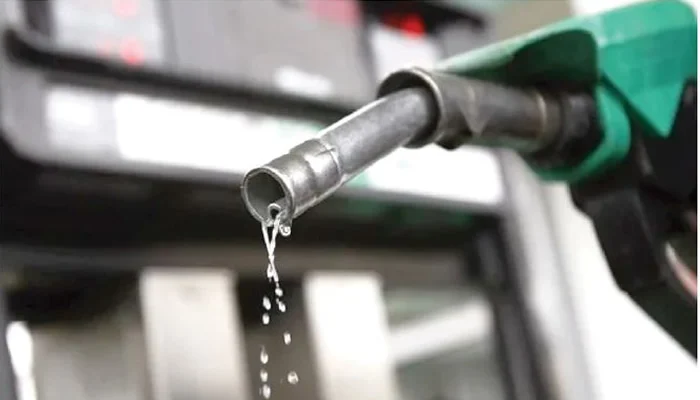
The concerns come as petrol prices rise across Abuja. A market survey cited by PUNCH showed MRS outlets increasing their pump price from N1,370 to N1,409 per litre, while Ranoil, AA Rano and Nipco sold the product at about N1,410 per litre.
The difference between the proposed N1,350 ceiling and prevailing pump prices also reflects the distinction between wholesale costs and retail prices, which include distribution expenses and retail margins.
 We do everything possible to supply quality news and information to all our valuable readers day in, day out and we are committed to keep doing this.
Your kind donation will help our continuous research efforts.
-Advertisement-

-Want to get the news as it breaks?-