





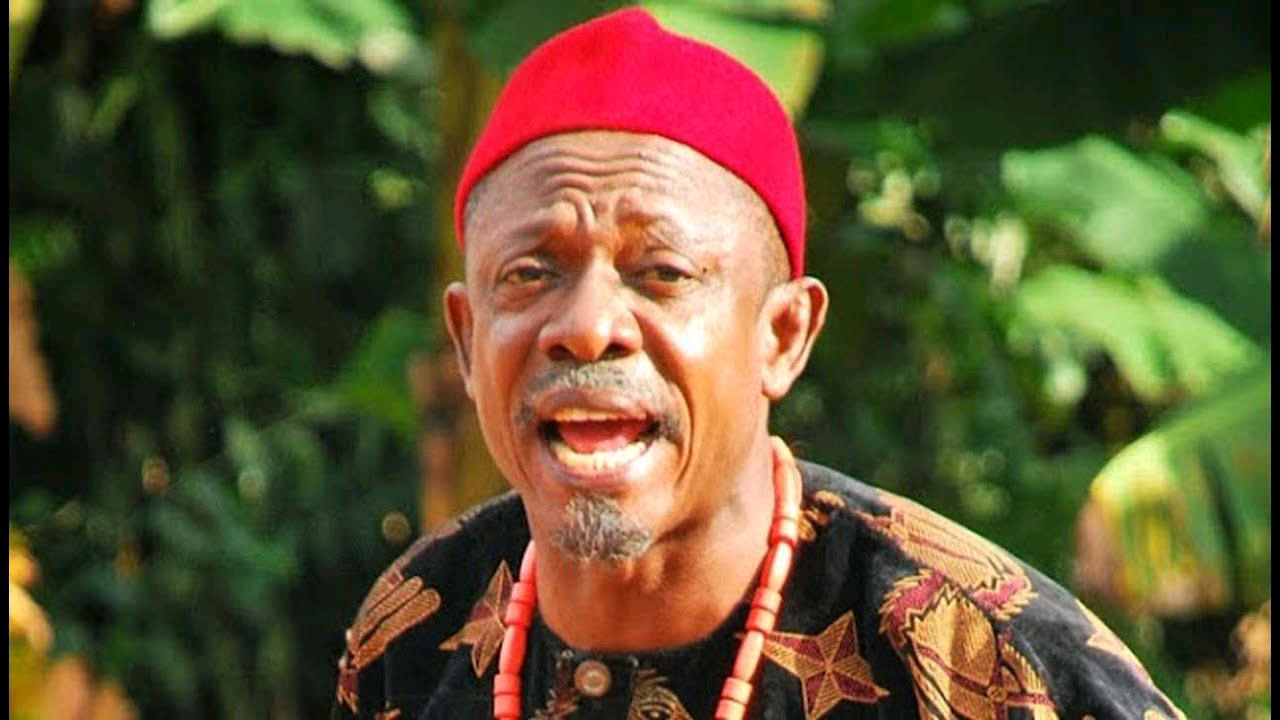

Veteran Nollywood actor Nkem Owoh, popularly known as Osuofia, has clarified his position on the origins of Nigeria’s film industry, insisting that Yoruba filmmakers pioneered home-video productions but did not start Nollywood.


Owoh made the clarification during an appearance on Curiosity Made Me Ask, a programme hosted by comedian and content creator Adebayo Abidemi, popularly known as Bae U. The interview was published on the host’s YouTube channel on Saturday.
The actor was responding to a question about reports that he had claimed Yoruba people, rather than the Igbo, founded Nollywood.

Rejecting the interpretation, Owoh explained that the name Nollywood emerged much later, after Nigerian filmmakers had already begun producing movies.
“First of all, you have given me this wrong accusation that I said, Yoruba started Nollywood. No. Yoruba started this film on… when did Nollywood come out? When we started the thing, there was no Nollywood as a name,” he said.
He recalled that filmmakers from different backgrounds exchanged ideas before the industry eventually adopted the name Nollywood.
However, Owoh maintained that Yoruba filmmakers played a significant role in popularising home-video productions in Nigeria, pointing to the works of late theatre and film pioneer Hubert Ogunde and veteran actor Adebayo Papa.
“So, Yoruba started the thing. They made the thing very popular home video and all that. Yes, they did. And I’ve said it several. Okay. Ogunde and Adebayo Papa. These are the people I love to watch their thing,” he said.
When the interviewer jokingly suggested that Ogunde was Igbo, Owoh disagreed, insisting that the late filmmaker was Yoruba.
“Ogunde is not Igbo. I’m telling you that Yoruba started it. When Ogunde was out, I don’t think there was any Igbo man who was that popular in that,” he added.
He further emphasised the distinction between the history of home-video productions and the emergence of Nollywood, stating: “The Yoruba did not start Nollywood. They started Home video.”
Historical roots of the debate
The debate over Nollywood’s origins has persisted for years, with filmmakers and industry stakeholders highlighting the contributions of different ethnic groups to Nigerian cinema.
Yoruba filmmaking has historical roots in travelling theatre groups led by figures such as Hubert Ogunde and Duro Ladipo. Their stage productions later evolved into film and video works, helping establish a strong tradition of Yoruba-language cinema.
However, the emergence of Nigeria’s modern commercial home-video industry is widely associated with the 1992 Igbo-language film Living in Bondage, produced by Kenneth Nnebue.
The film helped popularise the direct-to-video format and became a major milestone in the development of the industry now internationally known as Nollywood.
 We do everything possible to supply quality news and information to all our valuable readers day in, day out and we are committed to keep doing this.
Your kind donation will help our continuous research efforts.
-Advertisement-

-Want to get the news as it breaks?-