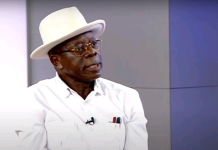






Minister of industry, trade and investment, Otunba Richard Adeniyi has said the federal government expects more from agencies such as the Industrial Training Fund (ITF) to grow the national economy and resolve other challenges confronting the country.
Adeniyi said of great concern to the federal government is the need to quickly address the rising tide of unemployment and poverty in the country, adding that it is in this regard that the government recently unveiled several initiatives including the 2021-2025 National Development Plan (NDP).
He made the disclosure at the end of the year performance review for 2021 with the theme: “Actualising the ITF Mandate in a VUCA world.”
READ ALSO: Fuel Scarcity: Buhari Should Resign, Hand Over To Capable Person – Primate Ayodele
The minister said the government believes that for these programmes to be achieved, organisations like the ITF have a vital role to play, especially in the area of human capacity development for Nigerians.


He urged the management of the fund to continue with the tempo of their activities even as they reach out to other agencies of government especially those with similar mandates, so that together, they can resolve the problems facing the country.
Meanwhile, the director general and chief executive officer (CEO) of the Industrial Training Fund (ITF) Mr Joseph Ari in his opening address disclosed that over N1.195billion was paid last year as students industrial works experience scheme as SIWES students’ supervisory allowances.
According to the DG a breakdown of this figure shows that over N961 million was paid to 64, 124 university students while over N162 million was paid to 16,292 Polytechnic students and the sum of over N71million paid to 7,121 students of colleges of education in the country.

He assured of the fund’s continuous commitment to promote payment of students and supervisors’ allowances as soon as money is received by the fund from the federal government.
Ari also commended the National Assembly for the bold step taken to commence legislative processes for the inclusion of Technical and Vocational Education Training (TVET) in Nigeria school curricula.
According to him, this step is in the right direction as it will expose Nigerians to hands-on skills at an early age and eliminate existing prejudices against TVET and the perception of technical skills as a preserve for some classes of the society.
 We do everything possible to supply quality news and information to all our valuable readers day in, day out and we are committed to keep doing this.
Your kind donation will help our continuous research efforts.
-Advertisement-

-Want to get the news as it breaks?-