



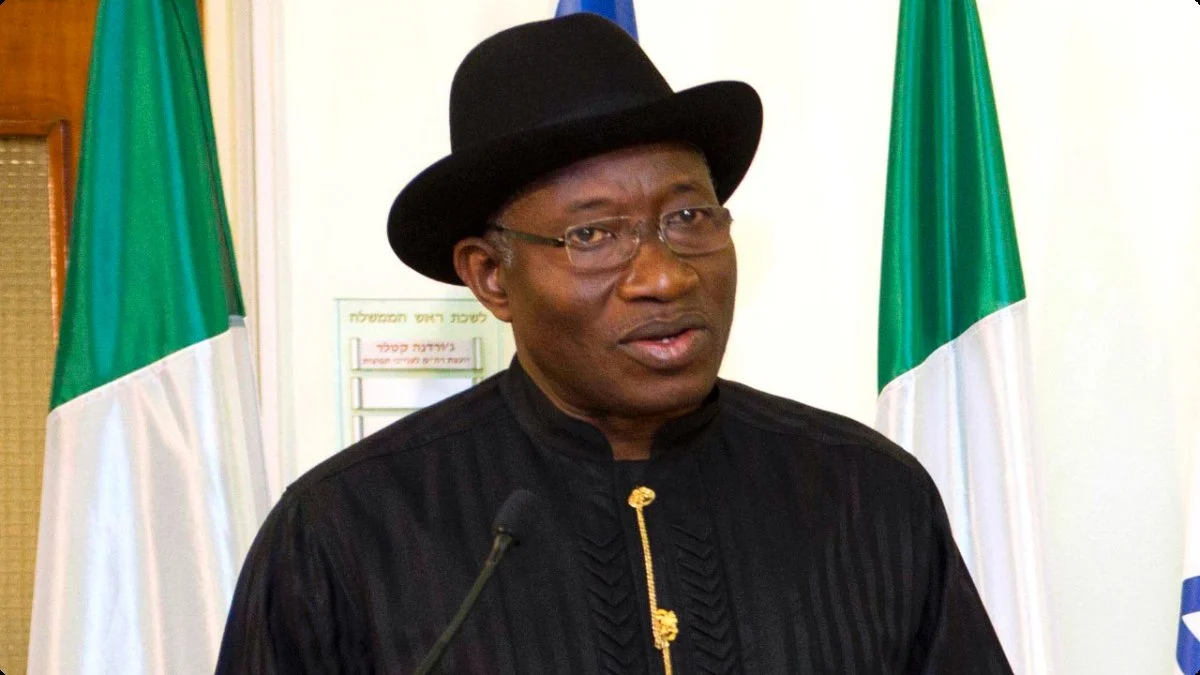

Former President Goodluck Jonathan has raised fresh concerns over Nigeria’s democratic future, warning that the 2027 general elections could face serious credibility problems if post-election litigation continues to dominate the electoral process.
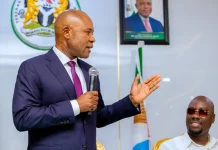
Jonathan spoke on Wednesday in Abuja during the 2026 Law Week organised by the Nigerian Bar Association, where he called for urgent reforms to protect the country’s democracy and restore public confidence in elections.
The former president lamented that election disputes in Nigeria have increasingly shifted from the ballot box to the courtroom, warning that courts were gradually becoming alternative centres for deciding political power.


According to him, the growing culture of candidates heading to court after elections weakens democratic values and reduces the importance of voters’ decisions.
“In Nigeria today, going to court after losing an election has become the norm,” Jonathan said, stressing that flawed elections should lead to fresh polls instead of judicial pronouncements declaring winners.
Jonathan argued that the judiciary should not replace the electorate in determining political leadership, insisting that credible elections remain the only legitimate route to power in a democracy.

He also questioned the structure of Nigeria’s electoral adjudication system, especially the multiple appeal processes attached to different political offices, saying the arrangement raises concerns over consistency and fairness.
The former president further expressed worry over declining voter turnout in Nigeria, describing participation levels as among the lowest in Africa despite the country’s huge population.
He urged the Independent National Electoral Commission to investigate deeper causes of voter apathy beyond public frustration.
Jonathan also condemned the growing normalisation of political violence and thuggery, warning that criminal elements were increasingly being empowered within the political space.
“Thuggery has almost become a profession in Nigeria,” he warned, adding that such a trend poses serious threats to democratic stability.
The former president proposed comprehensive electoral reforms, including collaboration between the NBA and the National Assembly to review electoral laws and establish a Constitutional Court dedicated solely to election-related matters.
Former Attorney-General of the Federation Mohammed Adoke also warned that Nigeria’s democracy was approaching a dangerous crossroads due to rising violence, weak party structures and excessive judicial intervention in politics.
Adoke noted that voter turnout during the 2023 general elections dropped to 27 per cent, the lowest since Nigeria returned to democratic rule in 1999.
NBA President Afam Osigwe similarly cautioned against politicians gaining power through manipulation and violence rather than transparent elections.
He praised Jonathan’s decision to concede defeat in the 2015 presidential election, describing it as one of the most significant democratic moments in Nigeria’s history.
 We do everything possible to supply quality news and information to all our valuable readers day in, day out and we are committed to keep doing this.
Your kind donation will help our continuous research efforts.
-Advertisement-

-Want to get the news as it breaks?-