




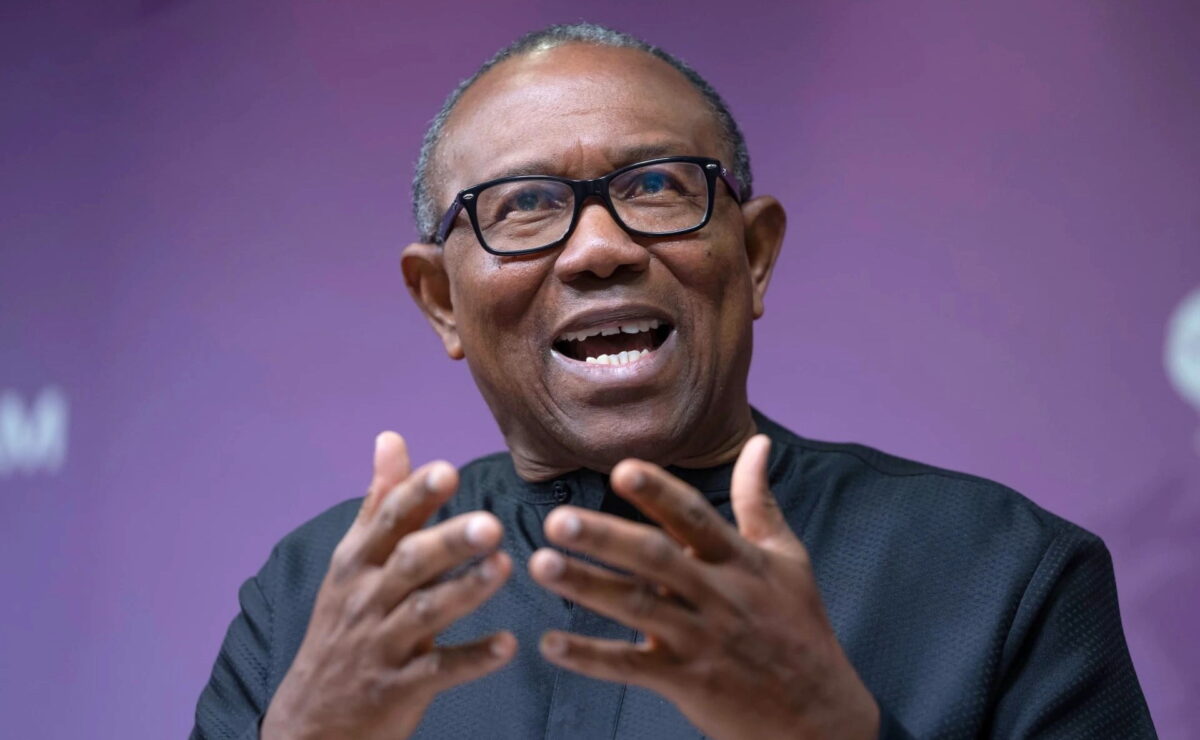

The presidential ambition of former Anambra State Governor, Peter Obi, ahead of the 2027 general elections is facing challenges following a wave of defections from the Nigeria Democratic Congress (NDC) and complaints over inadequate funding for the party’s activities.
Several prominent members, including political officeholders, party candidates and loyalists of the former Labour Party presidential candidate, have left the NDC for rival political parties in recent weeks.


The development has raised concerns about the party’s ability to sustain its political structures and mobilise supporters, particularly in northern Nigeria.
The situation has been compounded by complaints from some state party chairmen who accused the national leadership of failing to provide adequate financial support for grassroots mobilisation, consultations and campaign activities.
Wave of defections

One of the recent departures involved the NDC Deputy Governorship Candidate in Ebonyi State, Uka Ndubuisi, who defected to the All Progressives Congress on Thursday during the party’s governorship campaign rally.
Ndubuisi, who also served as the NDC National Youth Publicity Secretary, announced his decision to move his political structure in the state into the APC.
His defection followed that of the NDC governorship candidate in Bauchi State, Ibrahim Kashim, who formally joined the APC on November 16 and urged his supporters to follow him.
Kashim’s departure has raised concerns about the NDC’s political presence in the North, where Obi is expected to depend on support from the Kwankwasiyya movement and other opposition structures.
Another prominent departure was that of Yinusa Tanko, a staunch Obi loyalist who resigned as National Coordinator of the Obidient Movement and Political Adviser (North) to the former governor on October 30.
Tanko was subsequently unveiled as National Coordinator of the Social Democratic Party Presidential Campaign Council during its inauguration in Abuja on November 11.
Similarly, the NDC’s former Deputy National Publicity Secretary, Abdulmumin Abdulsalami, resigned around November 12, citing alleged internal injustice, exclusion and frustration with influential party officials.
He joined the African Democratic Congress about two weeks later.
The party also lost members in Enugu State in September when a group claiming to comprise more than 6,000 members defected to the Peoples Democratic Party.
The group, led by Chief Godwin Obasi, reportedly comprised members from all 260 wards and 17 local government areas of the state.
In Kano State, the NDC Vice-Chairman in Bichi Local Government Area, Haladu Sa’adu, alongside five ward chairmen, including the party treasurer, Mannir Umar, ward secretaries, women and youth leaders, and other members of the Kwankwasiyya movement, also defected to the APC on November 16.
The party was also reported to have lost its only northern senator, Rufai Hanga, to the APC.
Funding challenges threaten mobilisation
Beyond the defections, some NDC leaders have expressed concerns about the party’s financial capacity to sustain its political activities ahead of the elections.
The NDC Chairman in Bauchi State, Abdullahi Bisau, said the absence of financial support from the national leadership had affected grassroots mobilisation, consultations and campaign preparations.
Speaking with Sunday PUNCH, Bisau said party members remained willing to support Obi and his expected political ally, Rabiu Kwankwaso, but lacked the resources to reach voters across the state.
He expressed confidence that the party could secure a significant share of the votes in Bauchi if adequate funding was provided.
Similarly, the acting NDC Chairman in Oyo State, Akeem Aderogba, disclosed that members had been financing party activities with personal resources because the national leadership had yet to release campaign funds.
He, however, said the party had presented its financial budget and was expecting the funds.
Party leaders dismiss concerns
Despite the defections and funding complaints, some NDC leaders have dismissed suggestions that the developments would undermine Obi’s presidential ambition.
The party’s National Vice-Chairman for the North-Central, Barnabas Ejisi, attributed the departures to personal interests, insisting that the Kwankwasiyya and Obidient movements remained strong enough to support the presidential campaign.
He argued that the two movements would complement each other across northern, southern and Middle Belt states.
According to him, the party’s strategy does not depend on winning every state but on securing the constitutionally required spread of votes.
Similarly, the NDC National Vice-Chairman for the South-East, Teddy Obe, expressed confidence that Obi would secure at least 25 per cent of votes across the states.
An NDC chieftain in Osun State and House of Representatives candidate for Ijesa South, Gideon Aloba, also maintained that the defections would not affect Obi’s support base.
He described the Obidient movement as an idea-driven grassroots platform, arguing that its supporters were motivated by their expectations for Nigeria rather than personal political benefits.
Aloba said the departure of some individuals would not change the movement’s commitment to its objectives.
 We do everything possible to supply quality news and information to all our valuable readers day in, day out and we are committed to keep doing this.
Your kind donation will help our continuous research efforts.
-Advertisement-

-Want to get the news as it breaks?-