





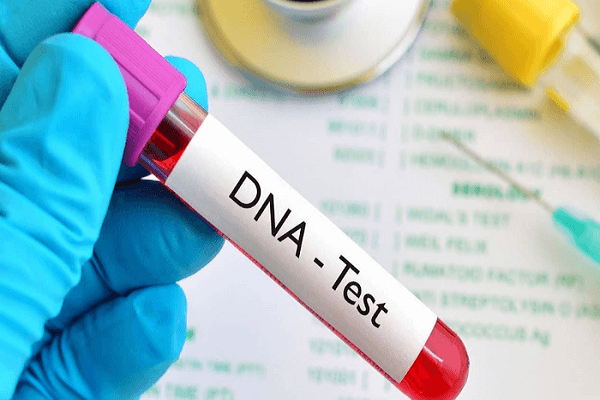

A new report on paternity testing in Nigeria has renewed conversations about trust, fatherhood and the growing use of DNA technology to settle deeply personal family questions.
Data from Smart DNA Nigeria showed that 23.6 per cent of paternity tests recorded by the laboratory in the 2025/2026 reporting period produced negative results, meaning the men tested were not the biological fathers of the children involved.
Although the figure remains significant, it represents a slight decline from 24 per cent recorded in the previous reporting period and 26.1 per cent in 2023.


The latest findings, however, do not establish that 23.6 per cent of Nigerian fathers are unknowingly raising children who are not biologically theirs.
Rather, the figure reflects the outcome among people who approached the laboratory for testing, many of whom may already have had concerns about paternity.
Smart DNA’s Operations Manager, Elizabeth Digia, said the people seeking such tests were often driven by a desire to resolve uncertainties that had become difficult to live with.

“Most of the men and women who come to us are not coming because anyone told them to. They come because they cannot live with the question. That is a deeply human experience, and it deserves to be treated with dignity — not sensationalism,” she said.
The data further showed that men accounted for 78.6 per cent of recorded first contacts for paternity testing, compared with 15.2 per cent for women.
Men aged 41 and above constituted the largest age group among classified male records, accounting for 48 per cent, while 59.5 per cent of those tested were aged five or younger.
The report also highlighted a notable pattern involving firstborn children.
Boys accounted for 56.1 per cent of negative firstborn outcomes, although this represented a decline from approximately 64.4 per cent in the previous reporting period.
The finding could carry particular social significance in Nigeria, where the first male child is traditionally associated with family lineage, inheritance and continuity.
Beyond the laboratory result, paternity disputes can therefore have consequences for marriages, family relationships, inheritance claims and the emotional wellbeing of children caught in conflicts between adults.
Experts have consequently urged men who receive unexpected negative paternity results to approach the situation with caution and avoid directing anger or blame at the child.
A child has no responsibility for the circumstances surrounding his or her birth, and the revelation of biological parentage can create significant emotional consequences if handled recklessly.
The report also showed a shift in the reasons Nigerians seek DNA testing.
Immigration-related DNA tests fell from 13.1 per cent to 9.7 per cent during the latest reporting period, while peace-of-mind tests increased from 83.7 per cent to 87 per cent.
The figures suggest that DNA testing is increasingly being used by Nigerians as a private means of resolving uncertainty rather than solely for legal, immigration or official purposes.
However, the most important qualification surrounding the report is its limited scope.
The 23.6 per cent negative-result figure cannot scientifically be presented as the rate of non-paternity among Nigerian men generally.
Smart DNA’s clients are self-selecting. People who have no doubts about their children’s biological parentage are far less likely to seek a paternity test than those already dealing with suspicion or uncertainty.
Consequently, the laboratory’s figures represent the proportion of negative results among its clients and not a random sample of Nigerian families.
Professor Femi Adebola of the Federal University of Technology, Akure, similarly cautioned against applying data from a single testing centre to the entire Nigerian population, noting that the characteristics of people seeking such services can differ considerably from those of the wider population.
The distinction is crucial because presenting the laboratory’s 23.6 per cent figure as a national rate could create a misleading picture of Nigerian families and fuel unnecessary suspicion.
Still, the steady demand for paternity testing points to a broader social issue: the growing willingness of Nigerians to use scientific evidence to resolve questions that were once handled largely through family discussions, personal assumptions or traditional methods.
As DNA technology becomes more accessible, its role in family disputes is likely to expand. But so too will the need for responsible counselling, privacy and sensitivity when scientific findings alter people’s understanding of their families.
For the men involved, a DNA result may provide certainty. For families, however, what follows that certainty can be far more complicated.
 We do everything possible to supply quality news and information to all our valuable readers day in, day out and we are committed to keep doing this.
Your kind donation will help our continuous research efforts.
-Advertisement-

-Want to get the news as it breaks?-