
The African Democratic Congress (ADC)-led opposition coalition is facing mounting concerns over its preparedness for the 2027 general elections as its lingering leadership dispute heads to the Supreme Court, with political analysts warning that the prolonged legal battle could erode the alliance’s momentum long before voters cast their ballots.
Rather than projecting itself as a credible alternative to the ruling All Progressives Congress (APC), the coalition has remained consumed by internal litigation over party leadership, congresses and constitutional interpretation, raising fears that valuable campaign time is slipping away.
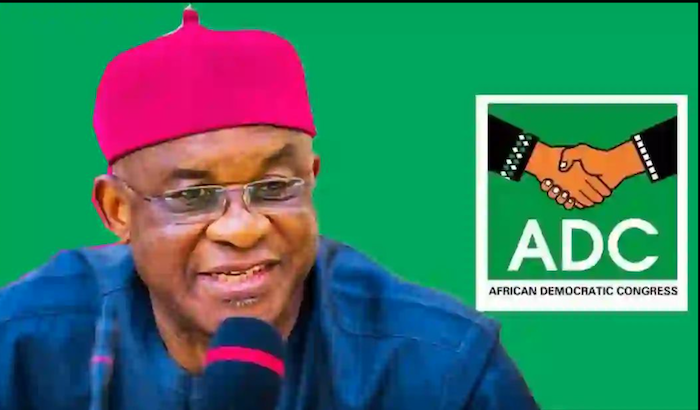
The latest twist came after the Court of Appeal, in a split two-to-one judgment, upheld an earlier Federal High Court ruling restraining the Independent National Electoral Commission (INEC) from recognising state congresses conducted by committees appointed by the National Working Committee (NWC) led by former Senate President David Mark.


The appellate court ruled that, under the ADC constitution, only elected state executive committees possess the constitutional authority to organise state congresses. It also declared the congresses and subsequent national convention organised under the Mark-led leadership invalid, holding that they allegedly violated an existing court order.
Unwilling to accept the verdict, the David Mark faction has approached the Supreme Court, insisting the judgment neither removed its leadership nor invalidated candidates already submitted to INEC.
Although the legal contest is expected to determine which faction legitimately controls the party, observers argue that the political consequences may outlast the courtroom proceedings.

Speaking on The Morning Show on Arise Television, constitutional lawyer Liborous Oshoma said the Supreme Court would primarily determine whether the caretaker committee appointed by the Mark-led leadership lawfully conducted the disputed congresses and primaries.
“They must present the facts showing that the caretaker committee (appointed by Mark-led NWC) was subsequently suspended and did not conduct the congresses or primaries,” Oshoma stated.
According to him, the burden now lies with the ADC to establish that recognised party organs, rather than the caretaker committee, conducted the disputed exercises.
He warned that failure to do so could have wider implications beyond the party’s state structures.
“Yes, the presidential ticket is threatened by this court judgment… The truth will be laid bare, but time might not be on their side,” he cautioned.
Political analysts note that while the David Mark-led NWC currently enjoys INEC recognition for candidates already uploaded to the commission’s portal—including the reported presidential ticket of Atiku Abubakar and Rotimi Amaechi as well as numerous legislative candidates—the unresolved leadership tussle continues to cast uncertainty over the coalition’s organisational stability.
The competing claims have also created a difficult scenario. Should the Supreme Court uphold the Appeal Court judgment, the faction eventually recognised as controlling the party structure may still have to contend with candidates already submitted by a rival leadership. Conversely, if the apex court overturns the ruling, the Mark-led coalition could still face the challenge of rebuilding trust after months of internal divisions.
Beyond the legal arguments, observers say the prolonged dispute risks distracting the opposition from articulating policies and mobilising voters ahead of the next general election.
Although opposition politicians have repeatedly alleged that the APC benefits politically whenever rival parties become trapped in lengthy court battles, no evidence has been presented to establish that either the judiciary or INEC is acting on behalf of the ruling party.
Nevertheless, analysts argue that extended litigation inevitably drains party resources, deepens internal divisions, discourages supporters and donors, and leaves voters uncertain about the party’s stability.
Nigeria’s political history offers similar examples. The Peoples Democratic Party’s prolonged Sheriff-Makarfi leadership crisis before the 2019 elections weakened its preparations, while the APC’s failure to conduct valid primaries in Zamfara ultimately cost the party electoral victories after Supreme Court intervention.
Political observers say the ADC now faces three possible outcomes. The Supreme Court could affirm the Appeal Court judgment, compelling another round of negotiations over party leadership. It could overturn the ruling and restore legal certainty to the David Mark-led NWC. A third possibility—a delayed judgment close to electoral deadlines—could prove even more damaging by leaving whichever faction prevails with insufficient time to unite the party before the 2027 polls.
For many analysts, the dispute has evolved beyond a legal contest into a broader test of whether Nigeria’s opposition can convince voters it is prepared to govern while remaining locked in a prolonged struggle over its own internal structures.
 We do everything possible to supply quality news and information to all our valuable readers day in, day out and we are committed to keep doing this.
Your kind donation will help our continuous research efforts.
-Advertisement-

-Want to get the news as it breaks?-