

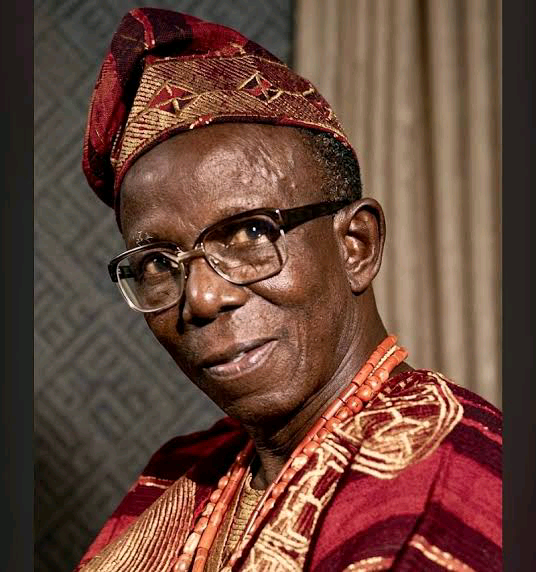
The estate of late High Chief Gabriel Akin-Deko, a former minister in the old Western Region, is seeking a financial settlement over a decades-old dispute concerning its reported 30 per cent shareholding in Solel Boneh Nigeria Limited (SBN), a construction company involved in infrastructure development.
The estate alleges that the company’s assets, contracts, equipment and goodwill were transferred to Reynolds Construction Company (Nigeria) Limited (RCC), a development it claims reduced the value of its investment and raised questions about the protection of minority shareholders.


The dispute, filed at the Federal High Court in Abuja in May 2022 under Suit No. FHC/ABJ/PET/38/2022, involves RCC, other companies associated with the Solel Boneh group, including Shikun & Binui and SBI International Holdings AG, as well as Israeli business figures Shari Arison and Naty Saidoff.
The court has approved a referral of the matter to alternative dispute resolution (ADR), with an initial meeting involving the parties and a mediator expected to take place.
The estate, represented by Sholias LP, is seeking an agreement under which its shares would be purchased at a fair value. Several respondents are represented by Akin Onigbinde, SAN, Chambers.

The allegations have not been established as findings of the court, while the circumstances surrounding the disputed assets and the respondents’ positions remain subject to clarification.
### Dispute over corporate identities
A key issue raised by the estate concerns the historical relationship between SBN and RCC, which it maintains developed along separate corporate paths.
The petitioners have also questioned the existence of two active corporate registrations bearing the name Reynolds Construction Company and are seeking clarification on their respective identities and roles in the alleged transfer or commingling of assets.
They contend that establishing the identities of the companies involved is necessary to determine how the assets were managed, where ownership rested and what obligations, if any, arose towards SBN’s shareholders.
SBN traces its origins to 1956, when the government of the former Western Region, led by Chief Obafemi Awolowo, and Israeli interests established Nigersol Construction Company through their respective representative organisations.
The company participated in infrastructure and industrial development in the region before political changes following the 1966 military takeover contributed to subsequent corporate restructuring.
Solel Boneh Nigeria Limited was established in 1969 by Solel Boneh Overseas and Harbour Works, with its operations based in Ibadan.
Akin-Deko, a British-trained building contractor who later entered politics, became the Nigerian partner. The estate says he subsequently acquired a 30 per cent shareholding against the background of Nigeria’s indigenisation policies in the 1970s.
RCC, meanwhile, had a separate commercial history associated with a road contract awarded in the late 1960s to the American consortium Reynolds, Brezina and Brown for the Calabar–Ikom Road project.
Its operations later maintained a headquarters in Trans-Ekulu, Enugu, under a board that included Chief Samuel Fadahunsi.
The estate maintains that these historical distinctions are relevant to determining whether assets belonging to SBN were subsequently transferred to, or placed under the control of, RCC.
Estate alleges loss of investment value
The petition centres on developments following Akin-Deko’s death in 1987.
According to the estate’s claims, changes in the ownership and structure of the wider Solel Boneh group during the 1980s and 1990s coincided with the alleged transfer, use or control of SBN’s assets by RCC.
The estate argues that the developments diminished the value of its investment without adequate consideration for its shareholder interests or the requirements of applicable Nigerian law.
The assets identified in the dispute reportedly include business contracts, equipment, other corporate property and goodwill, which can influence a construction company’s commercial value and capacity to generate revenue.
However, the precise nature of the transactions, their legal basis and the extent of any resulting financial loss remain issues requiring clarification through mediation or, if necessary, further judicial proceedings.
Mediation offers route to resolution
The ADR referral creates an opportunity for the parties to explore a negotiated settlement rather than continue with potentially prolonged litigation.
For the Akin-Deko Estate, the immediate objective is to secure a financial arrangement that reflects the fair value of its reported shareholding in SBN.
The dispute also raises broader corporate governance questions about the protection of minority investors, the preservation of company records and the treatment of shareholder interests during mergers, restructuring or changes in corporate ownership.
A settlement could provide a basis for resolving the estate’s claims, although its terms would depend on negotiations and the parties’ respective positions.
If mediation fails, the dispute could return to court for further proceedings.
The eventual outcome will depend on the evidence presented, the parties’ engagement and any agreement reached. Until then, the allegations concerning the disputed assets and the responsibilities of the companies and individuals named in the case remain unresolved.
 We do everything possible to supply quality news and information to all our valuable readers day in, day out and we are committed to keep doing this.
Your kind donation will help our continuous research efforts.
-Advertisement-

-Want to get the news as it breaks?-