



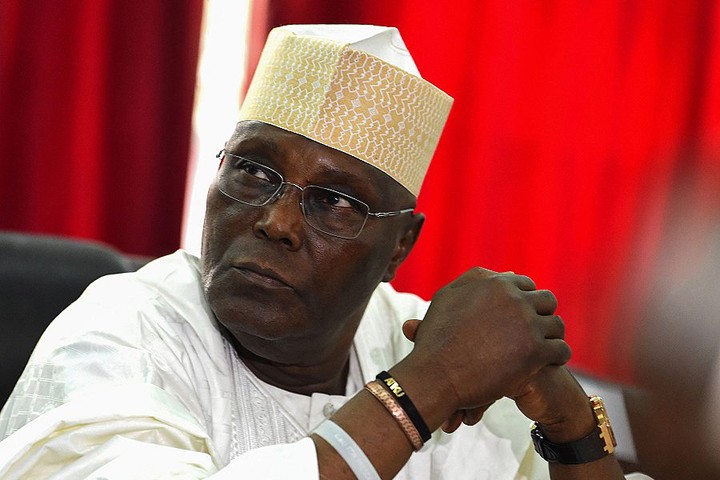

The presidential candidate of the African Democratic Congress (ADC), Atiku Abubakar, has come under renewed scrutiny after contradictory statements from his media aides created uncertainty over his position on fuel subsidy.
The former Vice President’s position has shifted in recent days, with statements from his spokespersons appearing to offer different interpretations of how an Atiku administration would address the removal of petrol subsidy.
At the centre of the controversy is whether Atiku intends to restore fuel subsidy if elected in 2027 or introduce a temporary intervention aimed at reducing the cost of petroleum products while supporting domestic refining.


Conflicting Messages From Atiku’s Aides
Atiku initially called for the reversal of the fuel subsidy removal, arguing that Nigerians had not adequately benefited from the revenues freed by the policy.
He also alleged that funds previously spent on subsidy had not been properly accounted for under the President Bola Ahmed Tinubu administration.
However, his media aide, Paul Ibe, subsequently said Atiku would restore subsidy if elected and later phase it out.

Ibe explained that the proposed arrangement would differ from the former subsidy regime and would instead be linked to domestic crude production and refining.
According to him, locally produced crude could be supplied to domestic refiners at discounted rates, enabling them to produce petrol and diesel more cheaply and ultimately reduce pump prices.
He argued that the temporary intervention would give households and businesses time to recover from the economic effects of the subsidy removal.
Ibe likened the proposal to allowing an economy to recover before introducing another major adjustment.
He said the policy would be temporary and designed to stimulate economic activity and improve productivity.
Atiku’s Camp Rejects ‘Return To Old Subsidy Regime’
But another of Atiku’s aides, Phrank Shaibu, later rejected the suggestion that the former Vice President planned to restore the old import-based subsidy system and subsequently remove it.
Shaibu described Ibe’s characterization of the policy as “unauthorised, imprecise and materially misleading”.
He said Atiku’s actual proposal was for a targeted, capped, transparently budgeted and independently audited intervention to support domestic refining and petroleum production.
The intervention, according to Shaibu, would be tied to measurable performance conditions rather than a fixed date for withdrawal.
He said the objective would be to reduce production costs, expand domestic refining, increase competition and improve the supply of petroleum products.
The aide maintained that government support would gradually decline once the domestic petroleum market became capable of delivering affordable products without continued intervention.
Debate Follows Tinubu’s Subsidy Removal
President Tinubu removed petrol subsidy shortly after assuming office on May 29, 2023, as part of a broader economic reform programme that also included the unification of Nigeria’s multiple foreign-exchange windows.
The reforms have remained politically contentious because of their impact on fuel prices, transportation costs, inflation and household purchasing power.
The Nation reported that Finance Minister Taiwo Oyedele said N15.8 trillion was freed and accrued to the Federation Account between June 2023 and December 2025 as a result of the cessation of subsidy payments.
Of the amount, the Federal Government reportedly received N5.4 trillion, while states and local governments received N10.4 trillion.
Atiku has questioned how the savings from subsidy removal have been utilised, arguing that the resources should have been channelled into areas such as security, education and economic opportunities.
Atiku Calls For Targeted Intervention
In his revised proposal, Atiku called for a temporary mechanism that would be independently audited and transparently funded.
He proposed accelerated domestic refining, increased competition, improved mass transportation and measures aimed at restoring household purchasing power.
His position is that government intervention should not permanently subsidise inefficiency but should instead create the conditions necessary for a competitive domestic petroleum industry.
The former Vice President has also argued that subsidy removal should have been implemented in phases to allow Nigerians and businesses to adjust to the consequences of the policy.
The conflicting explanations from his aides have, however, raised questions about the precise form an Atiku administration’s fuel policy would take if he wins the 2027 presidential election.
 We do everything possible to supply quality news and information to all our valuable readers day in, day out and we are committed to keep doing this.
Your kind donation will help our continuous research efforts.
-Advertisement-

-Want to get the news as it breaks?-