




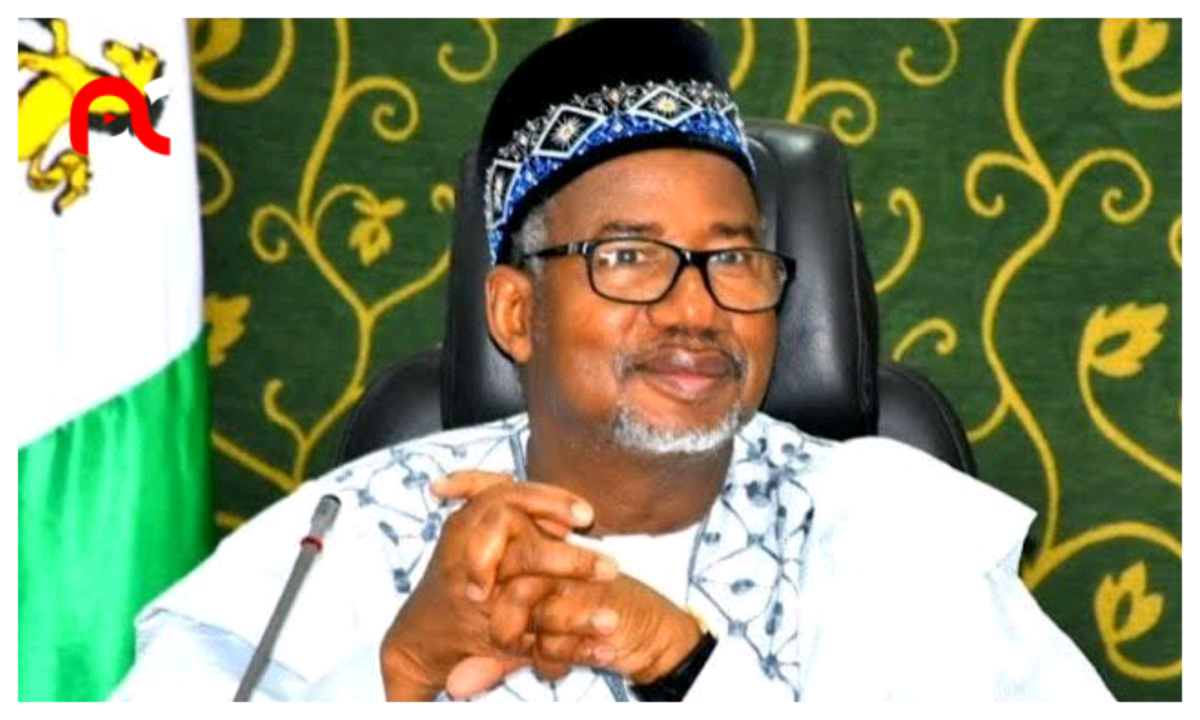

Bauchi State Governor, Bala Mohammed, faces a major political test ahead of the 2027 general election as he seeks to secure the governorship for his preferred candidate, Dr Yakubu Adamu, and return to the Senate after completing his tenure.
The two ambitions are unfolding against a shifting political landscape, with the All Progressives Congress (APC), Peoples Redemption Party (PRP) and African Democratic Congress (ADC) positioning themselves for the governorship and Bauchi South senatorial contests.


Mohammed’s decision to join the Allied Peoples Movement (APM), after months of speculation over his political future, has further altered the calculations ahead of the election.
His move is widely viewed as an attempt to secure a political platform for himself while providing an opportunity for Adamu to succeed him. However, the governor’s ability to achieve both objectives remains uncertain.
Bauchi’s political history offers little encouragement to governors seeking to install their preferred successors. Since the return to democratic rule in 1999, no sitting governor has successfully handed over power to a candidate of his choice.

Former Governor Adamu Mu’azu, who governed from 1999 to 2007, was succeeded by Isa Yuguda, while Yuguda’s preferred candidate, Mohammed Abubakar, lost the 2019 election to Bala Mohammed.
The struggle to retain political influence after leaving office has also affected former governors seeking Senate seats.
Mu’azu lost the Bauchi South senatorial contest to Mohammed in 2007, while Yuguda failed in his bid to represent the district in 2015, losing to Ali Wakili of the APC.
An analyst and lecturer at Abubakar Tafawa Balewa University, Abdullahi Yelwa, said Mohammed would face considerable challenges in his efforts to install a successor and return to the Senate.
He argued that the state’s political history showed how difficult it had been for former governors to maintain control of the political process after leaving office.
“It is very difficult for a serving governor to bring his successor. From 1999 to date, that has not happened. And no former governor has also become a senator after leaving office,” Yelwa said.
Adamu’s succession challenge
For the APM, the immediate challenge is whether Adamu can build enough support to win the governorship or rely largely on Mohammed’s political influence.
Yelwa said the party’s prospects were heavily tied to the governor, arguing that Adamu had yet to establish an independent political structure capable of delivering victory.
“The APM is hanging on the neck of the serving governor. Yakubu does not have his own political empire. He is relying on his godfather,” he said.
The analyst added that Mohammed’s performance in office might not automatically translate into electoral support for his preferred candidate.
He acknowledged the governor’s infrastructure projects but noted that some residents were dissatisfied over the rising cost of living, compensation for properties affected by road construction and unmet expectations concerning government contracts.
According to him, opposition parties could exploit these grievances to weaken the APM’s chances in 2027.
Senate race and APC’s position
Mohammed’s second ambition is to return to the Senate and represent Bauchi South, which comprises Alkaleri, Bauchi, Bogoro, Dass, Kirfi, Tafawa Balewa and Toro local government areas.
Although his position as governor gives him significant political influence, the contest will depend on his ability to secure votes across the seven local government areas.
Previous election results also point to the APC’s strength in the district. In 2019, the party secured 250,725 votes against the PDP’s 175,527, while it retained the seat in 2023 through Senator Shehu Buba Umar, who defeated the PDP candidate, Dahiru Garba.
Buba has since defected from the APC to the PRP, where he is contesting for the governorship after withdrawing from the APC primary over alleged irregularities and violations of party guidelines.
His departure, alongside the resignations of other prominent party figures, has created further challenges for the APC in the state.
Those who have reportedly left include former Deputy Governor Sagir Aminu Saleh, former two-time governorship aspirant Captain Muhammad Bala Jibrin and Hon. Sunusi Aliyu Kunde.
The defections have occurred despite reconciliation efforts by the APC, including initiatives led by a state committee headed by former House of Representatives Speaker, Yakubu Dogara.
Yelwa argued that Buba would have strengthened the APC’s chances had he remained in the party, citing his existing political structure and support base.
“Buba would have been stronger for APC. He has his own structure and votes. If you combine that with Tinubu’s votes, the calculation would have been different,” he said.
Abubakar, Tinubu’s influence and ADC’s prospects
The APC has settled for former Governor Mohammed Abubakar as its governorship candidate, setting up a possible return to the political contest between him and the incumbent governor’s camp.
Abubakar governed the state from 2015 to 2019 before losing his re-election bid to Mohammed. His experience in office and the backing of the ruling party at the federal level could strengthen his campaign, although questions remain about his electoral appeal.
Yelwa cautioned against assuming that President Bola Tinubu’s influence would automatically guarantee victory for the APC candidate.
“M.A. has prospects because he has the backing of the national government, but he is not very popular in Bauchi. Tinubu is more popular than M.A. in Bauchi,” he said.
He maintained that the APC would need a candidate with an independent support base rather than rely solely on the President’s popularity.
The ADC is also positioning itself for the election, with Aliyu Halliru Jika emerging as its governorship candidate.
The party could draw support from former Vice-President Atiku Abubakar’s political influence in the North-East, as well as voters dissatisfied with the current economic situation.
Yelwa said the ADC could benefit from protest votes if Atiku’s supporters mobilised behind its candidates.
“It can be a four-horse race. The ADC can get protest votes because of Atiku. In Bauchi, sometimes people follow the wind of change at the national level,” he said.
He added that the party could attract voters by presenting alternatives to current economic policies, particularly on taxation, fuel prices and the cost of living.
However, he said the ADC would still need to demonstrate that it had the candidates and political structures to convert public dissatisfaction into electoral support.
Yelwa described the contest as difficult to predict, noting that the major parties had different political strengths that could divide the votes.
“It is too early to say who will win. It can be a four-horse race, and the votes can be divided among the candidates,” he said.
 We do everything possible to supply quality news and information to all our valuable readers day in, day out and we are committed to keep doing this.
Your kind donation will help our continuous research efforts.
-Advertisement-

-Want to get the news as it breaks?-