
Reuben Abati
When a proper audit of the current electoral process is conducted, it would be interesting to evaluate the manner in which the art of dancing has dominated the campaign season in Nigeria. No political campaign is complete without the main campaigners and the supporters breaking out in a dance, and we have seen a broad range of dance styles, which help to turn political campaigns into pure entertainment, adding colour, hype and drama. The dancing is of course accompanied by music, for it would be odd for a man on stage to dance to an imaginary sound at a political rally, even if there are such art forms as mime and pantomime, but those genres are not exactly for the arena of political campaigns with its high-octane levels of performance, sound, and melodrama. Dancing is also not unexpected in African settings, given the established tradition of the African being a lover of movement, sound and rhythm, a culturally and physically expressive race that connects with the surrounding space through shape, sounds, and sense. Dance by the way is a universal language: a very strong, spatial definition which projects the human body in a series of non-verbal deployments in space and time. Dance is pure art. It is communication, and it can be used as a tool to express joy, hope, energy, physical fitness, the full range of human moods. It can also be used as a vehicle of protest. Its elasticity is seen in how since the beginning of time, it has served man as one of the oldest tools for connection, indeed man learnt to move his body before he learnt language and writing. Nigeria is in the season of elections, and whereas the politicians have always danced as human beings, we have seen a greater fascination with dancing as politics this time around, bordering on competition, with some politicians putting their bodies and heart into it, as if they were planning to win a prize.


Dance is not just an art; it is also a technique. It is language in motion. But we observe a telling absence of technique in the way our politicians have been dancing on stage. Because dance is ultimately a form of expression, it allows the man who is moved by the sound to do a variety of things. You can dance sitting down, and shuffle your body while seated, or move your head or hands, or you can just sway. While standing, you get an opportunity to occupy space. You can jump, hop, run, throw your hands about, rotate in one spot, squat and stand. You can choose to be fast or slow. You can even roll on the floor. The theory, however, is that dancing must be graceful, disciplined and dignified. Amateurs do not know this, and so we witness today, a variety of dancing styles that do not necessarily follow the rhythm. Many of our politicians would probably need the services of choreographers, the professionals who teach dance and for whom dance is work and art. These campaign rallies that we see engage the services of professional musicians, event decorators, stage designers, food suppliers, MCs, fashion designers, sound experts, entertainment groups, but they leave out the dance teachers. The high point is when the politicians themselves choose to entertain the electorate with dance steps. They are oftentimes uncoordinated. I do not propose that politicians should become professional dancers, perhaps their clumsiness, the sheer innocence of their exertions, is probably part of the fun. The consistency of a few of them, who are now being imitated by others, is so amusing. It is as if to be a Nigerian politician, you must learn to move your body. Even President Bola Ahmed Tinubu dances.
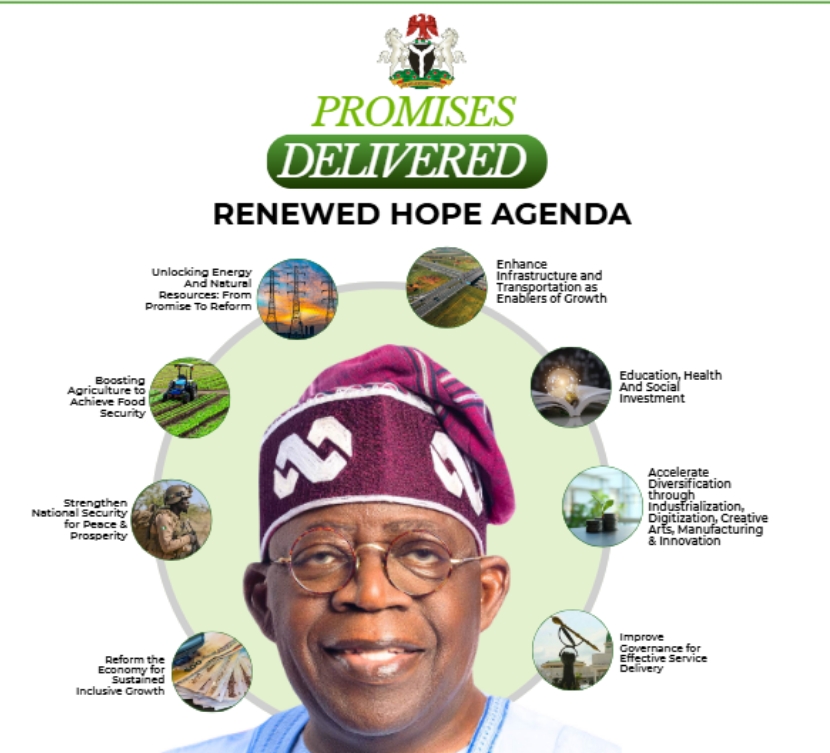
He has been dancing during campaign rallies in recent times and to get him off his feet, or get him into the mood would seem to require two triggers, two songs: “Omo Ologo” by Rarara or his signature tune, “Bola, On Your Mandate We Stand”. These two songs make the President’s head to swell like garri in a bowl of iced water. He would smile and show excitement, and break into a dance. Dauda Kahutu Rarara, composer of the “Omo Ologo” lyrics is probably one of the most prominent musicians in Nigeria today. He sang for President Muhammadu Buhari. He has now found bigger favour with President Bola Ahmed Tinubu. He is Hausa from Kano State. Tinubu is Yoruba. Rarara has more or less displaced King Wasiu Ayinde Marshall (KWAM 1), currently Nigeria’s foremost Fuji exponent, as Tinubu’s preferred musician, although KWAM 1 continues to hold sway in the South West, suffering under a weight of over-subscription that he manages competently with his creativity and talent for hardwork. Rarara’s pitch is “Omo Ologo”, composed in a benevolent moment of Muse visitation. “Omo Ologo” means “a child of glory” in Yoruba in a literal sense, a most fitting description of President Tinubu’s rise from grass to glory. That kind of reminder strikes a psychological chord, and for Yorubas who are brought up to appreciate the meaning of panegyrics and appellations, Rarara simply got it right. He may in fact be on his way to becoming a palace musician following a tradition that dates back to antiquity, with the poet-musicians, the Minnesingers of the German courts in the 12th and 13th Centuries, Johann Sebastian Bach in 18th Century Germany, and Antonio Salieri, director of the Habsburg Court, who dominated Vienna until 1792, the bitterest rival of Wolfgang Amadeus Mozart, as fictionalized in Peter Shaffer’s Amadeus (1979), and closer home, the traditional “ajirobas” in Yoruba palaces and the blowers of the Kakaki, the long, royal trumpet, the Maroki and Marokiya in Northern Nigeria. Being a favourite of the monarch as an artist has its own special privileges. When it is not Omo Ologo, the other dance that gets the Nigerian President dancing is “Bola, On Your Mandate We Shall Stand”. The author of that song is unknown and undisclosed but it is the stand-out music of the All Progressives Congress (APC) led by President Bola Ahmed Tinubu, sycophantic, but a rallying call for the party foot-soldiers and Tinubu loves it. He breaks into a smile. He sways sideways. He raises his hands. He submits to his own humanity. Every politician, black, brown or white, loves to be praised. Praise-singing is the oxygen of politics. It brings movement to the body and we have seen Tinubu dancing in Dutse, Jigawa State to Omo Ologo. In Uyo, Akwa Ibom State, the President shuffled to Duncan Mighty’s “Port Harcourt Boy”. He could relate. He is also famously known as “City Boy”, the city in his case being Lagos. “On Your Mandate” was also sung in Uyo. His usual dance style is the movement of his hands, gyrating in one spot. He raises his hands. He lowers them. He moves them sideways. Then he shuffles a little sideways. His fans find it entertaining. We are likely to see him again dancing before the polls.

But now to turn to other dancing politicians on the political scene, the man to start with is Governor Ademola Nurudeen Jackson Adeleke of Osun State. He is the main Nigerian symbol of dance as politics. He practically danced his way to a second term in Osun State. He is such an unmistakable, dominant personality, a Golden Leaf (John Player, 1980s), Michael Jackson kind of person that whenever he shows up, even at the most serious state functions, the audience will consider the event incomplete, if they don’t see him dancing or singing. Even when there is no music, he moves to an inner rhythm of his own, and he pleases the crowd. He stands out, not just because of his consistency, humility or the gift of emotional intelligence, but more because of a cultivated persona: the impression that this is a man who has no worries in the world, no malice, who just sees the sunny side of things all the time. He is more interesting because he also plays musical instruments: the talking drum, the Sakara and the Bandiri, and on top of it all, he speaks both Igbo and Yoruba. But Adeleke’s dancing persona is a mask. He is probably one of the smartest politicians from the South West. His popularity with the people of Osun State whom he governs is not derived from dancing and singing, he has been able to meet the people at their points of need, and despite the massive, intimidating Federal presence in his state, literally and politically, and the collapse of the People’s Democratic Party (PDP), the platform that brought him to power, he has managed to dance his way around the challenges and he is back in the Okefia Government House. Jackson was not part of his original, given names. He got the name as an epaulette for his love of dancing. Michael Jackson, the American pop star was a legend. Like Michael Jackson, Adeleke can move every part of his body. Even his toes. How he does that with all that mass of protoplasm is what intrigues most people, and always he just looks like a guy enjoying himself having fun. He has now joined Tinubu’s campaign, although he is the founder of a Special Purpose, survival, Vehicle called Accord Party, which exists only in Osun State. Rhythm runs in his family and in his veins. He is the father of B-Red, the Afrobeats songwriter and singer, and the uncle of Davido, the Afrobeats superstar. He does his politics with a language that attracts attention and communicates in an unobtrusive manner. The Silverbird Group just crowned him, Nigeria’s Man of The Year – a tribute to his clever balancing acts.
This is perhaps why he has in a way become a source of inspiration to others. These days almost every other Governor in Nigeria dances. The Governor of Ondo State, Lucky Orimisan Aiyedatiwa, who has won the Silverbird Governor of the Year Award, is ordinarily a quiet, self-effacing personality, but a few times, he has been caught displaying some energetic foot-works – notably at Ondo Night of Praise Concert (September 2025), political events and at Ilaje cultural events. Governor Babajide Sanwoolu of Lagos also dances, his most recent outing being his celebration with the trophy-winning Flamingo Champions, winners of the FIFA U-17 Women’s World Cup. Other Governors who have been seen dancing enthusiastically include Prince Dapo Abiodun of Ogun State, Professor Chukwuma Charles Soludo of Anambra State, in his own case, either at rallies or with his famous musician-son, Ozonna, and of course, the news-making Governor Monday Okpebholo, the Akpakomiza of Edo State, Okpes Baby also loves to dance. Interestingly, can your Governor dance better than my own Governor (?) although dancing is not stated anywhere in the Nigerian Constitution as a requirement for becoming a political leader. The Governor of Benue State, Fr. Hyacinth Alia, is a Catholic priest on sabbatical in politics. He dances too, forcing people to ask whether a Catholic priest should be seen dancing in public. The truth is that the Catholic Church is a very liberal institution contrary to received opinion. Fr. Hyacinth Alia is a perfect illustration of the saying that “when you are in Rome do like the Romans”. And he has learnt the game of Nigerian politics so well, he even knows how to move to all the popular tunes including “Buga oh.’ He dances with his whole body, and moves in a series of contortions that excites his audience. He has been shown dancing with children in a pair of jeans and a T-shirt and at political rallies. Whenever he seeks to return to his original calling as a Catholic Priest, he may need a period of re-orientation, perhaps purgation, not in his home parish in Gboko, Nigeria but at the Vatican City in Rome.
A review of dancing politicians ahead of the 2027 polls must note that some prominent ones have been very restrained, like Peter Obi and Atiku Abubakar. Do they know rhythm? But we have received further entertainment from the likes of Comrade Adams Oshiomhole and Vice President Kashim Shettima, both of the APC. Senator Oshiomhole is 74 years old but he will defeat an 18-year-old at any dancing competition. He can dance to any music whether it is KWAM 1 or Kizz Daniel. A master of calisthenics, his energy level is incomparable, a complete side attraction at any APC rally, and he has been just as consistent as Governor Adeleke. KWAM 1 calls him “Baba Kekere” but he is a giant on the dancing floor. And then enters Senator Kashim Shettima, the Vice President. Known for his wit and sharp barbs, the Vice President is also fast emerging as a major presence on the dance floor. He brings energy and charisma, with his hands flying in the air in all directions, some form of preparation it seems before he takes the microphone, and he releases stinging, verbal salvos against opponents – a porcupine.
Osita Iheme, our brother in Nollywood, has railed against all dancing politicians. He says they should stop dancing, and focus on issues – after all, “they are not going for a Grammy”. I differ. The issues are important, yes, but some entertainment does no one any harm. Let the politicians sing and dance!
 We do everything possible to supply quality news and information to all our valuable readers day in, day out and we are committed to keep doing this.
Your kind donation will help our continuous research efforts.
-Advertisement-

-Want to get the news as it breaks?-