



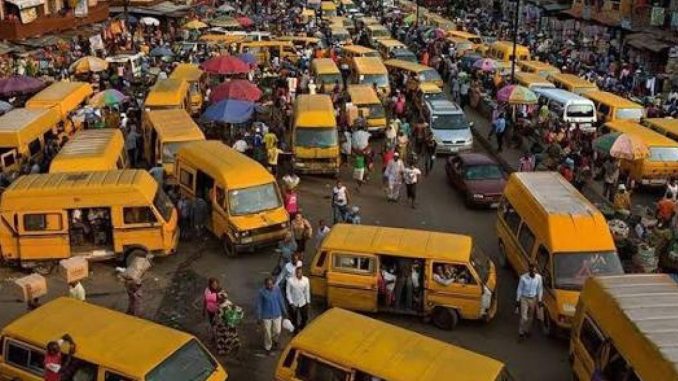

The Joint Drivers Welfare Association of Nigeria (JDWAN) has warned of a possible nationwide protest by commercial drivers over rising petrol prices, higher customs duties, escalating vehicle maintenance costs and declining purchasing power.
The association said the worsening economic situation had made it increasingly difficult for drivers to operate profitably, maintain their vehicles and provide for their families.

In a statement signed by its President, Akintade S. Abiodun, and Publicity Secretary, Feyisayo Ajimatanrareje, JDWAN said commercial drivers now spend between ₦50,000 and ₦100,000 on petrol daily, leaving little income after fuel, levies and other operating expenses.
The group said the situation had deteriorated considerably since its 2022 statewide protest against multiple tolling points allegedly imposed on commercial drivers by officials and members of the Road Transport Employers Association of Nigeria and the National Union of Road Transport Workers.
“A whole lot has got worse since our statewide protest in 2022 demanding an end to multiple tolling units by officials of RTEAN and NURTW, also known as agberos or garages and parks management in some states,” JDWAN said.

It added, “JDWAN has been bedevilled with much more catastrophic conditions that make the agbero problem minuscule.”
According to the association, petrol that was previously around ₦180 per litre now costs about ₦1,500 per litre, which it described as a 734 per cent increase.
JDWAN argued that wages had not risen at a comparable rate, leaving workers, low-income households and businesses struggling with higher transportation and living expenses.
The association also attributed the rising cost of vehicle ownership to increased customs duties and the depreciation of the naira.
It claimed that a serpentine belt that previously sold for about ₦2,000 now costs around ₦15,000, while tyres that once cost approximately ₦7,000 now sell for more than ₦50,000.
Similarly, JDWAN said an engine that previously cost about ₦250,000 could now exceed ₦1 million, while vehicles formerly valued at about ₦1.5 million now cost around ₦8 million.
“There is no driver that can save money to maintain their vehicle anymore. Once our car gets faulty, we have to go hunt for loans or park it somewhere and become beggars,” the group said.
JDWAN further complained about levies allegedly collected at motor parks and along routes, saying such payments consume a significant portion of drivers’ earnings.
The association expressed concern that the combination of high operating costs, weak purchasing power and rising unemployment could deepen economic hardship and create wider social problems.
“If the biggest manufacturers can exit Nigeria because of the cost of fuel and anti-poor policies like increased custom duty, then how will drivers, SMEs and working Nigerian citizens afford it?” it asked.
The group said the government should provide stronger measures to cushion the impact of rising fuel and living costs, arguing that Nigerians were paying more for petrol without corresponding improvements in infrastructure and public services.
“There is no oil-producing country in the world that pays so much for fuel like Nigeria without palliatives and subsidies in other sectors to cushion the effect with adequate infrastructure to show for it,” JDWAN said.
The association is demanding three major measures from the Federal Government: a reversal of the fuel subsidy removal and a reduction of petrol prices to the 2023 level of ₦180 per litre; a reversal of increased customs duties to their 2023 rates; and an increase in workers’ salaries.
JDWAN also criticised the ₦70,000 minimum wage, arguing that the amount was insufficient to meet basic household needs.
“Of what use is a policy if it makes citizens not able to buy food, afford healthcare and life essentials for his family?” the group asked.
The association urged commercial drivers nationwide to support its campaign, saying it would wait for responses from the state and Federal Governments before deciding whether to proceed with a nationwide protest.
 We do everything possible to supply quality news and information to all our valuable readers day in, day out and we are committed to keep doing this.
Your kind donation will help our continuous research efforts.
-Advertisement-
-Want to get the news as it breaks?-