


•Inconsistent power supply forces students to resort to alternative light sources
With many relying on solar-powered streetlights, lanterns, and even candles to study, the lack of consistent electricity is becoming a major barrier to academic success.
For students at institutions like Abraham Adesanya Polytechnic in Ijebu-Igbo, the absence of reliable power has forced them to seek alternative study spaces under the faint glow of community streetlights.


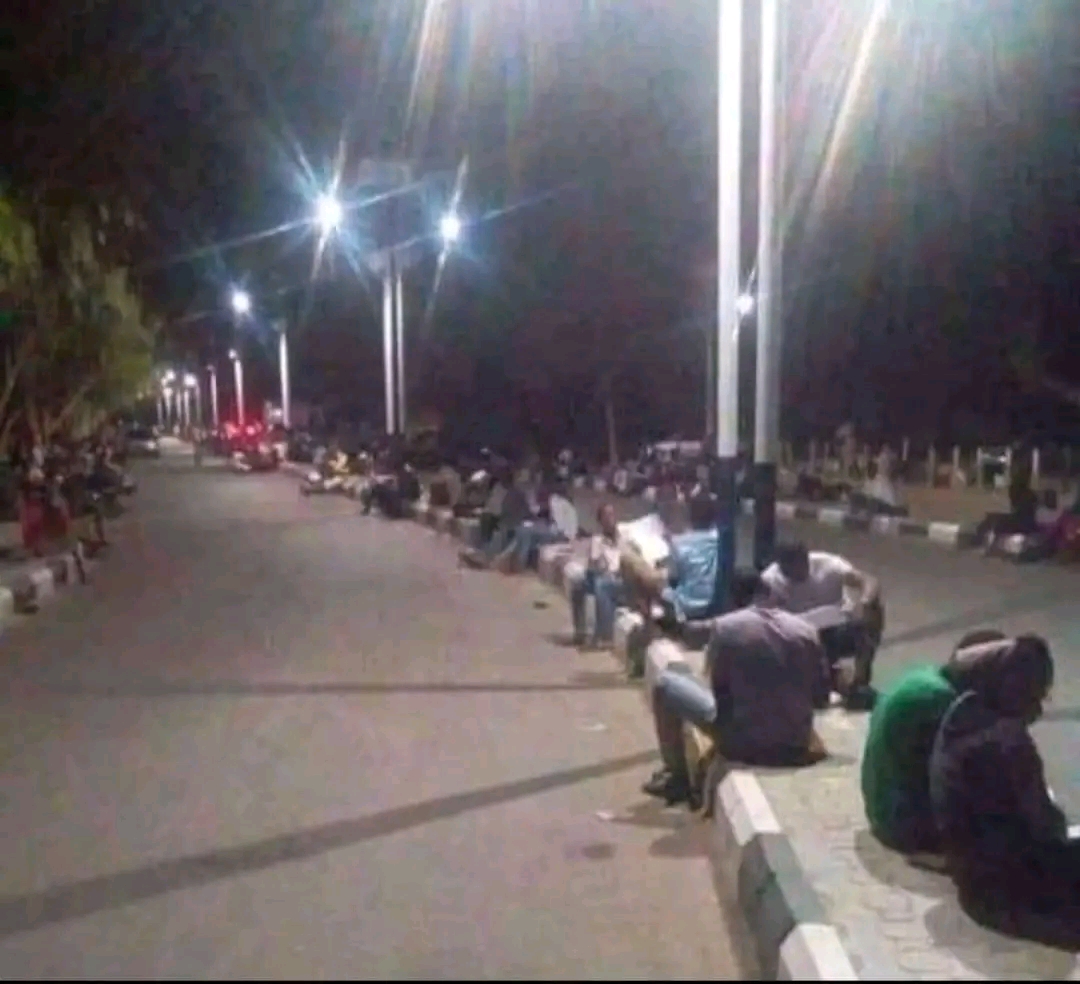
These students are often seen gathering at various outdoor locations, from charging centres to the sidewalks beneath streetlights, to prepare for their upcoming semester exams.
“We need to study hard so we don’t fail any course. The invigilators’ identities are kept secret, and that heightens our anxiety to get things right,” said Ayotunde Olumide, a student at Abraham Adesanya Polytechnic.
For many, the light provided by the solar-powered streetlights has become their only source of illumination for late-night study sessions. In areas like Oke Ife, Ijebu-Igbo, students gather in front of their hostels, using whatever light is available to read.

Kehinde Adewale, another student from the same institution, explained, “We use the streetlight in front of Hope Villa hostel to study.
There’s a blackout here, so we read wherever we can find light. It’s not just for charging our phones but also for reading.”
In the state capital of Abeokuta, students at Moshood Abiola Polytechnic share similar challenges. Durojaiye Adedayo, a student from the university, revealed that many of his peers also rely on solar streetlights in places like Oluwo and Ita Eko during exam periods.
“It’s become a regular practice because of the blackout.
“We’re constantly battling to keep our devices charged for exam updates, but sometimes, the phone battery dies, and students miss important notices,” he said.
The issue is not confined to just a few institutions. Rasaq Adebayo, a student at Tai Solarin University of Education (TASUED) in Ijebu-Ode, lamented the lack of power affecting his peers, particularly in rural areas where students often walk long distances to find places to charge their devices.
“It’s not just during exams, even for assignments and regular test preparations, electricity is a major issue,” he said.
The impact of this power deficit is far-reaching.
Ishola Adebayo, a lecturer at a public university in Ogun, noted that poor power supply significantly disrupts students’ ability to focus on their studies.
“A total blackout leads to mental blackout. The emotional stress of trying to find light or charging a phone eats into the time students need to prepare for exams.”
“Students who study mathematics or economics, for instance, rely heavily on light for their learning and research,” he added.
Adebayo also warned against the dangers of using candles for study, citing the health risks of inhaling smoke and the potential for fire hazards. “We cannot continue to ignore the risks associated with using candles or even studying under streetlights.
The lack of proper illumination can also harm the eyes,” said Dr. Amarachi Amadi, an ophthalmologist at Asiwaju Bola Ahmed Tinubu Health Centre. She explained that reading under inadequate light strains the eye muscles, potentially leading to vision issues such as myopia.
Despite the grave challenges, the students’ perseverance remains evident, with many resorting to makeshift solutions, like purchasing rechargeable lamps or pooling money to buy a generator for study sessions.
Addressing the issue, the Ogun State Commissioner for Education, Abayomi Arigbabu, acknowledged the state’s general power challenges but played down their impact on tertiary institutions.
READ ALSO: LG Election: Ogun Declares Friday Work-Free Day for Civil Servants
“The power problem is not unique to tertiary institutions; it’s a nationwide issue, students live outside the school in communities, so they’re also affected by the same power shortages. However, the government is aware of these problems and is working on solutions.” Arigbabu said.
Meanwhile, the Ibadan Electricity Distribution Company (IBEDC) attributed the poor power supply to low allocations from the national grid and widespread vandalism of power infrastructure.
IBEDC spokesperson Busolami Tunwase assured that efforts were underway to resolve the issue, including working with independent power producers and enhancing security measures to tackle vandalism.
 We do everything possible to supply quality news and information to all our valuable readers day in, day out and we are committed to keep doing this.
Your kind donation will help our continuous research efforts.
-Advertisement-

-Want to get the news as it breaks?-