



… Residents demand immediate halt, compensation, and environmental remediation
By Sodiq Opeyemi Adelakun
Residents of Ado-Odo Kingdom have raised serious concerns over the indiscriminate mining of black clay soil in several communities, warning that ongoing excavation poses health, environmental, and safety risks.


The issue centres on SAF Investment & Property Company Ltd, which obtained a Small-Scale Mining Lease from the Nigerian Mining Cadastre Office, authorising excavation of black clay within parts of Ado-Odo Kingdom.
Communities including Ijigbo, Ibiri, Idobarun, Idoleyin, Oloparun, Elemoki, and Dodo have reported that mining operations have extended dangerously close to residential areas, schools, health centres, and main roads.
The First Complaints

The earliest written warnings date back to 2019.
That year, according to Barrister Wale Alagbe, “families from villages such as Iberese, Adigbon, Idoleyin, and Isanyin sent petitions to security agencies and government offices. They complained that people were digging clay from their lands without permission, without conducting environmental studies, and without restoring the land afterwards.”
In 2020, the complaints grew louder.
The lawyer representing Ado-Odo stakeholders wrote again, this time alerting the Ogun State Government that government-acquired land at Idobarun was being excavated.
They warned that the land had originally been taken for public use, yet it was now being mined without an Environmental Impact Assessment or reclamation plans.
Those early letters described a pattern that has since become familiar: excavation, abandonment, silence.
From farmland to pits
Ado-Odo Kingdom is rich in clay deposits. For decades, that natural endowment attracted miners, both licensed and illegal. At first, excavation sites were far from homes, mostly around farmlands in villages such as Idoleyin, Iberese and Oloparun.
But over time, the pits multiplied. Reclamation never followed.
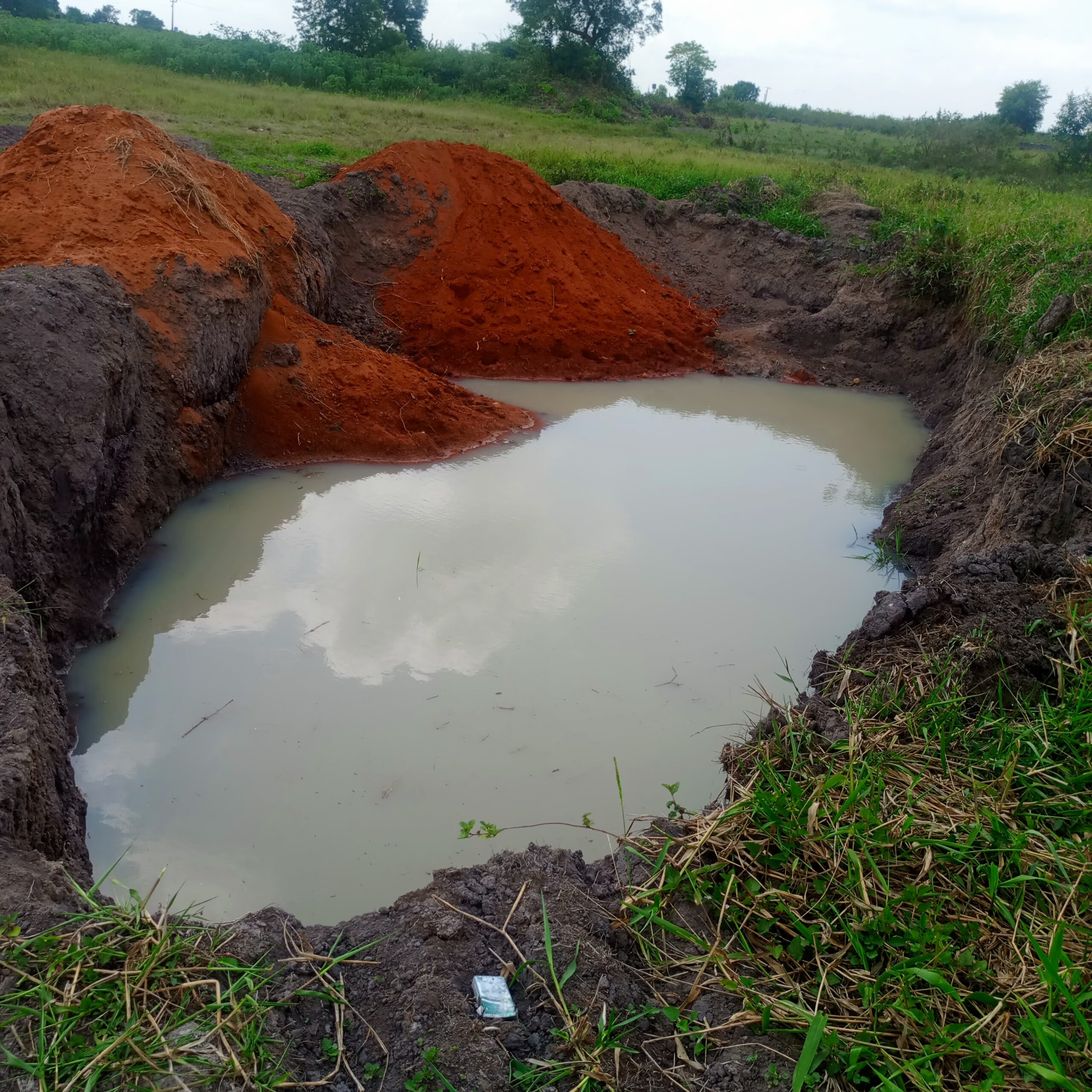
What were meant to be temporary borrow pits became permanent scars—deep, water-filled holes that now collect mosquitoes, criminal activity and, in some cases, death.
Farmers lost palm trees by the thousands. Access roads collapsed under the weight of heavy trucks. Streams and wells became polluted. Yet mining continued.
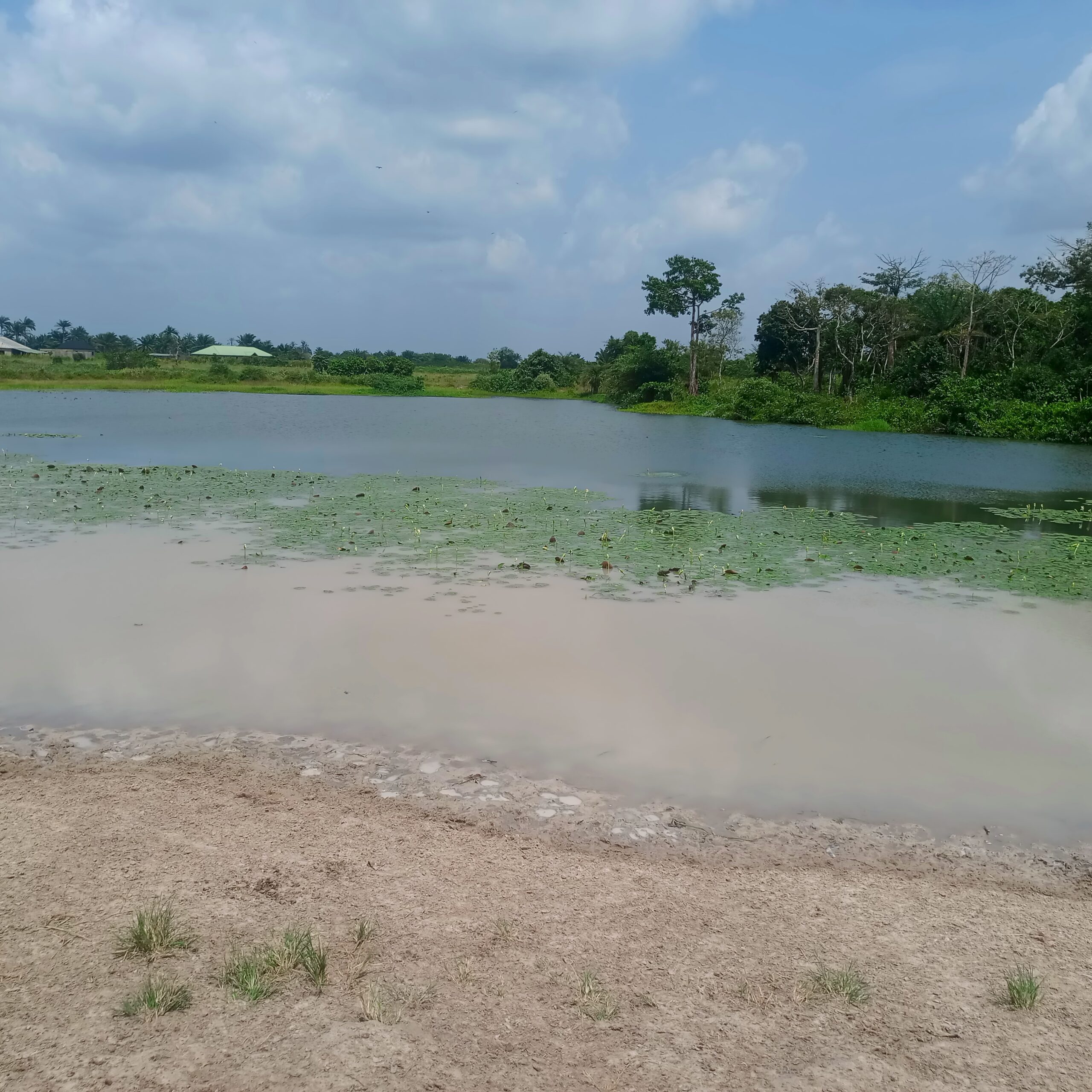
By 2019, community leaders began sending petitions to government agencies and security services, warning that illegal and poorly regulated clay mining was destroying land acquired for public use and threatening lives. They named locations, operators and buyers.
They attached photographs and videos. They asked a simple question: who approved this, and under what environmental safeguards?
Nothing changed.
Communities under threat
At Ibiri and Ijigbo, mining pits are less than 50 metres from homes and less than one kilometre from a new health centre.
Residents report that excavation, preparation, and loading began in 2019 and continued into January 2026.
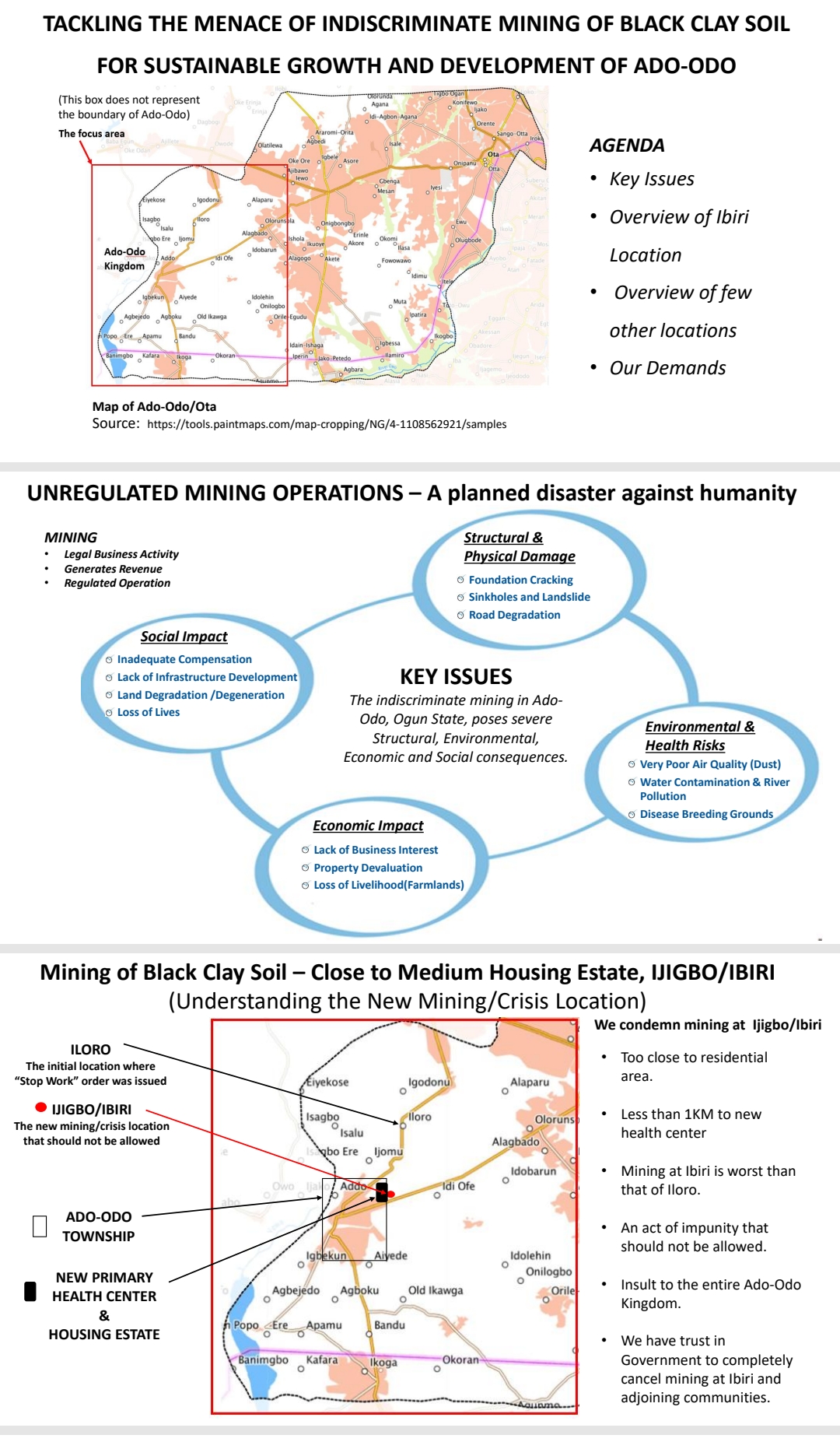
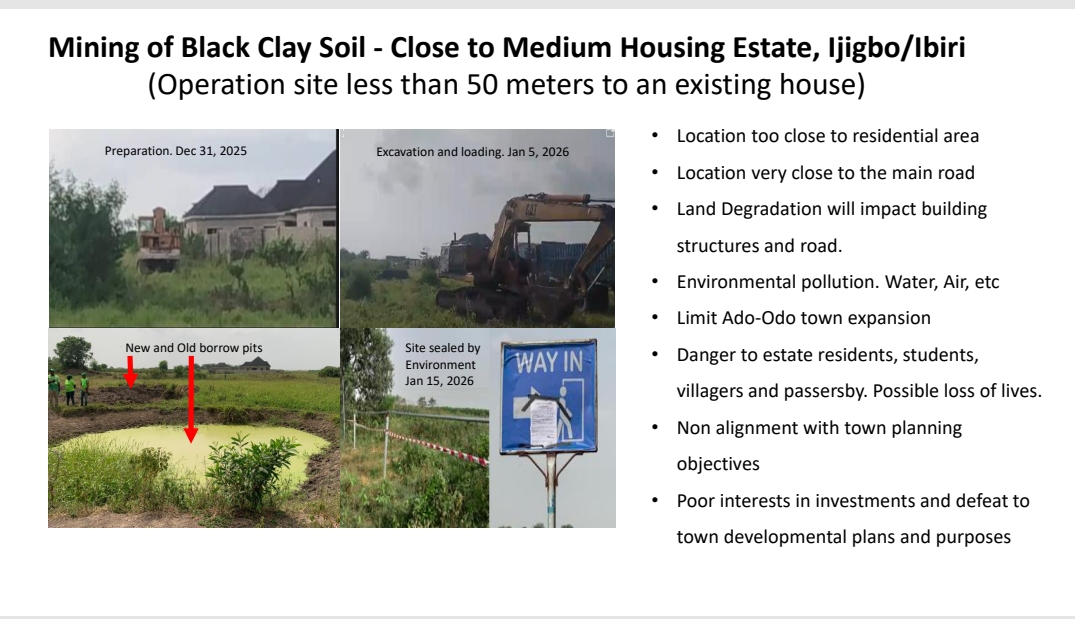
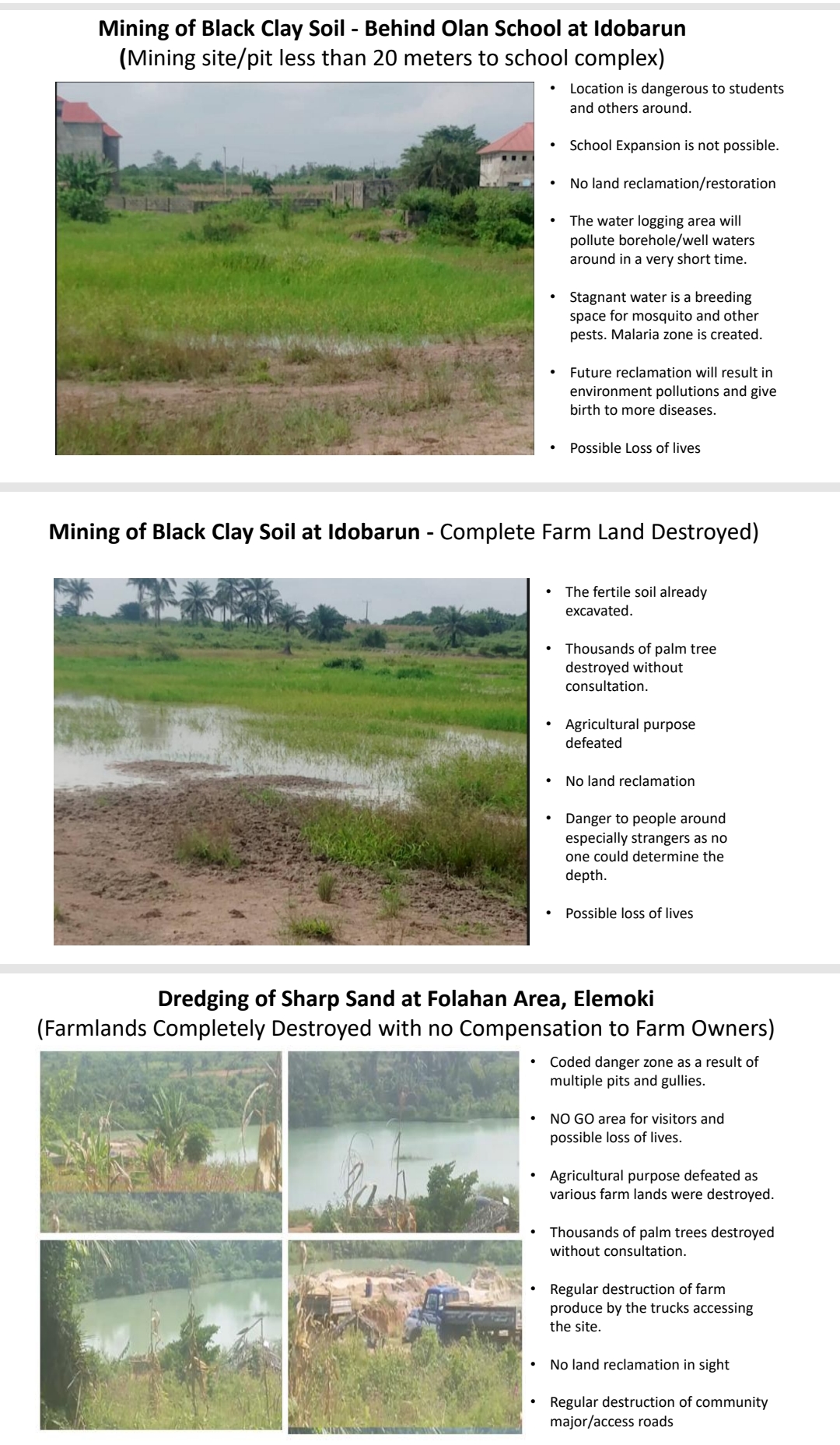
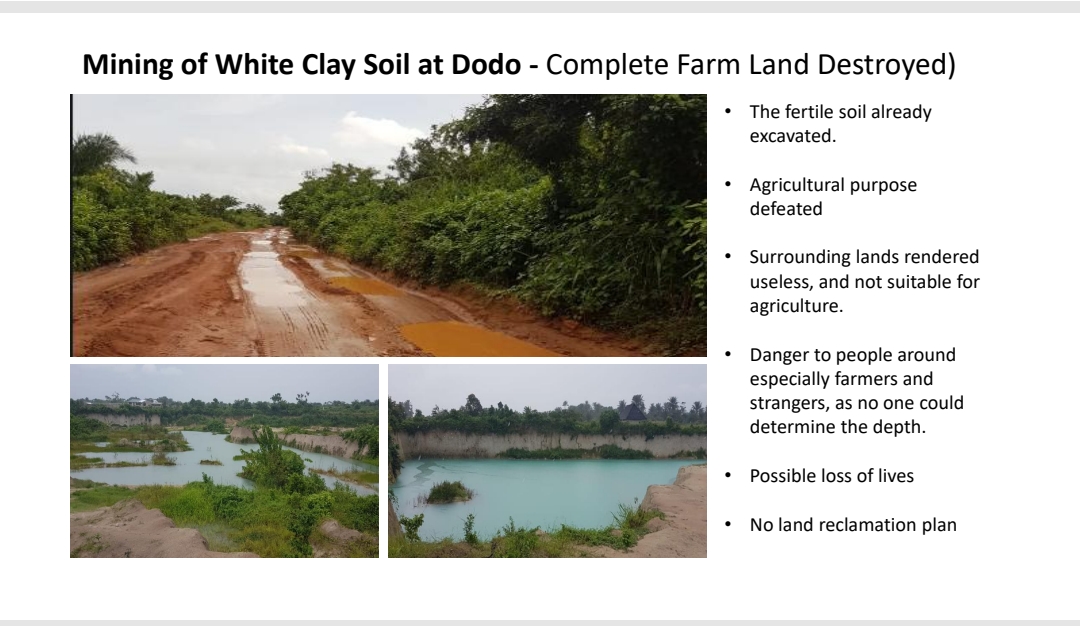
Environmental concerns include air and water pollution, stagnant water in pits that serve as breeding grounds for mosquitoes, and potential damage to roads and buildings.
At Idobarun, mining activities have destroyed farmlands, including fertile palm tree plantations, leaving pits unreclaimed and unusable for agriculture.
Parents and school administrators said that pits located behind Olan School, Idobarun, threaten students’ safety and prevent future school expansion.
READ ALSO: LAWMA apprehends cart pushers over illegal dumping on Lagos–Badagry Road
In Dodo and Elemoki, similar reports indicate total destruction of farm plots, absence of land reclamation plans, and creation of danger zones for residents and visitors.
Villagers have decried the lack of consultation and adequate compensation.
Petitions and appeals
Community leaders, through petitions, have repeatedly requested government intervention.
On 5 January 2026, a petition was submitted to the Governor of Ogun State and relevant ministries, highlighting ongoing violations of the Minerals and Mining Act, 2007, as well as breaches of environmental regulations and post-mining reclamation obligations.
The petition called for an immediate halt to all excavation and mining activities in Ibiri Village and neighbouring communities.
It also urged a thorough investigation into the identity, licensing status, and environmental compliance of all mining operators in the area.
Signatories demanded strict enforcement of environmental, town planning, and mining laws, including penalties for any operators found in default. The petition further requested the commencement of environmental remediation and the reclamation of degraded land.
Community representatives also called for meaningful engagement with local residents to ensure sustainable development and adequate compensation for host communities affected by the mining activities.
Also, the petition urged the deployment of security and monitoring mechanisms to guarantee compliance and protect residents’ rights.
Previous petitions from April 2019 and March 2020 also highlighted illegal excavation and looting of clay soil in Iberese, Adigbon, Idoleyin, and other villages, naming operators who allegedly transported clay to industrial buyers, including Time Ceramics Ltd and Guadong, Igbesa.
Communities warned that armed operators had contributed to environmental destruction and social disruption.
Government and company response
On 13 January 2026, a meeting was held at the Ogun State Ministry of Industry, Trade and Investment, chaired by Professor Kayode Festus Oyedele.
The meeting addressed environmental concerns in multiple Ado-Odo communities. SAF Investment representatives relied on Section 1 of the Minerals and Mining Act, 2007, to assert their mining licence. Evidence from communities, including videos and photos, was reportedly not admitted for review. Professor Oyedele directed SAF to engage directly with Ado-Odo stakeholders.
A follow-up stakeholders’ meeting occurred on 16 January 2026 at the Ado-Odo Town Hall. SAF Managing Director Alhaji Safiriyu Adebanjo Kazeem stated the company was willing to diversify into agriculture, provide employment, and offer skills acquisition programmes for residents.
Community leaders responded with caution. Mr Segun Aina, President of the Ado-Odo Club, stated that resistance was not against development, but against unsustainable mining practices that had resulted in loss of lives, damaged infrastructure, and destruction of farmlands.
Chief Munir Faari, the Ekerin of Ado-Odo, questioned the long-term viability of restoring excavated land for agriculture.
Elder Kareem Bewaji called for mining to be relocated away from residential areas and for reclamation of existing pits, warning of serious health and safety risks if operations continued.
Meanwhile, Taiwo Talabi, a member of the Ado-Odo Progressive Union in the United States and Canada, has called for urgent government action to protect residential and agricultural areas from ongoing mining activities.
Speaking with our correspondent, Talabi said while he supports responsible mining, he strongly advised that such operations should not take place near homes or farmlands, which form the backbone of the local economy.
He further warned that mining in residential and agricultural zones could compromise the safety and security of the community and disrupt the local ecosystem.
Talabi appealed to the government of Adobo State to take swift action to prevent further risks to residents and their livelihoods.
Also, Alhaji Chief Okanlawon Jagundina, representing the Ado-Odo Progressives in the United Kingdom, United States, and Canada, has called on the Ogun State Government to intervene in the ongoing mining activities in Ado-Odo.
Jagundina expressed deep concern over indiscriminate mining in Ado-Odo, particularly at the Ado-Odo Farm Settlement, historically recognised as the food basket of Ogun State.
He highlighted that part of the settlement had previously been allocated for housing by the Ogun State Housing Corporation.
Jagodino urged the government to address the situation carefully and objectively, without bias or affiliation, to protect both the local ecosystem and the community’s livelihood.
The community’s plea
In submissions to the authorities, residents insisted that Ado-Odo is neither hostile to the government nor opposed to investment.
They urged immediate action to stop mining of black clay soil that is rapidly degrading the environment, threatening public safety, and disrupting agriculture—the primary source of livelihood.
The stakeholders’ petitions and meetings reflect years of complaints, with consistent emphasis on compliance with environmental, town planning, and mining laws.
Residents demand recognition of their rights, adequate compensation, and enforcement of statutory safeguards.
 We do everything possible to supply quality news and information to all our valuable readers day in, day out and we are committed to keep doing this.
Your kind donation will help our continuous research efforts.
-Advertisement-

-Want to get the news as it breaks?-