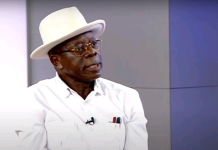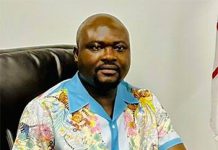

Popular Osun socialite, philanthropist, and business leader, Asiwaju Olayinka Fasuyi, has praised President Bola Tinubu’s economic reforms, describing them as pivotal in shifting Nigeria from a culture of import dependency to production-led growth.
Speaking during an interview on the Arise Morning Show from Ibadan, Fasuyi framed the country’s economic trajectory against decades of borrowing to fund consumption, warning that such practices “mortgage the nation’s future.” He argued that Tinubu’s administration is breaking this cycle by directing borrowing into productive sectors and infrastructure.
> “When a country borrows to finance consumption, it mortgages its future. But when borrowing is channelled into production and infrastructure, the nation prospers,” Fasuyi said.


Nigeria’s debt currently stands at ₦149 trillion, with 73 percent domestic. Fasuyi asserted that prior administrations relied heavily on foreign and domestic borrowing to cover consumption, leaving the economy vulnerable. Under Tinubu, he noted, these patterns are beginning to shift.
Fuel and Energy Reforms

Fasuyi highlighted the Dangote Refinery as a case study of policy impact. Nigeria, long a crude oil exporter reliant on imported refined products, is now experiencing reduced fuel scarcity and lower pump prices. “Filling stations once marked by endless queues are suddenly free, and refined petroleum flows not only across Nigeria but also into neighbouring markets. The savings are massive,” he said.
Agriculture as a Priority
Looking ahead, Fasuyi identified agriculture as the next frontier for sustainable growth. He urged that if Nigeria produces consistently what it consumes, the naira will stabilise, purchasing power will improve, and economic resilience will strengthen.
READ ALSO: 10 Giant Strides Of Yinka Fasuyi As First Asiwaju Of Ijesaland @ 7
Beyond economics, Fasuyi reflected on Nigeria’s social progress—from a population of 63 million at independence to 230 million today, the growth of universities, expanded infrastructure, and the evolution into 36 states. He stressed that governance must be viewed as a partnership, not a spectator activity, particularly in light of the Supreme Court ruling granting financial autonomy to local governments.
“Communities hold enormous social capital. If tapped, it can transform Nigeria,” Fasuyi said.
He also dismissed criticisms of external lenders such as the World Bank. Loans, he argued, are neutral; the difference lies in national discipline and utilisation, citing China’s continued borrowing as an example.
Personal Milestone and National Vision
As Fasuyi prepares to celebrate his 70th birthday in Ijesaland, he frames the occasion as both a personal milestone and a platform for promoting inclusive and sustainable development. With Nigeria’s national life expectancy pegged at 62 years, Fasuyi regards his longevity as a mandate to contribute actively to national progress.
“Attaining 70 is a dream fulfilled. My joy is to use this milestone to further champion inclusive and sustainable development,” he said.
 We do everything possible to supply quality news and information to all our valuable readers day in, day out and we are committed to keep doing this.
Your kind donation will help our continuous research efforts.
-Advertisement-

-Want to get the news as it breaks?-