


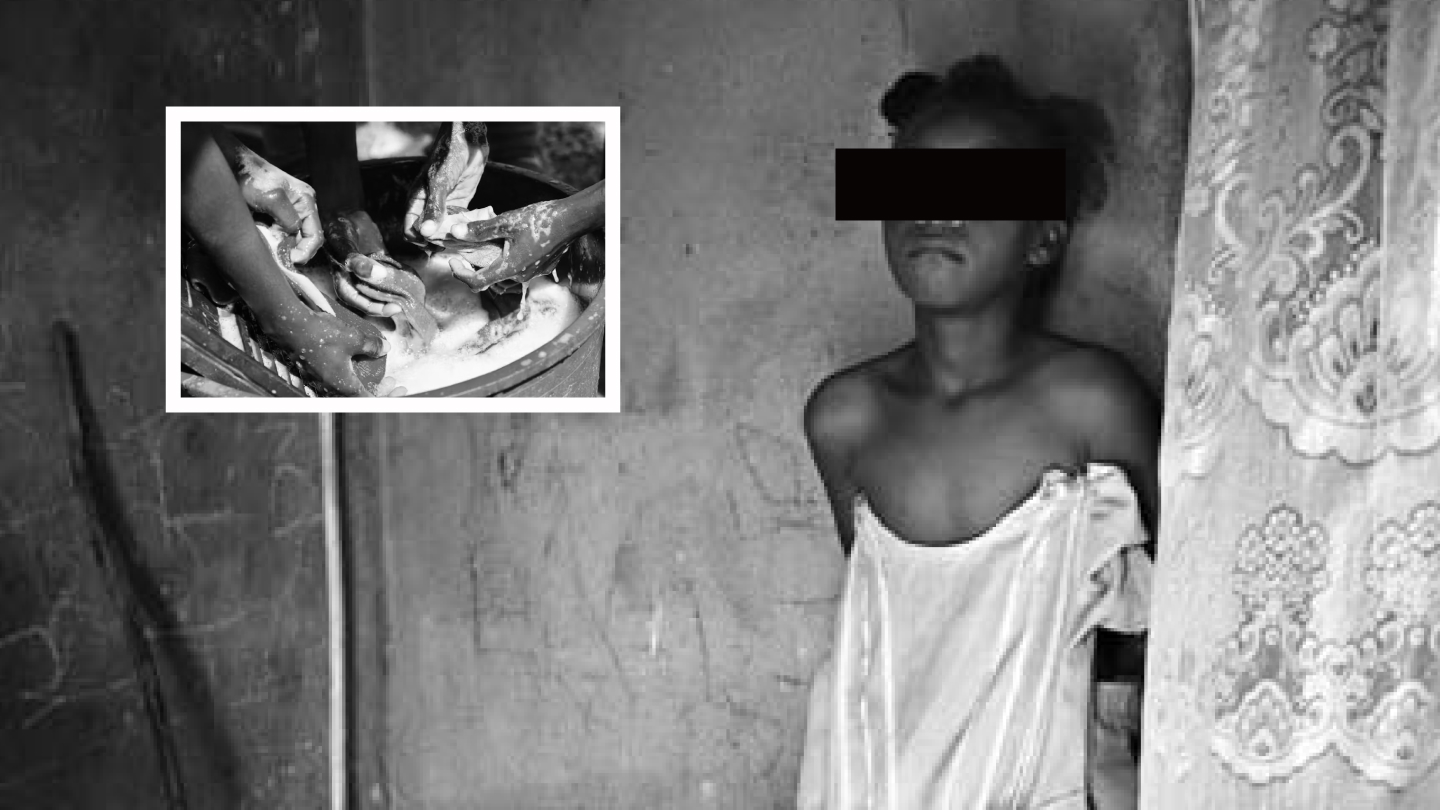

Following recent reports of monstrous acts performed by domestic help workers on families in Nigeria, WISDOM DEJI-FOLUTILE explores the contributive factors affecting the psychological development of child labourers
On what seemed an uneventful day on November 4, 2018, a family of five sat down to share a meal of homemade vegetables (efo riro) in their humble abode in Ibadan, Oyo State. It was an evening like any other, filled with its own troubles. And at the end of it all, a frail grandmother settled with her four grandchildren to eat the sumptuous food. The meal, prepared by their employed help—a timid, soft-spoken girl firmly wedged in the centre of her teenage years—was spiced as expected, but this time, with an additional ingredient that would bring with it the taste of death. And it did. A few days later, it was reported widely in the media that the grandmother was dead, her four grandchildren grappling to hold on to their dear lives in a hospital bed.
In the viral confession video uncovering these events, the house help, identifying herself as Taibat, would explain how she, being excluded from sharing a former meal with the grandkids by the grandmother—a punishment she was meted out after the maid stole crayfish—proceeded to poison the family’s meal with herbicide. Repeatedly questioned, the young teenager appeared sombre, but her words bore no noticeable remorse. Instead, she expressed satisfaction at the sight of seeing the grandmother rush to the toilet to vomit and stool but expressed that she had only thought the chemical would make the soup bitter.
This story was one of the earliest in recent memory to spark a frenzy in the minds of Nigerian households who use wide-eyed, coming-of-age children with limited opportunities in smaller communities as employed help in town areas. Just a year before Taibat’s murder attempt, a prescient rendition of the same scenario occurred in Ondo town when a 14-year-old maid allegedly tried to poison her master because she was rebuked. Mr. Nasiru Akinlosotu, 63, a former medicine store operator, had secured his narrow escape from death by noting the unpleasant taste of the meal—a bean pudding dish—after taking a spoonful. Spitting it out and grilling the young Mary, a confession eventually revealed that he was one swallow away from ingesting rat poison. According to Akinlosotu, his attempted murder was his punishment for rebuking her for pouring water on the floor a few days before.


Although the elderly Akinlosotun was lucky to escape what could have easily become a tragic tale, Funmilola Adefolalu was not as lucky six years later. On October 31, 2023, the Niger State Police Command arrested 14-year-old Joy Afekafez over the murder of Funmilola, who was a lecturer at the Federal University of Technology, Minna. Afekafez was the housemaid of the slain lecturer. Following interrogation by the police, the homicide suspect confessed to working as the deceased’s maid for three weeks before she was laid off for an undisclosed misdeed. She had, following the layoff, conspired with two classmates to attack the lecturer at her residence.
Such tales are not uncommon to read in any headline of the metro section of dailies available in various parts of the country. Even more unsettling, however, is the age group of the perpetrators of these atrocities—every case listed above was not perpetrated by a career criminal hardened by decades of crime, but by a young teenager, likely one who had seen a lot more of the world than they should’ve seen at their age.
While children doing domestic work is not always exploitative or harmful to the child, the International Labour Organisation (2021) estimates there are up to 15 million workers aged under 14 in Nigeria, many of whom are domestic help whose labour is often forced and unpaid or underpaid. House helps, or “house girls” as they are more often referred to, are domestic labourers employed to carry out household chores and assist in activities related to the weaning and grooming of children, care for the elderly, and assistance with domestic duty.

However, from baby kidnappings to physical abuse and even attempted murder of the people they were employed to cater for, domestic help in Nigeria is fast becoming synonymous with monstrosity. However, the story, like most others, remains incomplete without an account of the other side of the coin.
— Rampant abuse of child labourers in domestic contexts —
Almost two years ago to the day, Margaret Joshua, an 11-year-old maid, was beaten to death by her madam, Mrs. Nnaemeka Nwachukwu. The ailing house help had been found on the streets severely injured and barely alive. Taken in by a Good Samaritan who would for days make ill-fated attempts to nurse her back to health, Margaret Joshua told her helper that she had suffered repeated physical abuse from Mrs. Nwachukwu any time she failed to do her work properly. Despite efforts to give her the care she desperately needed, Margaret died in the University of Jos Teaching Hospital on November 14, 2022.
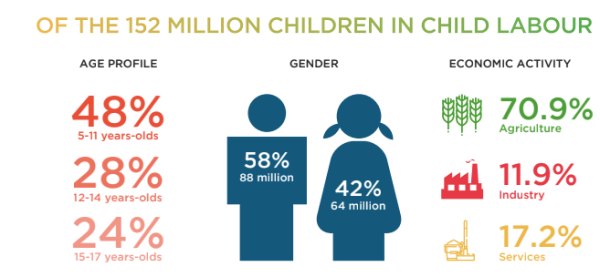
That an 11-year-old suffered such a tortuous end is dismal considering the facts of her employment status as a prepubescent child. Barely into the cusps of adolescence, her future and present were yanked from her fate, replaced with nightmarish recompense for her struggles of handling an employment opportunity that would be scarcely realistically doable even for an adult—house domestic labour work is often a 24/7 responsibility in Nigeria. But probably more dismal is the reality that in that same year, a Child Labour Survey by the National Bureau of Statistics revealed that about 32.9 per cent of children aged 5 to 17 are involved in child labour. This amounts to almost 25 million. In fact, that same year that Margaret died, she was one of 14,990,674 children within the 5-11 age group engaged in child labour. Margaret Joshua’s case is not the beginning, and it is not the end. Tomorrow, as the sun breaks over a waking Nigeria, a child will raise a child. And on the same day, another will change a tyre, weld an iron gate, and take the death-defying stunt of fixing a live-wired generator.
READ ALSO: Housewife Forces Teenager To Sleep With Husband To Give Them Child
Beneath the malaise of bloodthirsty domestic labour lingers the exploitation of children from all levels of extremity—from hawking to begging and even sex work.
The current survey allowed for the classification of children 5 to 17 years old into four mutually exclusive categories: children who are exclusively working, children who are exclusively in school, children who are working and in school, and children who neither work nor go to school. The survey indicates that among the 5-14 age group, 42.3 per cent are full-time students who are not engaged in any form of economic activity, 35.3 per cent are in school and working simultaneously, and 11.2 per cent are working only. Among the 15-17 age group, a larger proportion of children are working only, at 21.9 per cent of the population of that age. Furthermore, only 24.7 per cent are exclusively in school and 45.3 per cent are working and in school.
The Child Rights Act (2003) prohibits children in the 5-11 age group from engaging in any economic activity but allows children 12 to 14 years old to engage in light work, while those in the 15-17 age group are allowed to be involved in economic activities that are not hazardous.
However, the ILO revealed that 22.9 per cent of Nigerian children are involved in hazardous work.
And while reports of monstrous behaviour from house helps are plentiful, stories of the abuse of domestic helpers are so popular that it is even a recurring theme in Nollywood movies.
— Laws against child labour difficult to enforce —
Although a distasteful fact to point out, the likelihood of events would suggest that the victims of monstrous domestic helps mentioned in this report were probably contravening Nigerian law concerning child labour.
According to Section 59 of the Labour Act (2004), a child in employment should not be required to work for more than 4 hours at a time; neither should a child work for more than 8 hours in a day. Also, according to Section 28 of the Child’s Rights Act (2003), No child should be allowed to lift, carry, or move any heavy thing that can likely affect their physical, mental, spiritual, moral, or social development. Also, no child should be employed as a house-help outside his/her home or family environment.
However, child labour continues to be a malaise in Nigeria because of many reasons, one being multidimensional poverty. In a February 2023 paper on “The Rights of a Child in Nigeria” written by Hon. Justice Zaynab Bashir, Judge, National Industrial Court of Nigeria, an absence of proper policy that can eradicate poverty was listed as one of the major impediments to the full impact of the Child’s Rights Act in Nigeria.
Children from poorer backgrounds are often forced to assume financial responsibility at an earlier age. “In this regard, where the parent of a child cannot afford to provide basic needs of the child, it becomes an avenue for the parent to send the child off to several other undignifying means for survival. As long as the poverty level continues to rise, it is difficult to see how the sufferings of the Nigerian child will come to an end,” the report reads.
Unfortunately, Nigeria’s economic woes have continued on into successive administrations of government, with the country struggling to keep inflation rates down and reduce the cost of living for its citizens. Today, tens of millions live firmly wedged underneath the poverty line. In September 2024, the World Bank reported that Nigeria’s poverty rate is expected to surpass the 104 million projection made in 2023.
Poor enforcement is also a pertinent issue that delays the progress of the Child’s Rights Act.
Mrs. Olaolu M. Olaitan, the Director of the Inspectorate Department at the Federal Ministry of Labour and Employment, in a meeting with stakeholders in October 2024, in which FTN was present, noted that Nigeria’s labour officers are greatly outnumbered by the casework children involved in child labour.
“There are about 4,000 labour officers to 30 million child workers in Nigeria,” Olaitan said.
— Child labour guilty for turning children to monsters, expert says —
As Nigeria continues to grapple with the deep chasmic challenges that contribute to child labour, the effects of such conditions are already causing irreparable damage to its children.
Psychologist Dr Kaizar Victoria Omenebele, who holds a PhD in Guidance and Counselling from Dennis Osadebey University, Asaba, tells FTN this much.
When queried on the existence of documented studies proving exposure to toxic working conditions from an early age affects the development of a child, Dr. Omenebele addressed it matter-of-factly.
“There are many documented studies that prove that being exposed to strenuous labour or toxic working conditions from an early age affects the development of a child. For example, the International Labor Organisation has stated that strenuous working conditions are damaging to a child’s education and psychological and physiological development. They also found out that children who engage in such jobs are exposed to dangers, which could jeopardise their health or morale,” Omenebele told our correspondent.
“In places like homes where the children are used as housemates, we have seen cases where children are being flogged so much that their backs and bodies are battered and sore, and some are being burnt with a hot iron. Their employers use a hot iron to stamp their back or their lap, and sometimes their buttocks. So all these things affect their development, health, mental state, and emotions, and based on this, the children will be affected negatively, even till the adolescent stage, because they harbour experiences that can never be forgotten throughout their lifetime,” she said, further recounting an example she had experienced during the course of her career.
“I have witnessed such a situation in my neighbourhood during my practice as a counsellor. It was a situation where a child took a biscuit from her madam’s shop to eat. The woman used a hot iron to press the child’s hand. I also learned that sometimes she uses a hot iron to press the child’s buttocks or laps. It is very devastating because no woman can do that to her own child, but because these children are maids in the house, they do anything to them,” the doctor said.
Omenebele also shared a situation where a housemaid—a child—was flogged by her ‘madam’ to the extent that her back was scarred permanently.
According to the guidance counsellor, child labour also poses a risk of poor socialisation for victims.
“The adolescent period is when adolescents seek peer acceptance, so when normal socialisation is lacking in a child, the consequences include a decline in motivation and social skills. It also causes unhealthy relationships and deviant behaviour, such as fighting, drug abuse, drinking, and criminal activities. It affects relationships with their parents and teachers,” she said.
Criminal activity, as the guidance counsellor notes, could very well translate to any of the monstrous acts documented by house helps in the last seven years.
“We have seen cases of exploited children or underage house maids becoming dangerous to themselves, and the children left in their care due to frustration and the job,” she said, continuing, “We have seen cases where housemaids starve the children they are supposed to take care of, throw away their food, leave them unattended, punishing the babies as if they were responsible for their being beaten, and refusing to bathe them until it is almost time for the madam to return home. So the madam returns and finds the child sleeping, and may never know what has happened when she was away.”
— Free, universal education, a solution to child labour epidemic —
It is no secret that a leading reason for the endless cycle of child labour employment in domestic labour is economic difficulties. Families, forced to consider their options following poor family planning and limited economic opportunities in small hamlets, essentially give off their children to informal recruitment agents.
In a 2021 investigative report by Al Jazeera, it was revealed that the promise of education for the child help is a part of the package promised to their parents in the village, alongside monthly stipends and improved opportunities in the city.
Taiwo Akinlami, an attorney and child rights activist, expresses that for the issue of child labour to be curbed, free universal education is non-negotiable.
“The Nigerian Child Rights Act, domesticated in 2003, expressly provides for the right to education under Section 15, mandating free, compulsory, and universal basic education for every Nigerian child. The law also criminalises actions that prevent children from accessing education, recognising education as a pathway to safeguarding children from exploitation.”
“Education is key to breaking the cycle of poverty and child labour. Research shows that every additional year of schooling can increase an individual’s income by 10%, empowering families and communities economically and socially. Educated children are less likely to engage in exploitative work and more likely to contribute meaningfully to national development,” he told FTN.
“Children forced into labour often suffer from anxiety, depression, and post-traumatic stress. Emotional abuse and exploitation leave lasting scars, stunting social development,” he said.
For universal education to work, however, Akinlami believes that full implementation of the Child Rights Act and relevant constitutional provisions is critical. “Authorities must prosecute violators and provide alternative support systems for vulnerable families,” he said.
Child labour ultimately remains a viable route to economic support for many families in impoverished portions of the country. To combat this, Akinlami believes that economic empowerment programmes and community engagement can help reduce economic reliance on child labour and raise awareness about the harm of child labour and the value of education.
“Child labour robs children of their potential and denies society the benefits of an educated and empowered generation,” he said.
 We do everything possible to supply quality news and information to all our valuable readers day in, day out and we are committed to keep doing this.
Your kind donation will help our continuous research efforts.
-Advertisement-

-Want to get the news as it breaks?-