





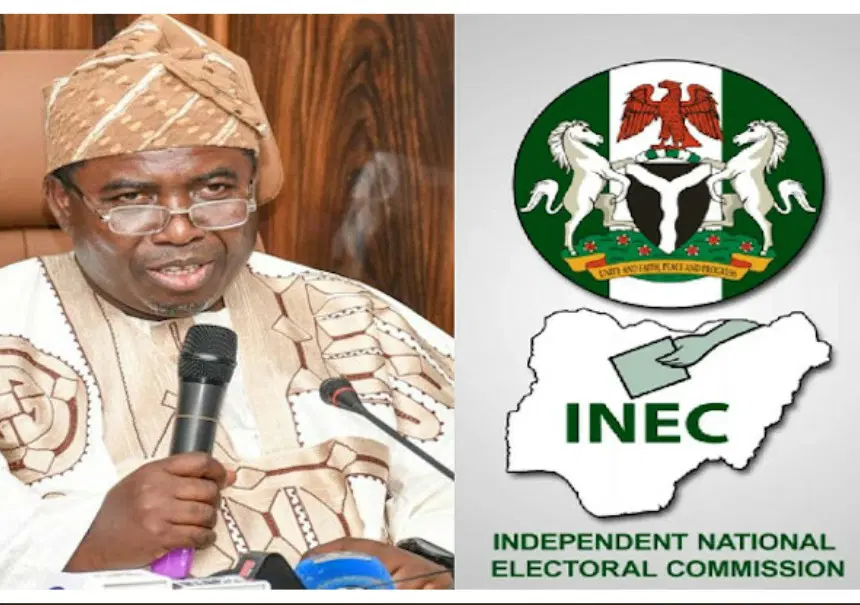

The Independent National Electoral Commission (INEC) is battling to address irregularities in Nigeria’s voters’ register ahead of the 2027 general elections, amid concerns over duplicate registrations, questionable identities and alleged misconduct by officials with access to its database.
The commission has reportedly received hundreds of thousands of claims and objections following the public display of the preliminary voters’ register, as part of efforts to identify and eliminate questionable entries.


An INEC source disclosed to Vanguard that the exercise had helped the commission identify duplicate registrations and other irregularities, adding that more claims and objections were still being expected.
“You will recall that when the present leadership of the commission took over, we wanted to carry out a revalidation exercise. That exercise would have helped to clean the register in a more seamless manner. But the public outcry against the revalidation forced the hands of commission to abandon the idea. Mind you, we have carried out three phases of continuous voter registration,” the source said.
Vanguard also reported that INEC was conducting a zonal review of the exercise and had committed to presenting a clean register by December 15, 2026.

The development comes amid renewed scrutiny of the credibility of the national voters’ register, which forms the foundation of the electoral process by determining eligible voters and providing the basis for accreditation and voting.
Although Nigeria has transitioned from largely manual registration systems to biometric identification, electronic databases and the Bimodal Voter Accreditation System (BVAS), concerns persist over the reliability of its electoral records.
The country’s registration figures have also fluctuated over the years, rising from 73.5 million in 2011 to approximately 84 million in 2019, after dropping to 67.4 million in 2015.
While such changes do not automatically establish manipulation, questions remain about whether the database accurately reflects eligible voters.
The European Union Election Observation Mission’s final report on the 2023 general elections identified shortcomings in electoral administration that undermined public confidence and recommended an independent external audit of the voters’ register, including physical data checks and an assessment of biometric data quality.
Section 19 of the Electoral Act provides for the public display and scrutiny of the voters’ register for seven days, not later than 90 days before a general election.
The provision allows citizens to raise claims and objections concerning names improperly included in or omitted from the register. Failure by an INEC official to display or publish the register as required also constitutes an offence under the law.
Concerns have also emerged over suspected artificial intelligence-generated photographs, duplicate records and questionable entries in the preliminary voters’ register.
INEC reportedly acknowledged investigating the irregularities in October 2026, while its Director of Information and Communication Technology, Lawrence Bayode, attributed some questionable records to alleged misconduct by registration officers with access to the platform.
The commission, however, has yet to publicly disclose the identities of the officials allegedly involved, according to the report.
The investigation also highlighted concerns over PVC collection and voter participation, noting that INEC recorded 93,469,008 registered voters ahead of the 2023 general elections, while 87,209,007 had collected their permanent voter cards as of February 5, 2023.
This left more than six million registered voters without collected PVCs at the time.
The report noted that although low voter turnout, insecurity and logistical challenges do not automatically indicate electoral fraud, they underscore the need for an accurate register and accessible voting arrangements.
To restore public confidence, the investigation recommended an independent audit of the national register, stronger database access controls, improved biometric verification, regular publication of additions and deletions, and accountability for officials found culpable of deliberate manipulation.
It also called for stricter enforcement of the Electoral Act and improved access to voter information ahead of the next general elections.
The credibility of the 2027 elections will therefore depend not only on the conduct of voting and collation but also on INEC’s ability to establish an accurate, transparent and verifiable record of eligible voters.
 We do everything possible to supply quality news and information to all our valuable readers day in, day out and we are committed to keep doing this.
Your kind donation will help our continuous research efforts.
-Advertisement-

-Want to get the news as it breaks?-