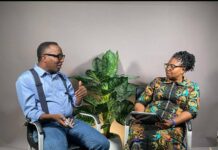


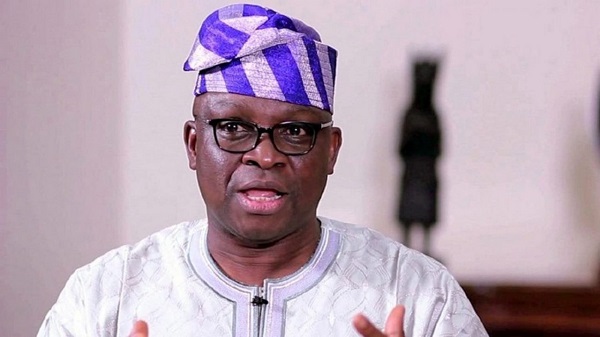
In an exclusive interview with FTN, former Governor of Ekiti State, Ayodele Peter Fayose, speaks on the political calculations ahead of the 2027 general election, explaining why he believes former Vice-President Atiku Abubakar and the 2027 presidential candidate of the Nigeria Democratic Congress, Peter Obi, may struggle to unseat President Bola Tinubu.
Fayose also discusses his decision to support Tinubu despite remaining a member of the Peoples Democratic Party (PDP), the opposition’s political structure, his strained relationship with former President Olusegun Obasanjo, his assessment of Oyo State Governor Seyi Makinde, his appointment as chairman of the Rural Electrification Agency board and other national issues.


Q: A lot has changed in Nigeria since your last birthday celebration. We have witnessed several political alignments and realignments, with different political actors coming together. We have also heard discussions about a rainbow coalition and the formation of a formidable political group.
I would like to know whether there has been any form of realignment between you and former President Olusegun Obasanjo in the last one year.

Fayose: Let me also thank you for finding the time to come. You are gradually turning this into an annual event. I welcome you and your team.
The only constant thing in life is change, and change is inevitable. It will continue because we are approaching an election.
Beyond that, a country like Nigeria is diverse, with different political, cultural and other interests. Sentiments also change over time. I believe all these developments are normal, and nothing is out of order.
After political parties have submitted their names to INEC and the candidates have been published, we will know who the flag bearers are. We will also be able to distinguish between the serious contenders and those merely engaging in political theatrics.
I would streamline the serious contenders to three: the APC led by Asiwaju Bola Tinubu, the ADC represented by Atiku Abubakar and the NDC represented by Peter Obi. We should focus on these major political players.
As for Obasanjo, I have said what I needed to say about him. The point at which he failed to act as a statesman, a father and a leader was when he crossed certain boundaries.
It is no longer my place to continue discussing Obasanjo. I handed him over to the devil last year. For the period I served as governor, I have nothing good to say about him, particularly when he goes around maligning the President and allegedly inciting people.
I consider that a moral issue for a man who wants to be remembered.
Nobody is perfect. We all have our flaws. Obasanjo has his flaws, and I have mine. We should learn from our mistakes.
I have made up my mind to leave him to God. Last year, during our anniversary, he came to me, and I responded appropriately. When somebody is sick, you give them the medicine they need. I believe I gave him the medicine he needed.
I sincerely do not want to discuss Obasanjo, but there is an incident I will never forget.
It was the day Obasanjo was part of the delegation that received the President in August. He wanted to demonstrate that there was always a reason behind his actions, whether in support of or opposition to someone.
In the first place, I believe Obasanjo wanted to show the President that if he accepted his daughter into government, he would have Obasanjo’s support. That was why he pretended to be close to the President.
He praised the President, wore the uniform and spoke as though he were the spokesperson for the state. He said certain things that I would rather not discuss now.
But after that did not work out as he expected, he returned to his usual position and began making comments at different public functions.
That is why, for this second anniversary, we will not invite him.
Q: I was about to ask whether you invited him this time.
Fayose: If you make a mistake by bringing the devil into your home, you must have learnt your lesson. I have learnt mine.
I invited him in good faith, but I do not believe he is a man of honour or deserves that kind of recognition.
Q: I thought he was your godfather. I also thought disagreements between godfathers and their godsons could eventually be resolved. Has there been any attempt at reconciliation?
Fayose: I have already used very clear words to explain that, as far as Obasanjo and I are concerned, it is over.
He is not somebody I want to keep mentioning. I do not want to promote him by continually talking about him.
Let us leave that matter and discuss other issue.
Q: A lot has changed in the last one year. You have also been appointed chairman of the Rural Electrification Agency.
In one of your previous interviews, you said the President had asked what he could do for you, but you told him you did not want anything.
Now, you have accepted an appointment under the same administration. At what point did you change your mind, and why did you accept the position?
Some people also believe your strong support for President Tinubu and his administration may have influenced the appointment. Others wonder whether it is a reward for your support. What is your response?
Fayose: Let me first clarify a few things.
I have always advocated giving the younger generation an opportunity to participate in leadership. By 2031, I will be 71 years old. It is my desire to see young people come forward and take up leadership responsibilities.
Nobody will celebrate you if you do not celebrate yourself. I commend young people who have come forward, because their participation will encourage others to take up leadership responsibilities.
On the Rural Electrification Agency, many Nigerians do not understand the difference between the role of a board chairman and that of the managing director.
My responsibility is not the day-to-day running of the agency. That is the responsibility of the managing director and his management team.
Our role at the board level is to provide political support and ensure that the agency’s activities align with the President’s vision for the country’s energy sector.
I attend board meetings. I am too old to be involved in the daily running of such an organisation.
Supporting a government’s vision does not necessarily mean occupying an executive position or becoming a minister. I have said before that I would not accept a ministerial appointment because of the energy and demands involved.
If you offer me a government position that requires me to be involved in the day-to-day administration of an office, I may decline it. That time has passed.
But being chairman of a board is different. Our responsibility is to ensure that the board’s decisions and activities support the President’s objectives.
We receive reports, examine proposals and make contributions where necessary. That is how we help the organisation achieve its goals.
My board allowance is N150,000. It is not about material benefits. It is an opportunity to contribute and help things work.
As for my critics, they are free to hold their opinions. I am doing what I believe is right, and I am entitled to my views.
Where were some of these critics when Buhari was in power? I was among those who openly criticised that administration.
I was also one of the Nigerians who spoke against the government of Donald Trump when he was in the United Kingdom. I do not shy away from speaking out against those in power.
If you tell me I should not support Tinubu, tell me what those criticising him have done differently. I do not want to start attacking anybody.
Peter Obi was my colleague. Atiku Abubakar was also a political colleague. I wish them well, but I want to see how they intend to defeat the President.
Tinubu defeated many of them without anybody’s assistance. Even Buhari’s body language could not save him at the time.
I do not want people wasting their money. If they want to spend it, that is their decision, but they must explain how they intend to defeat the President.
People talk about political support and the number of governors behind a candidate. What has happened to the political influence of the governors who have moved to other parties?
Some people argue that governors are not necessarily popular among the electorate. But you cannot ignore the influence of a sitting governor.
The influence of a governor, whether in office or out of office, is enormous. A governor may not be popular in every community, but he may have significant influence across the state.
Financing an election is another matter. If a candidate has five or six governors behind him, those governors can provide political support and influence the electoral process.
When a governor is not with you, what political structure do you have to parade? On election day, politicians operate through structures.
Q: But during the 2023 election, some people also said you did not have the necessary political structure.
Fayose: We eventually lost. That is the difference. You must have a structure.
Q: I agree that political structures are important. However, during the 2023 election, many people underestimated Peter Obi because of the same argument about structure. Some relatively unknown candidates won elections on the Labour Party platform because of the political atmosphere at the time.
Do you think the influence of people like Obi will disappear in the coming election?
Fayose: I do not want to mention names unnecessarily. We are all Nigerians, and there is no need to destroy or belittle one another.
But if the two of them come together structurally, it is still not enough to assume that they will win the election.
Obi has a strong presence in the South-East and some presence in the South-South. But you cannot compare that with the political spread of a candidate who has support across several regions.
When there is too much weight against you, your speed will reduce. That is the consequence.
I am not saying Obi is a bad person. I am not saying he is not a good person. But I do not believe he will enjoy the same political advantage he had in 2023.
The APC has also developed a stronger strategy for responding to his political statements. Whenever Obi makes a statement, several people come out to challenge him.
The political environment has changed.
The day Obi and Atiku went their separate ways after the last election was a turning point. The law of self-preservation is something you cannot wish away.
Governors will first protect their political interests before anything else. They may love Nigerians, but they must also secure their own political future.
That is why I believe it will be difficult for Obi. Even his margin in the South-East may be much smaller than it was in 2023.
Q: Do we still have the PDP as a viable political party?
Fayose: Yes. I am a PDP member.
Q: Really? You are still a PDP member?
Fayose: Of course.
Q: But what has happened to the PDP? Is it still capable of providing an opposition strong enough to challenge the ruling party?
Fayose: This time, we are not fighting to take power. We are with power.
Q: You are with power? What exactly do you mean?
Fayose: We are with power, and that is the truth. By 2031, we will pick up the pieces and move forward.
I will not come on television and pretend that I have suddenly changed my position. I have always supported the direction I believe is right.
We are all PDP members, and we can still support the government. We will be part of the coming election because we supported the President in 2023.
We cannot come here and pretend otherwise. We will support him through our words, actions and body language. You may call it a coalition.
My advice is that people should support whatever works in their respective states.
Q: Do you think this position will affect other PDP members who are contesting for elective positions?
Fayose: No. Nigerians know how to make their choices on election day.
I know of situations where politicians have moved from the APC to the PDP and others have moved from the PDP to the APC. They must have confidence in their political environment before making such decisions.
It will be an interesting election.
We are not members of the APC, and we are entitled to our choices. If you ask for my support and I genuinely believe in what you are doing, I will support you.
But that does not mean I will abandon the PDP completely.
For the presidential election, I am supporting the APC. For other positions, including senatorial contests, people can make their own choices.
Q: So you are supporting the APC for the presidential election?
Fayose: I am supporting the APC.
Q: But you remain a PDP member?
Fayose: I am a PDP member. I started my political life in the PDP.
Q: Is your son also a member of the PDP?
Fayose: Yes, he is a member of the PDP. I will allow him to make his own political choices. I am not going to choose a party for him.
My son is a young man, and everybody must be allowed to pursue their own political future.
If he comes to me and says he wants to join the PDP, I will tell him not to do so at this time. These are not the best of times for the PDP to contest in certain places, especially when I, his father, am supporting the government.
He has made his choice.
On election day, I will support my son. If he is in the APC, I will stand with him. If he chooses another party, I will still support him.
Everybody wants their children to succeed. I am not a hypocrite who will say one thing publicly and do another privately.
I am clear about my support for Asiwaju and my support for my son. I have had my own opportunity. I became governor at 42. It is time to allow the younger generation to make their choices.
Q: As an elder statesman, when you consider the political situation, who do you believe has the capacity to lead Nigeria at this time?
Fayose: Tell me who has the capacity. We should not deceive ourselves.
It is easy for people to say a particular candidate will do this or that, but when they eventually get into office, the realities of governing Nigeria become clear.
When Buhari came into power, people described him as a man of God who would cleanse Nigeria. But he left us wounded.
I do not follow the logic that one candidate is automatically the best simply because people say so.
If you say Atiku should become President, what new thing does he intend to do for Nigeria? What will he do differently?
Governing one state does not automatically mean you can govern Nigeria. The challenges of governing the country are different.
Nigeria is not easy to govern. The journey to the presidency may look attractive, but the realities of the office are different.
There is also the need to respect the unwritten understanding of eight years in the South and eight years in the North. That arrangement is important for protecting interests and ensuring stability in the count.
Q: President Tinubu has introduced several economic policies since taking office. Many Nigerians have described these policies as harsh. Do you think the same Nigerians will vote for him again?
Fayose: Let me help you understand something.
The attitude of Nigerians must also be examined. We cannot talk about changing the country without looking at our own conduct.
For instance, how many Nigerians obey traffic rules? How many people refuse to cut corners? Some people manipulate systems and engage in activities that undermine the same society they complain about.
Even when government policies are introduced, some people deliberately sabotage the process.
Look at developed countries. People there understand the importance of rules and institutions.
Our attitude as a people needs to change. We must find common ground when things are being done properly, and we must also be willing to speak out when they are not.
Q: I want to focus specifically on the economic policies of the government.
Fayose: I have said it repeatedly. I am 66 years old today. I have seen Nigeria go through different phases.
It is not an easy journey to lead this country. Previous administrations also promised to fix Nigeria. Did they succeed?
Look at the economic challenges we face. The exchange rate has been difficult, and the country has debts that must be serviced in foreign currency. How do you expect a government to resolve all these problems overnight?
If you want to return Nigeria to where it was 40 years ago, it will not happen easily.
Anybody who comes into power will face serious challenges. That is the reality.
Nigeria is in serious trouble. The government has its responsibilities, but the people also have responsibilities. Both sides must do what is right.
You cannot blame everything on the President and ignore the attitude of the people.
The people must also change. When a government takes a decision, people should examine it before attacking everything.
One President cannot solve every problem overnight. That is what I want Nigerians to understand.
Q: Are you suggesting that Nigerians should simply accept the economic hardship?
Fayose: No. I am saying that we must look at the situation realistically.
I am not saying the government is perfect. I am saying that the challenges facing Nigeria are enormous, and we must understand that changing the country is not an easy task.
Fayose: There is another issue we must be willing to discuss honestly: voting patterns and ethnic sentiments in Nigeria.
Let me ask you a question. If Atiku Abubakar is not on the ballot, will the North vote for an Igbo candidate?
That is a fundamental question people do not want to discuss.
From the days of Nnamdi Azikiwe, who wanted to become President but did not become Prime Minister, Nigeria has had political arrangements influenced by regional interests.
At different times, certain regions have had stronger political influence.
I am not saying that people should vote based on ethnicity. I am asking questions about the reality of our political behaviour.
If Obi is not on the ballot, will the South-East vote for another candidate from a different region?
If people accuse one group of being tribalistic, they should also examine the conduct of other groups.
For instance, many Igbo people I know in Nigeria would vote for Tinubu. What would you call that? We must be honest about these things.
Q: Do you think the support Tinubu received from Igbo voters, particularly in Lagos, can be repeated in the next election?
Fayose: They will prepare for the election. They will use social media and other platforms to challenge decisions and campaign against their opponents. Politics is involved in all these things.
But I wish everybody well. God knows the beginning and the end.
I believe we will win by a significant margin in the South-West. I have said this before, and I can explain the calculation.
In Ekiti, where I come from, I believe we will get substantial support. The PDP has strong grassroots structures, and many of its members have agreed to work with me.
The APC and PDP remain prominent political parties in the state. The political situation is changing, and the support base is important.
In Osun, I also believe the President will secure significant votes.
The political alliances in the South-West will make a difference. Some of the parties and political groups that previously worked against one another are now working together.
When political groups are united, their votes can be consolidated.
Q: What about Ogun State and other parts of the South-West?
Fayose: The work is ongoing. We are looking at the political situation across the region.
The PDP and APC have remained important political platforms in the South-West, and the current alignments will influence the coming election.
Q: There have been discussions about the position of Governor Seyi Makinde and his political plans. What is your assessment?
Fayose: Let us leave aside whether we are together politically or not. I have a history with these people.
I remember seeing a campaign flyer more than a year ago. I called Makinde and asked him about it. He told me not to mind the people circulating it, saying they were only looking for attention.
At another time, he made comments about the Southern presidency and his political plans.
I also remember him telling me that he was not contesting in the coming race. The following day, he called and said I was not his equal and that he had not authorised me to speak on his behalf.
He said he would contest. I did not force those words out of his mouth.
He also told me he would not allow himself to be used to destroy the chances of a younger person. God is my witness. I have no reason to lie about what he told me.
I am not somebody who will make statements about people and refuse to stand by them.
Q: What are your plans concerning Makinde?
Fayose: I do not know what you mean by plans.
Makinde will face the consequences of his political decisions. I believe he will suffer a serious defeat and eventually hand over power.
He should understand that arrogance and deceit have consequences.
I was governor when he became governor. I was one of the people who welcomed him into the office and supported the transition.
I have records of my political journey and the relationships I have had with people. I know where I stand.
Q: Earlier, you said you were 66 years old and that you would not have accepted a ministerial appointment because you no longer had the energy for such a demanding position.
Should Nigerians expect you to contest for President?
Fayose: Nigerians can decide who they want as President. I cannot force anybody to marry someone. It is a choice.
Nobody pushes anybody into a position. If you want to become something, you pursue it.
But why should I be looking for the presidency? What am I looking for? Do you want to kill me?
You do not have to become President of Nigeria before you can contribute to the country.
By the grace of God, my voice is there to speak to those in power and represent the concerns of the people. You do not have to occupy a government office to help Nigerians.
I have been governor twice and spent eight years in office. Am I the only Nigerian who can contribute to the country?
I am not interested in becoming President. The demands of that office are enormous. It is easy to say you want to be President, but when you get there, you will understand the challenges.
Q: But what if God has ordained you to become President?
Fayose: A lot of people use the expression that God has ordained them for political office. Some of them are liars.
Do not use God to deceive people. Do not use prophecies to mislead people.
Somebody will come to me and say God has told him that I am destined to become President. I will ask: which presidency? President of where?
I am not interested in all that.
Let me enjoy my life, be happy, have God in my life and be at peace with myself. That is all I want.
Q: I heard your wife say several lovely things about you.
Fayose: I am her sweetheart. I am a good man.
Q: Looking at you, you appear to be a very tough man. How do you manage to have a soft heart?
Fayose: I got my toughness from my father.
God knows I will face many challenges in this world, so He gave me a woman who would stand by me.
My wife has been a great support. She prays for me every day and has helped me through many difficult moments.
God has a way of compensating people. As human beings, we love God, but God also provides a shield for us. My wife has been that shield in my life.
I pray that in another world, I will have the opportunity to repay her for everything she has done.
Q: Does that mean you would prefer to be more gentle in another life?
Fayose: I do not want to be gentle. In this world, if you are too gentle, people will take away your rights.
I do not like people who pretend to be gentle. You cannot always know what is inside another person.
Sometimes, if you are too mindful of other people, they will take advantage of you.
Many people praise those in power because they want to get something from them. They do not necessarily know or understand the people they praise.
It is like people who tell women they love them. It is when the woman is in the house with them that she discovers whether the love is genuine.
Let us leave that matter for another day.
Q: Let us discuss another important issue. All 36 state Houses ofsembly have now approved the proposed constitutional amendment for state police. What is your view of this development?
Fayose: It is a good intention. It is a great idea if the objective is to strengthen security and help our people.
However, I do not know how it will be implemented. In Nigeria, implementation is often the major challenge.
We must first examine whether the existing central police structure is working effectively.
There is a need to ensure that the federal police system is properly organised before introducing another layer of policing.
My concern is that state police could eventually become an instrument in the hands of governors.
Many people do not fully understand what the implementation of state police will involve.
Currently, the Federal Government controls the police and appoints the Inspector-General of Police, who oversees the deployment of commissioners of police to the states.
Under a state police arrangement, there will have to be state commissioners of police, while the federal police will also have to operate within the states.
The question is how the two structures will work together.
There may be situations where one police authority wants to prosecute someone while another has a different position.
I believe state police could be beneficial, but we need to look beyond the appearance of the proposal and examine how it will work in practice.
Let us see how it goes.
Q: Returning to your appointment at the Rural Electrification Agency, you said your role was to provide political support to the agency.
What have you been able to achieve in the three months since your appointment?
Fayose: There are processes involving donor agencies and other stakeholders. You cannot simply announce that work has started without understanding the procedures.
Some of the donor agencies have their own officers and requirements. They also have to issue the necessary approvals.
You cannot put them under pressure to release funds or begin projects without completing the required processes.
For me, the first three months have been about understanding the agency, its operations and what needs to be done.
There are plans involving federal universities. One of the major challenges facing these institutions is the cost of electricity.
There is a pilot project intended to cover 10 federal universities. The objective is to introduce renewable energy solutions that will reduce their electricity bills.
The project will take some time, but it is expected to make a significant difference.
There are also discussions with states on renewable energy projects. Some of the states have made progress with preparations, including groundwork for the projects.
The objective is to improve electricity supply, reduce costs and ensure that the projects can be sustained.
We want a system that will continue to work beyond the initial investment. It should be able to manage its achievements and reproduce them over time.
It is not an easy process, but the work is ongoing.
Q: In your earlier comments about your appointment, you suggested that Nigerians were having many children because of the lack of electricity. Could you explain that position?
Fayose: I will say it again.
When you visit a village with a convoy, one of the first things you notice is the large number of children. A few minutes later, you see their parents, who are far fewer in number.
You begin to wonder why there are so many children.
My argument is that when there is no electricity, people return to their homes and have very little to occupy them. They go to bed early because there is no light or other activities to keep them busy.
When there is electricity, people have other things to do. There are businesses, entertainment and other activities that occupy their time.
If a factory is not working because there is no electricity, production stops. But when there is power, people can work, produce and engage in other productive activities.
That is the point I was making.
Q: You once described the PDP as a swamp and a carcass. However, you have also said that some people are still contesting elections on the party’s platform. Do you still stand by your earlier description?
Fayose: When I made that statement, I was referring to the condition of the PDP at the time.
Since 2011, I have watched the party go through serious challenges. Many people have defected to other political parties.
The PDP of today is no longer the PDP of 2015. If you compare the party as it was in 2015 with what it has become today, you will understand why I described it as a carcass.
However, in some states, the PDP remains organic. It still has strong structures and a solid grassroots presence.
So I stand by what I said, but people must understand the context. The party is no longer what it used to be.
Q: Do you think the PDP can come back as a strong political party?
Fayose: I am not sure.
There are several issues within the party that need to be resolved. The level of organisation and the political disagreements have affected its ability to function effectively.
Q: Do you think what happened to Governor Fubara was fair?
Fayose: What happened to him, or what did he do to himself?
I have seen some of the public comments and statements surrounding the matter. I do not want to create unnecessary divisions among people.
People must understand that their actions have consequences. If you make certain decisions, you must be prepared to deal with the outcome.
Sometimes, people need to listen carefully and understand the implications of their actions.
I believe we should have the courage to face the truth and pray for those going through difficult situations.
 We do everything possible to supply quality news and information to all our valuable readers day in, day out and we are committed to keep doing this.
Your kind donation will help our continuous research efforts.
-Advertisement-

-Want to get the news as it breaks?-