

June 12, 1993: REDISCOVERING AND MAINTAINING AN ELECTORAL PROCESS SUITABLE FOR THE ADVANCEMENT OF NIGERIA’S DEMOCRACY
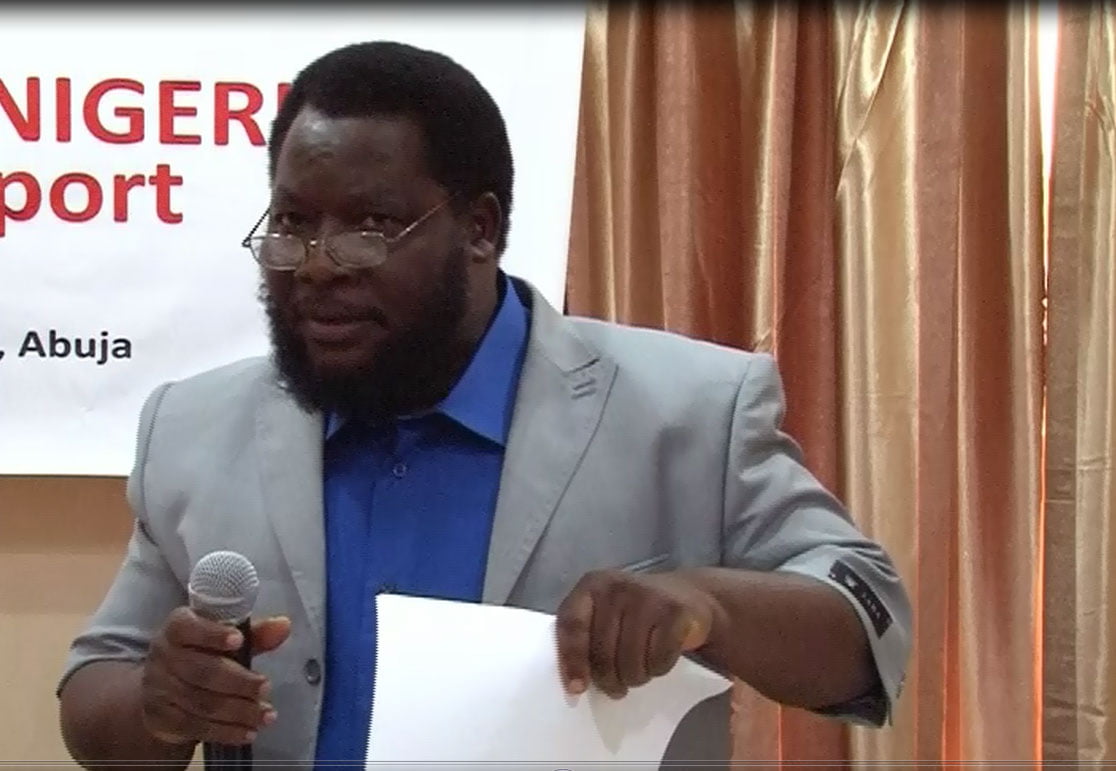
(Paper Presented By Comrade Femi Aborisade Esq, during a Webinar organised by STSINOIZ International Club, Nigeria, to mark the June 12, 2025 Democracy Day celebration, in commemoration of the Annulment of the 1993, June 12 Presidential Election in Nigeria won by Bashorun M.K.O. Abiola. Comrade Aborisade is a Lawyer, human and labour rights activist. He was fully involved in the struggle towards the actualisation of June 12, 1993 Presidential Election).


Introduction
I profoundly thank St. Sinoiz International Club for inviting me to present a lead paper to mark the 32nd official Anniversary of June 12 Democracy Day in Nigeria. I consider it a privilege to be invited as a member of the Club to do the presentation, even though I have not been an active member. My presentation is in three parts, namely: timeline of critical dates in the struggle for the actualisation of June 12, 1993 ; the significance of June 12; and the way forward.
Table 1: Timeline of Critical dates in June 12, 1993 Struggle
| Year | Date | Event |
| 1993 | June 12 | Conduct of Presidential election won by MKO Abiola with about 60% and Bashir Tofa of SDP about 40% |
| ‘93 | June 23 | General IBB annulled election citing irregularities |
| ‘93 | June 30 | CD declared a week of nationwide protests starting from July 5: about 200 persons were shot dead in Lagos alone |
| ‘93 | August 4 | Abiola left Nigeria unannounced |
| ‘93 | August 27 | IBB stepped aside, installed ING headed by Ernest Shonekan and Sani Abacha as Defence Minister |
| ‘93 | Nov. 10 | ING declared illegal by Hon. Justice (Mrs) Dolapo Akinsanya |
| ‘93 | Nov 17 | Defence Minister takes over as Head of State after forcing Shonekan to “resign” |
| 1994 | June 11
(Eve of June 12 1993) |
“Epetedo Declaration”: Self declaration as President – encouraged by mass protests and courageous pronouncements of the Court |
| ‘94 | June 23 | MKO arrested |
| ‘94 | July 5 | Oil workers (NUPENG and PENGASSAN) strike started a strike that lasted 2 months |
| ‘94 | August 3 | NLC calls nationwide strike |
| ‘94 | August 5 | Conditional bail granted MKO and rejected: no travels without leave of court, no address of rallies, not to do anything that would undermine peace, unity and stability |
| ‘94 | August | Arrest and Detention of Frank Kokori, Gen. Sec. NUPENG |
| ’94 | Oct 21 | Arrest of MKO Abiola declared illegal, null and void. |
| ‘96 | Jan | Arrest & detention of Milton Dabibi (Gen. Sec. PENGASSAN, 25 Jan)
Arrest of chief Gani Fawehinmi (Jan 30, Bauchi Prison), Femi Falana and Femi Aborisade – February 14, detained at Dutse Prison and Gumel Central Prison. released only in December 1996 pursuant to continued mass pressure domestically in Nigeria and internationally, including the visit of the European Delegation sent to the military regime to release us |
| 1996 | June 4 | Murder of Alhaja Kudirat Abiola |
| 1998 | June 6 | Abacha died in suspicious controversy: assassinated “poisoned” Major Hamza Mustapha, Chief Security Officer of Abacha |
| 1998 | June 30 | Secretaries General of the United Nations and the Commonwealth, Kofi Annan and Emeka Anyaoku respectively, met Chief Abiola in detention, in separate meetings but with the same agenda. They intimidated Chief Abiola that the international community would not recognize him as President because of the lapse of five years (1993-1998). They therefore wanted Abiola to sign an undertaking that he would abandon the June 12 agitation in exchange for his release from detention. According to Chief Abiola in a letter he wrote to the Late Chief Gani Fawehinmi, he told the two ‘international civil servants’, as he called them, that ‘the bar of public opinion has a code of practice totally different to that of a formal point of law’ and that ‘if a majority of OAU member-nations gave me recognition, the UN must automatically do the same e.g. the Angola situation between MPLA and UNITA’
|
| ‘98 | July 7, 1998 | through the tea prepared for him while meeting a special American Delegation led by an Under Secretary of State and a former Ambassador to Nigeria, Thomas Pickering. Abiola was murdered by the Nigerian State in collaboration with the so called “international community”, after four years in solitary confinement, totally cut off from the media, from his family, from any form of human interaction. As he put it in his letter to Late Chief Gani Fawehinmi, it was ‘the most wicked incarceration ever known – 4 years without exercise, access to the sun or even the corridor outside my room.” |
| 2018 | June 12 | conferment of the posthumous award of the Grand Commander of the Federal Republic (GCFR) on Chief MKO Abiola on the 25th Anniversary of June 12 in 2018. Being the highest award conferred on Presidents and/or former Heads of State of Nigeria, the conferment of GCFR, albeit, posthumously, represents an official recognition that Chief MKO Abiola won the June 12, 1993 election. This fact was made explicitly clear by President Muhammadu Buhari whilst conferring the award when he said, inter alia, that:
“… on behalf of the Federal Government, I tender the national apology to the family of late MKO Abiola who got the highest votes and to those that lost their loved ones in the course of June 12 struggle |
ASPECTS OF THE SIGNIFICANCE OF JUNE 12
A critical significance of June 12 lies in the celebration of the iron determination of the masses of our people to resist annulment of the democratic mandate given to Chief MKO ABIOLA and the resolve of the winner of the election not to compromise the democratic mandate.
June 12 (1993) struggles put an end to about 16 years of continuous military dictatorship from December 1983 till May 1999. Therefore, June 12 is the father and mother of “democracy” that Nigeria runs today. The blood, sorrow, pains and pangs of the masses who fought for June 12 as well as the loss of freedom of those who were arrested and detained paved the way for the ‘civilian’ regime we run today.
The question to ask is: Does the democracy we run today justify the sacrifices involved in the struggle for June 12?
Civilian regime is not synonymous with democracy. “Democracy” could be democracy of the rich for the rich and by the rich. The rich who have looted, they engage thugs to intimidate or induce the electorate or a section of the judiciary to influence outcomes of election petitions
‘Democracy’ can produce dictatorship in civilian garbs rather than in military regime.
The worst civilian regime, it is often said, is better than military regimes. No, I disagree. The worst civilian regime that is dictatorial is not better than military regimes that are dictatorial. A dictatorial civilian regime is in fact worse than military regime because the source of power is supposedly ‘democratic’. This does not mean i support military rule. I will oppose military rule anytime. But the worst civilian regime that is dictatorial is the same as the military regime that is dictatorial that should be opposed on the ground of dictatorship. What we oppose is not the military uniform. What we oppose is the essence or character of the regime characterised by dictatorship.
A civilian regime that suspends an elected governor and elected legislators as it has happened in Rivers State is not better than the military regime that annulled June 12, 1993 presidential election. Annulment of election either by the military or civilian regime, is a dictatorial act, which should be opposed. Annulment by a civilian regime is no less dictatorial than annulment by the military. However, the role of MKO Abiola can be appreciated from the unstable attitude of Fubara, the suspended Governor of Rivers State who appears to be prepared to defect to the party of the President who suspended him? Would June 12 struggles have taken place without the resolve of MKO Abiola?
IMPOSITION OF SOCIOECONOMIC POLICIES
Imposition of socioeconomic policies that hurt the masses and benefit the ruling class as it has happened in withdrawal of fuel subsidy which puts more money in the hands of governors and subjects the masses to pains and agony and without resistance by the legislature or with the support of the legislature is no less dictatorial than policies taken by the military without consulting the masses
The suspension of the Rivers State governor and legislature with the approval of the national Assembly is no less dictatorial than the acts of appointing state administrators under military regimes.
The Senate president didn’t contest election to be senator the courts said he was elected under Nigerian ‘democracy’. Election is one of the ways to change society. It’s not the only way. Another way is the road to revolution. Electoral democracy is democracy of the rich. The masses are excluded in many ways. June 12 shows us the glimpse of the alternative route to social change instead of regime change in which the same ruinous class of forces retains or rotates power.
The challenges of ‘democracy’ we face in Nigeria call for similar struggles waged for the actualisation of June 12.
THE SIGNIFICANCE OF JUNE 12
The significance of June 12 may be assessed from the inextricable intertwined standpoints of –unity of Nigeria, abolition of poverty and the imperativeness of the resolve to resist annulment of democratic rights. These are the recurring themes in the struggle to actualize June 12 mandate and in the campaign manifesto of Chief MKO Abiola, entitled: “Hope ‘93: Farewell to Poverty”[1].
On page x, 2nd paragraph of the Manifesto, Bashorun M. K. O. Abiola declared:
“Our Farewell to Poverty is a new covenant between government and people to be signed on the morning of August 27th 1993. From that date, the wellbeing of all the people of Nigeria, irrespective of tribe, tongue, religion or sex, will become the measure of the efficiency of Government”.
Concern for the frustrations and interests of the downtrodden against the privileged
The “Farewell to Poverty” Manifesto, issued by Chief MKO Abiola, a businessman, surprisingly showed concern for the frustrations and interests of the downtrodden against the privileged:
“…From that day [i.e. 27/8/1993] …No more will some be spectators because of unemployment while a tiny privileged minority usurp the juicy fruits of our land”[2] (page 1, 2nd paragraph).
He went further:
“Driven by frustration with the general downward trend in most spheres of our lives, the majority of our countrymen have begun to express doubts about the future of our dear country and the promise which it holds for all of us” (page 1, 3rd paragraph of the Manifesto).
The quotations from the manifesto of Bashorun MKO Abiola show that the principal preoccupation of the symbol of June 12 was ‘Farewell to Poverty’.
The programme of Farewell to Poverty reflects an understanding that there is a relationship between Poverty and the possibility of sustaining the unity of Nigeria. In an atmosphere of pervasive poverty and lack, loyalty would tend to be to primordial identities of ethnicity, tongue and religion rather than to the country. However, where Nigeria is able to solve the problem of basic physiological needs, the country would command loyalty of the citizenry. Farewell to Poverty therefore reflected the concern of Bashorun Abiola that the struggle of ordinary Nigerian masses against continued military dictatorship and to live under a democratic political regime would be meaningful only if it resulted in abolition of poverty.
We can therefore argue that the electorates were rationale in their decision to give Bashorun Abiola the majority of the votes mainly because of the Manifesto of Farewell to Poverty such that the candidate of the NRC, Bashir Tofa, from Kano State, was defeated in Kano State where the SDP/Bashorun Abiola scored 52% of majority of lawful votes. Overall, Bashorun Abiola had overwhelming majority of the votes in 10 out of 19 States of Northern Nigeria; and in 20 States of Federation, out of 36 States, including the Federal Capital Territory.
The significance of June 12 may therefore be summed up as the desire and preparedness of the overwhelming masses of Nigeria to fight for freedom from continued military-political dictatorship and freedom from want and lack as encapsulated in the Manifesto of Farewell to Poverty, in a united Nigeria. Celebrating June 12 therefore has nothing to do with any secessionist agenda; it has nothing to do with Oodua Republic and it has everything to do with the striving to keep Nigeria united, in an atmosphere of freedom to continue to negotiate and renegotiate the terms of sustaining a united country.
THE SIMILARITY BETWEEN THE ESSENCE OF JUNE 12 AND THE DREAM OF DEMOCRACY AS A CONCEPT
There is a similarity between the essence of June 12, which we have partly recognized as ‘farewell to poverty’ and the dream of democracy as a concept. I argue that the dream or essence of democracy as a concept is also constitutionally protected in Sections 14(2)(b), 16(1)(b) and 16(2)(b) of Nigeria’s Constitution. These three sections of the Constitution reflect a constitutionally sanctioned understanding that there is an inseparable relationship between material well being and physical security. On the one hand, where material poverty prevails, physical insecurity would prevail. On the other hand, providing for the material wellbeing of ordinary people would guarantee physical security.
Section 14(2)(b) provides that ‘the security and welfare of the people shall be the primary purpose of government’ while S. 16(2)(b) prescribes that ‘the State shall ensure that the material resources of the nation are harnessed and distributed as best as possible to serve ‘the common good’.
Section S. 16(1)(b) provides that ‘the state shall control the national economy in such manner as to secure the maximum welfare, freedom and happiness of every citizen on the basis of social justice and equality of status and opportunity’.
In other words, where material welfare is neglected and people are unhappy, or are frustrated, angry and hungry, physical insecurity must be the order of the day.
Therefore, I argue that the constitutional essence or goal or measure or end of democracy is: abolition of material poverty. Material Poverty threatens physical or material existence of any human being. Material Poverty is at the root of physical insecurity. Abolition of poverty is an assurance of physical security.
Democracy: The Reality of Nigeria
Here, I pose the question again: Does the Nigerian State serve the end of democracy as constitutionally defined?
I reiterate the answer in the negative. Poverty, in all its dimensions, is unprecedentedly perniciously pervasive:
- Poverty of economic insecurity (survival)
- Poverty of physical insecurity,
- Poverty of marginalisation and exclusion from opportunities to participate in political decision-making processes, and
- Poverty of criminalisation of the right of assembly and peaceful action.
WAY FORWARD
- People of conscience must come together and be intentional and determined to effect changes, to win power and reorganize society. Undemocratic forces, Yahoo-yahoo boys and girls, dug barons are consciously organising politically and controlling power at different levels. When we engage in discussions of this nature and we identify what is wrong and the way forward, we should consider organizing to actualise the dream. We should not just declare a manifesto and expect some other unidentified forces to carry it out.
- Societal wealth is being concentrated in the hands of a few to facilitate and perpetuate state capture. Concentrated wealth in the hands of a few means concentrated power as it facilitates political capture and political capture breeds economic and political exclusion, i.e. economic and political inequality. Removal of subsidy has meant more money for governors to loot and pervasive grinding poverty for the generality of the people.
- We need to fight against certain policies such as privatisation by which wealth is being concentrated in few hands.
- Campaign for constitutional amendments to pass and enact a moral code of conduct for contestants for political offices. Such enactments should exclude persons who forge certificates and/or indulge in any other conduct of moral turpitude. The expectation is that such a moral code of conduct would enable ordinary people of character to emerge as candidates to contest and win elections, as more and more of wealthy candidates with skeletons in their cupboards may be excluded, by law, from the electoral process.
- Right of independent candidacy in national political elections.
- The constitutional right of political parties to exist and campaign for elective offices regardless of scope of influence, even if locally based or limited to wards, local governments or states.
- Fight against Poverty of marginalisation and exclusion from opportunities to participate in political decision-making processes. The constitutional policy of ‘national parties’ is a barrier to popular participation in politics and we should campaign for an amendment. The provisions include:
- 222(e) a political party shall not be confined to only one geographical area of Nigeria.
- 222(f) the headquarters office of the party must be in Abuja.
- 223(1)(b) the national Executive Committee (NEC) of the Party shall reflect Federal Character.
The party structure is thus conceived in the image of a Nigerian institution with nation-wide presence. Only those who have looted public treasury or unduly ‘benefitted’ by the wielders of state power can meet the constitutional requirements and make impact electorally. The poor classes are automatically excluded.
Fight against Insecurity. Bring perpetrators of physical insecurity to justice. But we must recognise that politics crates and manufactures perpetrators of insecurity. The state in Nigeria has acquired the attributes of bandits and terrorists who have no regard for rule of law
- Borno State Governor, Prof. Babagana Zulum, has raised the alarm that only one town out of 300 remains under government control in Marte Local Government Area, warning that Boko Haram terrorists are on the brink of taking over the entire LGA
- Defend right to strike and opposition to “no work no pay”, particularly in the context of Section 30(6)(b) &(c) of the Trade Unions Act. – i.e. context of disputes of right and where the employer breaches contracts of employment or Collective Agreements. Without the roles of NUPENG and PENGASSAN, June 12 struggles might not have shaken military regime to its roots.
- Fight against Poverty of criminalisation of freedom of peaceful protests as we witnessed during the 2020 #endsars protests, #endhunger & #endbadgovernance protests on 1st-10th August 2023 and the #FearlessinOctober 2024 protests of the youths.
I thank you for your attention.
Femi Aborisade, Esq.
12/6/2025
[1] Bashorun MKO Abiola (1993) Hope ‘93: Farewell to Poverty – How to make Nigeria a better place for all” (Team work communications)
[2] page 1, 2nd paragraph of Hope ‘93: Farewell to Poverty – How to make Nigeria a better place for all.
 We do everything possible to supply quality news and information to all our valuable readers day in, day out and we are committed to keep doing this.
Your kind donation will help our continuous research efforts.
-Advertisement-

-Want to get the news as it breaks?-