



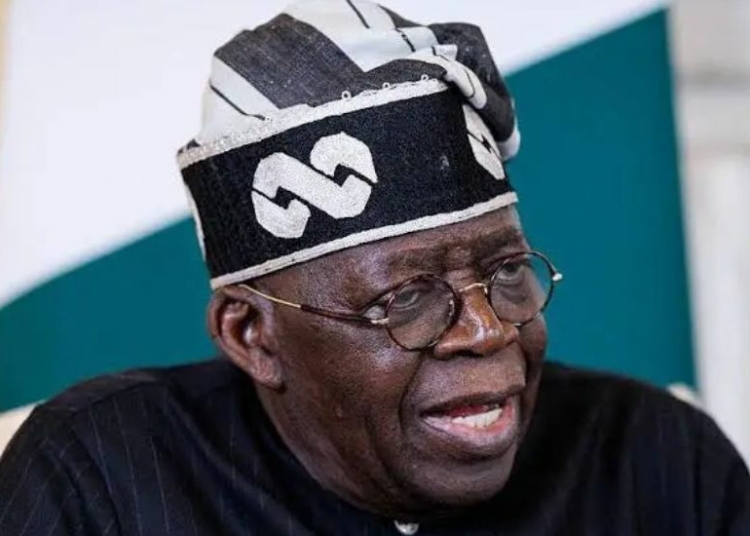

President Bola Ahmed Tinubu has declared that Nigeria has moved beyond the most difficult phase of his administration’s economic reforms, saying the country is now entering an “age of prosperity.”
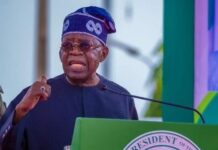
Tinubu made the declaration on Thursday in his Independence Day address to Nigerians as the country marked its 66th anniversary.


In the address themed “From Reform to Prosperity,” the President defended the removal of petrol subsidy and the unification of the foreign exchange market, arguing that the measures were necessary to address longstanding economic distortions.
He compared Nigeria’s previous economic situation to a cancer patient faced with the choice between undergoing painful treatment and relying on medication that merely suppresses the symptoms.
“For too long, Nigeria’s leaders chose morphine while praying for a miracle that never came,” Tinubu said.

The President argued that the reforms implemented by his administration did not create the country’s economic weaknesses but were designed to address them.
“Our reforms did not create the weaknesses in our economy. They confronted them,” he said.
Subsidy Debate
Tinubu also criticised calls for a return to petrol subsidy payments, urging Nigerians to reject what he described as a “siren song” to reverse the policy.
He said the country must remember the reasons behind the reforms and continue with the changes already introduced.
The issue is emerging as a major policy debate ahead of the 2027 general election, with politicians taking different positions on the future of petrol subsidies.
Tinubu Lists Economic Gains
Three and a half years into his administration, Tinubu said the reforms had produced measurable improvements in the economy.
He claimed that Nigeria’s economy had grown by more than four per cent in 2026, with both the oil and non-oil sectors contributing to the growth.
According to him, oil theft had declined, inflation had fallen from its peak, foreign reserves had increased and the foreign exchange market had stabilised.
He also said Nigeria recorded more than $6 billion in non-oil export revenue in 2025, which he described as the country’s highest-ever figure.
“These are not idle claims,” Tinubu said, arguing that international observers and multilateral institutions had recognised improvements in Nigeria’s economic stability and resilience.
‘Emergency Treatment Is Over’
Declaring what he described as a new phase for the economy, Tinubu said the government’s immediate priority had shifted from correcting economic distortions to delivering broader prosperity.
“The emergency treatment is over. The foundation has been repaired,” he said.
“For three years, our overriding purpose was to correct our nation’s course. Now, our purpose is simple: shared and widespread prosperity.”
The President said prosperity should translate into tangible improvements in the lives of Nigerians, including lower production costs, reliable electricity for factories, access to credit, jobs for young people and improved affordability of food, transportation and education.
Jobs, Agriculture Take Centre Stage
Tinubu said his administration would focus more heavily on jobs, enterprise and industrial expansion.
He announced plans to use Nigeria’s gas resources to support new industries, revive factories, expand digital connectivity and invest in skills required by employers.
On agriculture, he said the government would expand mechanised irrigation and dry-season farming, improve access to seeds and fertiliser and strengthen agricultural mechanisation.
He also highlighted investments in storage, roads, railways and ports to improve the movement of agricultural and industrial goods.
“I want to see more Nigerians making things,” Tinubu said. “I want to see more Nigerian farms feeding our cities and supplying our factories.”
Poverty And Social Support
The President acknowledged that millions of Nigerians continue to face difficulties meeting basic needs despite the reforms.
He said the government would strengthen support for vulnerable households and improve the National Social Register to ensure assistance reaches those in need.
Tinubu also cited the Nigerian Education Loan Fund, which he said is helping students from low-income families access higher education, as well as CREDICORP, which provides consumer credit for assets including vehicles and solar systems.
He said salaries and pensions had been paid on time since 2023 and that reforms to the national pension programme were intended to benefit retirees and vulnerable Nigerians.
“These programmes are not substitutes for prosperity. They are a bridge,” he said.
“Our objective is not to manage poverty more efficiently. We will defeat it.”
Tinubu ended the address with a call for Nigerians to look ahead, saying the country had “passed through our own Red Sea” and should now focus on building a more prosperous future.
“The age of reform has done its work. Now begins the age of prosperity,” he declared.
The President’s address comes amid continuing debate over the cost of living, economic reforms and competing policy proposals ahead of the 2027 elections.
 We do everything possible to supply quality news and information to all our valuable readers day in, day out and we are committed to keep doing this.
Your kind donation will help our continuous research efforts.
-Advertisement-

-Want to get the news as it breaks?-