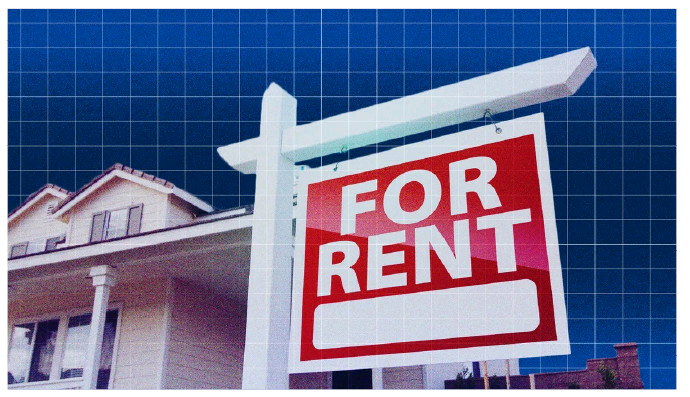

Nigeria’s housing crisis has taken a sharper turn, with rental costs surging by as much as 200 per cent over the past two years, intensifying pressure on households and reshaping urban living patterns across major cities.
A new report by Fortren & Company indicates that Nigeria, with Lagos at the centre of the crisis, has emerged as one of Africa’s most expensive rental markets, driven by rising construction costs, inflationary pressures, currency depreciation, and tight credit conditions.
According to the report, escalating prices of building materials and high borrowing costs have significantly increased the cost of property development, making homeownership increasingly out of reach for a large segment of the population. This has, in turn, fuelled demand for rental accommodation, further driving up prices.


Data cited in the report shows that Lagos now ranks fourth among African cities with the highest rents for two-bedroom apartments, trailing Abidjan, Cape Town, and Accra.
The study, titled “Average Rent of 2-bedroom Apartments Across Africa’s Most Important Cities,” estimates that luxury two-bedroom apartments in prime Lagos locations such as Ikoyi, Banana Island, and Victoria Island now cost an average of $19,379 annually (approximately N26.8 million).
While Lagos remains below some continental peers in dollar terms, analysts warn that the burden is significantly heavier in Nigeria due to weaker income levels and currency depreciation, making affordability increasingly unsustainable for average earners.

Principal Partner at Ubosi Eleh + Co, Chudi Ubosi, noted that rental prices have risen by between 50 and 200 per cent within the last 24 months, describing the trend as severe and unprecedented.
He added that the income-to-rent ratio has now climbed to around 70 per cent in many urban centres, far above the United Nations’ recommended threshold of 30 per cent, underscoring the depth of Nigeria’s housing affordability crisis.
The surge in rent is forcing many households to allocate a disproportionate share of their income to accommodation, leaving limited room for other essential expenses and worsening living conditions.
Analysts further observe that the pressure is triggering a gradual urban displacement, with many residents moving away from city centres to peri-urban communities in search of more affordable housing. However, these areas often come with longer commuting times and weaker infrastructure.
In these outskirts, annual rents for two-bedroom apartments currently range between N1.5 million and N2.5 million, offering some relief but still posing challenges for low- and middle-income earners.
Despite growing demand, experts warn that Nigeria’s rental burden is likely to worsen if structural issues such as high construction costs, limited housing finance, and speculative property pricing are not urgently addressed.
The report also highlights that Lagos’ high rental values are driven by limited land availability in prime districts, rising development costs, currency volatility, and increased interest in dollar-denominated leases in high-end neighbourhoods.
Research Director at Fortren & Company, Martin Uche, noted that luxury properties in exclusive Lagos corridors such as Ikoyi’s Bourdillon, Alexandra, and Gerrard areas command rents as high as $130,000 annually, reflecting strong demand from high-income tenants and expatriates.
Across Africa, similar trends are being recorded. In Cape Town, rents have risen by 68.5 per cent since 2014, driven by migration patterns and short-let demand, while Accra continues to experience pressure from multinational firms, diplomatic missions, and expatriate housing needs.
The report also draws attention to Africa’s widespread reliance on advance rent payments—often spanning one to two years—particularly in Nigeria, Ghana, Sierra Leone, and Cameroon. This practice, linked to weak credit systems and low rental financing penetration, continues to place additional strain on tenants.
Stakeholders warn that without deliberate policy intervention to expand housing supply and improve affordability, Nigeria’s rental crisis could deepen further, pushing more citizens out of formal housing markets and widening urban inequality.
 We do everything possible to supply quality news and information to all our valuable readers day in, day out and we are committed to keep doing this.
Your kind donation will help our continuous research efforts.
-Advertisement-

-Want to get the news as it breaks?-