


By Wisdom Deji-Folutile
Another rainy season envelops the West African nation of Nigeria, and along with it has come an exacerbation of fears of flooding.
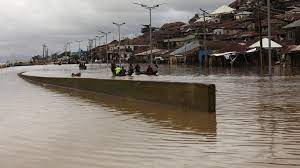
Flooding in Nigeria, increasingly deadly with each annual appearance, has become an issue of national concern. Most recently, Nigeria experienced its worst flooding in the last ten years in 2022.


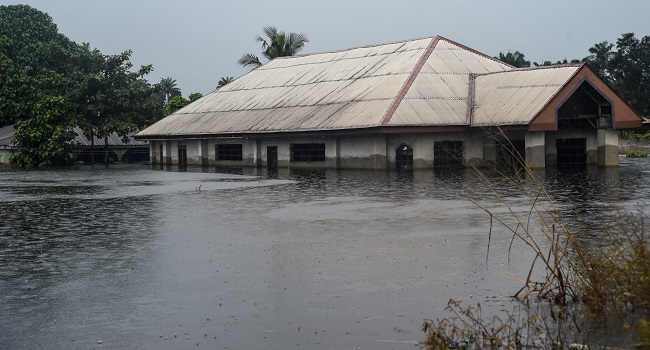
The 2022 floods, starting in late August and peaking in October, affected many parts of the country, killing 600 people and displacing 1.4 million more. Hectares of farmland were damaged, and thousands of houses were partially or totally submerged, rendering most of them damaged and unusable.
Although the flooding was exacerbated by the perennial release of water from the Lagdo Dam in Cameroon, a climate modeling study by the World Weather Attribution revealed that heavier rainfall due to climate change increased the likelihood of severe flooding in the country.
In order to avoid a repeat of 2022’s disaster, the Nigerian Government has attempted to be more proactive. In early June, the National Emergency Management Agency (NEMA) warned that 14 states, along with 31 other communities, may witness heavy rainfall, which could lead to significant flooding.

States step up preparations
Although the announcement was concerning rainfall between July 4-8, 2023, the federal government has nevertheless continued to deploy experts to at-risk states across the federation.
In its preparation to manage imminent flood disaster, the government had in late June said it deployed experts from the NEMA, the Nigerian Meteorological Agency (NiMet), and the Nigerian Hydrological Services Agency (NIHSA) to all 36 states of the federation, including the Federal Capital Territory, Abuja, to cascade early warning messages to all the relevant end users at risk of flood disaster and associated hazards
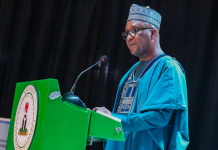
The Director General of NEMA, Alhaji Mustapha Ahmed, had in a keynote address disclosed the deployment of experts.
State Governments have since the announcement set steps to mitigate the brewing disaster.
For instance, The Rivers State Flood Management Committee, which was set up to coordinate activities designed to mitigate the impact of the flood, took to airwaves in early July to sensitize residents to the looming flood and ask them to prepare to move to higher grounds.
The authorities of the Abua, Opobo, Emohua, Okirika, Ahoada, and Ikwerre local government areas, all of which are prone to flood, have also set up their own flood monitoring and intervention committees.
The Akwa Ibom State Government also responded to the gloomy reports of looming doom.
State Deputy Governor Akon Eyakenyi had acknowledged that though flood incidents are natural disasters that cannot be stopped, the state government was making preparations.
According to her, state preparations included the development of IDP camps across 31 local government areas in the state, and training personnel in disaster management.
Although states have continued to step up efforts to stockpile reliefs and deploy on-ground expertise, Flooding is evidently sparsely avoidable. However, flood waters can rise when drainage systems are clogged, or structures erected on waterways.
As such, the Ekiti State educated its residents on acts that can lead to flooding and other natural disasters during this rainy season and beyond.
In an official inspection, the State Emergency Management Agency (SEMA) and NEMA stressed the importance of proper disposal of refuse and the dismantling of structures situated on waterways.
Delta State Governor Sheriff Oborevwori ordered the demolition of all buildings on waterways across the state.
The Delta Governor also directed the state ministries of Housing, Works, and Lands to identify and pull down all such buildings to allow for the free flow of water on natural waterways.
He said: “We started the inspection with Phase 2 of the stormwater drainage project being handled by CCECC. They have five catchment areas. We have looked at their work and realised that they have done a lot as they have gone very far.
“They have some obstacles and we also looked at what is causing the obstacles and got to know that there are some buildings on natural waterways, which is causing obstructions and slowing down the spate of work being done by the construction firm.
“We also assured the contractors that all the buildings on the waterways, both in phase l and phase 2, will be brought down by the state government to enable them to finish their work seamlessly.”
No concrete preparations, at-risk residents insist
Although several state governments insist that preparations are underway, investigations by the media revealed that residents in at-risk areas have remained despondent.
According to investigations by The Nation in Bayelsa, Rivers, Delta and Akwa Ibom, residents, some members of committees set up for flood preparations, have insisted that no serious efforts have been made to prepare for the flood.
Residents of Cemetery Road in Azikoro Village, Yenagoa asked the relevant agencies to clear the canals that empty water into Azikoro Village from Cemetery Road.
A member of the recently inaugurated Committee on Flood and Erosion Control in Bayelsa State told The Nation that the committee was yet to begin work because it had not been mobilised by the government.
Mr. Royal Egede, a resident of Cemetery Road in Azikorro Village, Yenagoa, urged the government to clear drainage channels and make relief materials available to residents proactively.
“We suffered during the 2022 floods severely. The disaster really affected us so much here and up till now, we have not received any help,” he shared.
An environmentalist, Mr. Alagoa Morris, claimed that successive administrations in the state have not given flooding the attention it requires since its creation in 1996.
He said while the establishment of the Flood and Erosion Control Directorate by Governor Douye Diri looks good on paper, it needs to be empowered to deliver on its mandate.
Limited reference to health, food preparations
There has also been a limited reference to health preparations. Flooding in Nigeria has been documented to threaten human lives in more dimensions than one. For instance, in the 2022 floods, a cholera outbreak in northeast Nigeria was attributed to the contamination of water sources by flooding. The outbreak was eventually responsible for the deaths of at least 64 people.
Food insecurity is also another notable threat, as floods damage thousands of hectares of arable land used for agricultural production.
In the aftermath of the 2022 floods which saw damage to over 340,000 hectares of land across 33 states, the UN revealed that 19 million people in the country were suffering food insecurity. About 15 million children were also at risk of malnutrition. Inflation rates for food production had also notably skyrocketed.
In all, although the country has stepped up efforts to address the flooding crisis, gaping holes remain to be filled.
 We do everything possible to supply quality news and information to all our valuable readers day in, day out and we are committed to keep doing this.
Your kind donation will help our continuous research efforts.
-Advertisement-

-Want to get the news as it breaks?-