





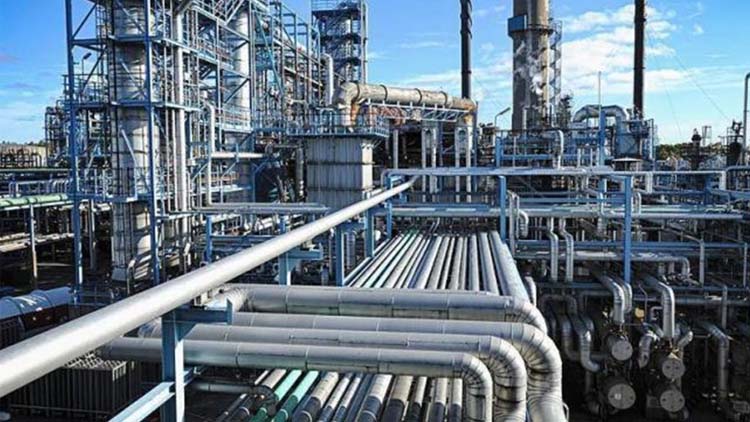

Nigeria’s crude oil refining output has dropped by 92% over the past decade, according to data from the World Energy 2023 report.
The report reveals that the country’s four refineries produced just 6,000 barrels per day (bpd) in 2022, compared to 92,000 bpd in 2012.


This decline in production capacity aligns with the findings of the Organisation of the Petroleum Exporting Countries’ Annual Statistical Bulletin 2023, which reported an 81% drop in Nigeria’s crude oil refining capacity from 33,000 bpd in 2018 to 6,000 bpd in 2022.
Despite owning four government-owned refineries, Nigeria continues to import refined petroleum products.

The refineries, located in Port Harcourt, Warri, and Kaduna, have a combined capacity to process 4.45 million barrels of crude oil daily.
The Nigerian government, under President Bola Ahmed Tinubu, aims to have the refineries operational by December.
READ ALSO: (SPECIAL REPORT) Rising Cost of Medical Drugs Leaves Nigerians with Impossible Choices
The Minister of State for Petroleum, Heineken Lokpobiri, stated in August that the Port Harcourt plant would begin operations by the end of this year, while the Group Chief Executive Officer of the Nigerian National Petroleum Corporation Limited (NNPCL), Mele Kyari, confirmed that the Port Harcourt refinery will start operating in December 2023.
“I can confirm to you that by the end of December this year, we will start the Port Harcourt refinery; early in the first quarter of 2024, we will begin the Warri refinery, and by the end of 2024, the Kaduna refinery will come into operation.
“We will no longer discuss fuel importation by the end of 2024. I am very optimistic that this will crystallize,” he said.
 We do everything possible to supply quality news and information to all our valuable readers day in, day out and we are committed to keep doing this.
Your kind donation will help our continuous research efforts.
-Advertisement-

-Want to get the news as it breaks?-