
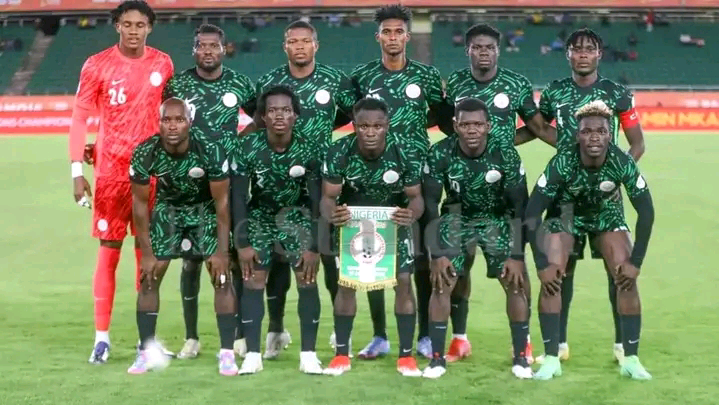
The Nigeria Football Federation (NFF) has launched an investigation into the eligibility of DR Congo players who featured in the 2026 FIFA World Cup African qualifiers, raising the possibility that Nigeria’s Super Eagles could still secure a spot at the tournament in the United States, Canada, and Mexico.
DR Congo eliminated Nigeria in November after a 4–3 penalty shoot-out in Morocco, ending Nigeria’s chance to advance to the FIFA intercontinental play-off. The Congolese team is scheduled to face the winner of the semi-final between New Caledonia and Jamaica, but their participation may now be questioned.
READ ALSO: NLNG Outlines Path to Sustainable LNG at World LNG Summit
Concerns centre on six to nine DR Congo players who reportedly switched national allegiance without fully complying with domestic eligibility rules. While FIFA cleared the players based on valid DR Congo passports, the NFF alleges they did not formally renounce previous citizenships, violating Congolese law which prohibits dual nationality.


A member of the NFF executive board told PUNCH Online, “Their constitution does not allow dual citizenship, and some players had that status during the play-offs. That is the loophole we are exploring.”
NFF General Secretary Dr Mohammed Sanusi added: “FIFA rules allow eligibility once a player holds a country’s passport, but our concern is that FIFA was misled into clearing them. It is not FIFA’s duty to enforce domestic Congolese regulations; we have submitted a petition challenging the process.”
This development has rekindled Nigeria’s hopes of participating in the 2026 World Cup, having already missed out on the 2022 edition in Qatar. DR Congo, known as Zaire in 1974, has only appeared at a FIFA World Cup once before.

The investigation is ongoing, and the NFF is seeking clarification from FIFA regarding the players’ eligibility, potentially reshaping Africa’s qualifying landscape.
 We do everything possible to supply quality news and information to all our valuable readers day in, day out and we are committed to keep doing this.
Your kind donation will help our continuous research efforts.
-Advertisement-

-Want to get the news as it breaks?-