

The International Committee of the Red Cross (ICRC) has raised fresh alarm over worsening food insecurity in North East Nigeria, revealing that over 3.7 million people are now at risk of acute hunger due to conflict, displacement, and failed harvests.
The ICRC report, released in Abuja, revealed that conflict had not only displaced millions but also devastated farmlands and food systems. The lean season has now pushed already struggling families into deeper crisis, with many surviving on meagre supplies or going without food altogether.


According to Diana Japaridze, head of the ICRC’s Maiduguri office, the organization is responding by supporting malnutrition centres and distributing farming tools and seeds to over 21,000 households, while also training farmers in sustainable practices. However, she warned that the interventions cannot fully stem the tide of hunger without a coordinated national response.

The Food and Agriculture Organisation (FAO) and UNICEF also released grim statistics: 3.7 million children in the region are currently battling severe malnutrition and diseases linked to hunger, including stunting and wasting. Areas such as Yobe, Zamfara, Sokoto, Katsina, Maiduguri, Jere, and Nganzai are facing emergency-level nutrition crises.
In spite of the Right to Food Act of 2023, which makes food security a constitutional right, implementation has faltered. The act mandates government to ensure food availability and affordability, yet poor enforcement, ongoing insecurity, inflation, and floods have rendered millions food-insecure.
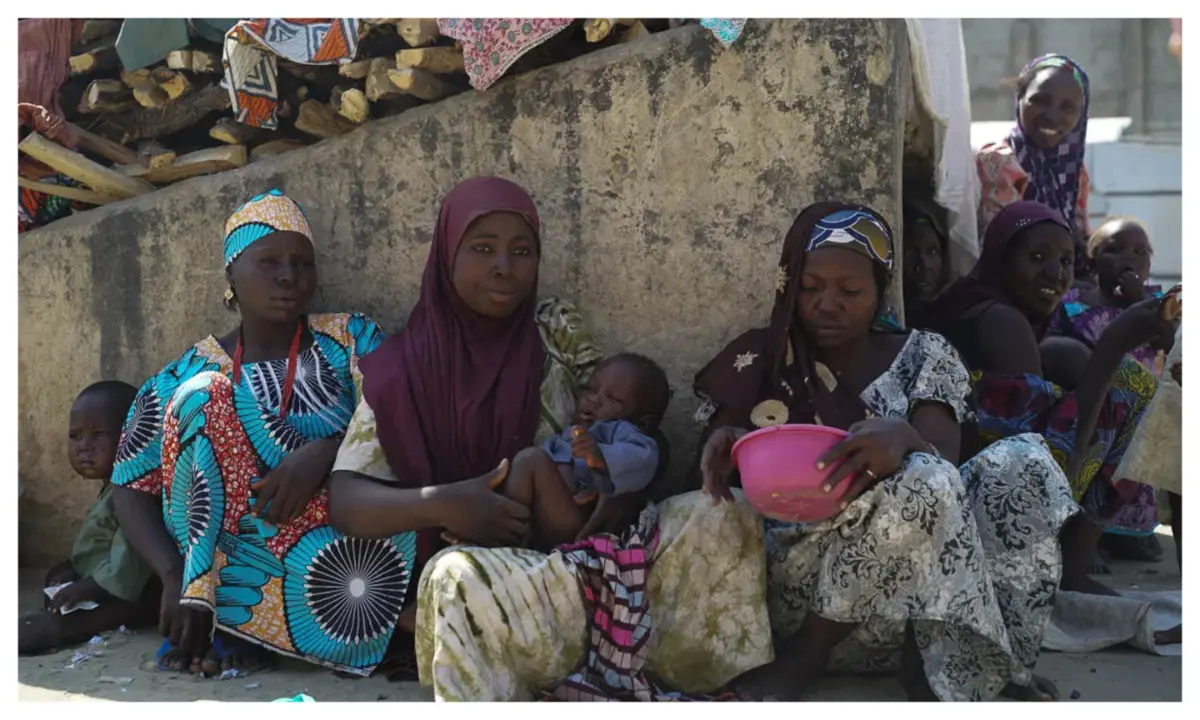
Community voices echo these concerns. Modu Umar, a leader in Dikwa, lamented the desperation in his town, where some families now rely on selling firewood to afford a single meal. In Gajibo, 70-year-old Churi Ibrahim described farmers trekking hours just to reach inaccessible fields amid escalating security threats.
Bintu Konto, a mother of five, said farming in fear had become a way of life. “If we don’t farm during the rainy season, we’ll have nothing to eat,” she said.
Earlier reports had shown that over 40,000 Nigerians fled across the border to Niger Republic seeking refuge from hunger. Similar protests over food prices were held in Lagos, Kano, Oyo, Sokoto, Katsina, and Niger, as the cost of living continues to spiral beyond the reach of ordinary Nigerians.
READ ALSO: Nnamdi Kanu’s release not condition for South-East to support Tinubu in 2027 – Umahi
Despite these urgent warnings, experts say there is still no coherent long-term policy to implement the Right to Food Act. Dr Michael Terungwa David, Executive Director of GIFSEP, stressed that food is a right, not a privilege. “The Act is a step forward, but a law is only as powerful as its enforcement,” he said.
From the Federal Ministry of Health, nutrition director Ladidi Bako-Aiyegbusi urged lawmakers to prioritise pro-nutrition funding and annual constituency-level debates on food security to hold local governments accountable.
Educationist Mallam Sabiu Abubakar said the situation should not surprise anyone. “With insurgency, banditry, floods, and displacements keeping farmers out of their land, hunger was inevitable,” he said. He called on the government to decisively flush out all criminal elements in the region, so displaced persons can return and rebuild.
As hunger grips millions and food insecurity expands beyond the North East, observers warn that unless bold, immediate action is taken, Nigeria risks slipping into a full-blown humanitarian emergency.
 We do everything possible to supply quality news and information to all our valuable readers day in, day out and we are committed to keep doing this.
Your kind donation will help our continuous research efforts.
-Advertisement-

-Want to get the news as it breaks?-