



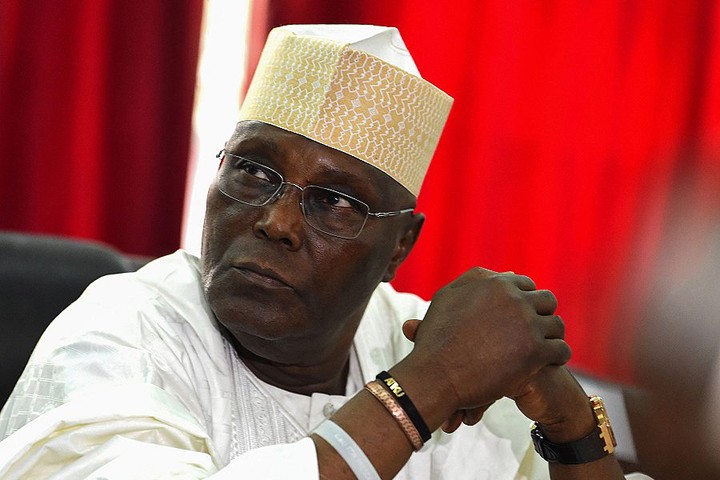

Former Vice President Atiku Abubakar has demanded greater accountability over the savings from fuel subsidy removal as petrol prices rise to as much as N1,470 per litre in Nigeria.
Atiku, the African Democratic Congress presidential candidate, said the latest increase had further intensified the cost-of-living pressures facing households, arguing that the impact of higher petrol prices extends far beyond filling stations.


His position was contained in a statement by his spokesperson, Phrank Shaibu, on Monday.
Atiku said increases in petrol prices directly affect transportation costs and subsequently raise the cost of food, school runs, farming, manufacturing and other essential activities.
“Petrol at N1,470 per litre is not merely a figure at the filling station. It enters the price of transportation, food, school runs, farming, manufacturing and virtually everything Nigerians buy. Every increase at the pump travels directly into the household budget,” he said.

The former Vice President also questioned the economic justification for removing fuel subsidies if the resulting savings were not being sufficiently deployed to cushion the effect of higher energy costs on Nigerians.
“After all the pain imposed on Nigerians, they have a right to ask: where are the subsidy savings and where is the money?” Atiku asked.
He further compared current petrol prices with those recorded during the administration of the late President Umaru Musa Yar’Adua.
According to Atiku, crude oil was selling for about $147 per barrel in 2008, yet petrol was sold at N65 per litre.
He contrasted that with the current situation, where he said crude oil was trading around $102.52 per barrel while Nigerians were paying as much as N1,470 per litre for petrol.
“With crude oil around $102.52 per barrel, Nigerians are paying as much as N1,470 per litre. In 2008, when crude oil reached about $147 per barrel, petrol sold at N65 per litre under the Yar’Adua administration. The difference is that government then understood that economic policy must ultimately protect the welfare of citizens,” he said.
The comparison forms the basis of Atiku’s demand for an explanation of how the savings generated from the subsidy reform are being applied, particularly amid continued increases in the cost of transportation and other essential goods and services.
His comments come as fuel prices remain a major factor in Nigeria’s cost-of-living debate, with changes in petrol prices having broad implications for households and businesses because of the country’s heavy reliance on road transportation.
 We do everything possible to supply quality news and information to all our valuable readers day in, day out and we are committed to keep doing this.
Your kind donation will help our continuous research efforts.
-Advertisement-

-Want to get the news as it breaks?-