



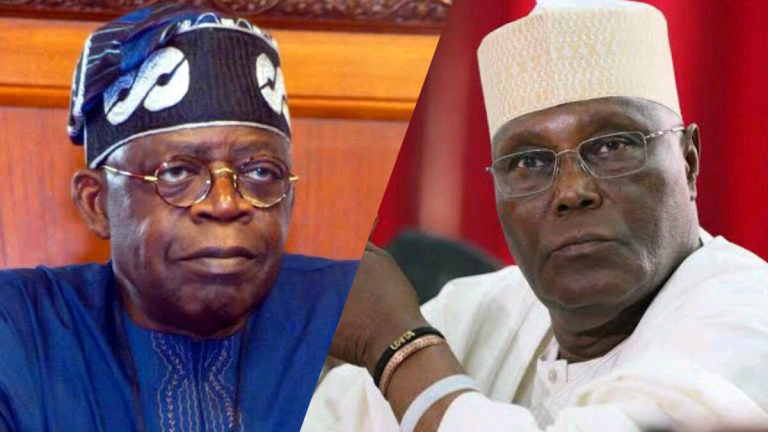

The Presidency has defended President Bola Tinubu’s economic policies, rejecting allegations by former Vice President Atiku Abubakar that the administration is pursuing reckless fiscal policies and steering the country towards economic decline.
In a lengthy response issued on Sunday, Special Adviser to the President on Information and Strategy, Bayo Onanuga, accused Atiku of relying on outdated figures and presenting a distorted picture of the Nigerian economy.
The statement, titled “Facts, Not Fear: A Point-by-Point Response to Atiku Abubakar on Nigeria’s Reform Journey,” argued that criticisms of the administration’s reforms failed to reflect the country’s economic realities in 2026.


Onanuga said Atiku’s assessment was largely anchored on developments in the 2024 fiscal year, describing such an approach as misleading because it ignored improvements recorded since the implementation of key reforms.
He maintained that the Tinubu administration had never promised that the reforms would be painless but insisted they were necessary to address structural distortions that had hindered economic growth for decades.
According to him, Nigeria’s economy has shown significant recovery since the exchange-rate adjustment, noting that the country’s dollar-denominated Gross Domestic Product, which dropped to about $253 billion after the currency realignment, has rebounded to approximately $377 billion.

He added that the country’s naira-denominated GDP also rose from about ₦314 trillion in 2024 to around ₦530 trillion, attributing the growth to increased economic activities and the impact of ongoing reforms.
Defending the Federal Government’s borrowing policy, Onanuga argued that debt should be assessed in relation to the size of the economy and the purpose for which funds were obtained rather than the absolute amount borrowed.
He said Nigeria’s debt-to-GDP ratio remained below 40 per cent, while the debt service-to-revenue ratio had fallen from nearly 100 per cent in December 2022 to below 60 per cent under the current administration.
The presidential aide also defended the removal of fuel subsidy, describing it as one of the boldest economic decisions taken by the government.
He argued that the policy had significantly increased statutory allocations to states and local governments, giving sub-national governments more resources to fund infrastructure, healthcare, education, salaries and social programmes.
Onanuga further dismissed Atiku’s criticism of the administration’s tax reforms, insisting that the measures were designed to broaden the tax base while protecting low-income earners and small businesses.
According to him, individuals earning ₦1 million or less annually, as well as businesses with turnovers below ₦100 million, have been shielded from increased tax burdens, while compliance among high-income earners has been strengthened.
He also highlighted the administration’s investments in healthcare, saying over 3,000 primary healthcare centres had been upgraded, more than 78,000 frontline health workers retrained, and free caesarean sections made available to indigent women in over 100 public health facilities nationwide.
On education, Onanuga said the Nigerian Education Loan Fund had disbursed more than ₦303 billion to over 1.64 million students across about 300 higher institutions, describing the initiative as unprecedented.
He added that over 11,000 projects had been undertaken through the Universal Basic Education Commission in partnership with state governments to improve learning at the basic education level.
Responding to Atiku’s allegation of an unaccounted ₦7.98 trillion oil windfall, Onanuga dismissed the claim as unfounded.
He explained that government oil revenue could not be calculated by simply multiplying crude oil prices by production volume, noting that such estimates ignored production costs, contractual obligations and forward sales arrangements.
According to him, fluctuations in crude production also offset gains from higher global oil prices, while portions of crude revenue remained committed to existing obligations.
The Presidency maintained that Nigeria’s economic reforms were already yielding positive results, arguing that inflation had begun to decline after peaking during the adjustment period.
It added that targeted intervention programmes, including NG-CARES, HOPE, SOLID and cash transfer initiatives for vulnerable households, were helping to cushion the impact of reforms on Nigerians.
Onanuga said the Tinubu administration remained committed to expanding economic opportunities, strengthening institutions and improving living standards, insisting that history would judge the reforms by their long-term impact rather than the temporary discomfort they created.
 We do everything possible to supply quality news and information to all our valuable readers day in, day out and we are committed to keep doing this.
Your kind donation will help our continuous research efforts.
-Advertisement-

-Want to get the news as it breaks?-