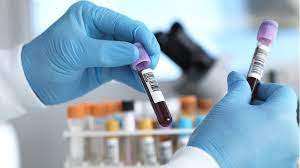

People who do not have symptoms of prostate cancer could get a life-saving diagnosis with a new test for sugars in the blood.
Research at Swansea University is looking into the blood of those with the disease to help develop a test for early detection.
Prostate cancer affects one in eight men in the UK and diagnosis has tripled over the last three years.


Simon Gammon, 62, who has a terminal diagnosis, said it could save lives.
Wales is one of the worst affected regions in the UK for late prostate cancer referrals and diagnosis, according to Prostate Cancer UK.
In Wales, one in every five men with the disease is diagnosed too late for a cure. In London, that figure is one in eight.

Older men, black men, and men with a family history of the disease are at even higher risk. Prostate Cancer UK has funded the project at Swansea University, as part of the charity’s Research Innovation Awards (RIAs), a £3m investment across seven UK institutions in the latest advancements to defeat prostate cancer.
It is hoped it could lead to more effective testing and earlier diagnoses as it often is asymptomatic at first.
READ ALSO: Man Stabs Elder Brother To Death Over Shirt And Trousers In Kano
Dr Jason Webber has received more than £400,000 for research to create a new type of non-invasive blood test.
The project will investigate specific sugars found in the bloodstream of men with prostate cancer that could be used in tests to determine a man’s risk of developing the disease, and how likely it is to spread.
When prostate cancer spreads beyond the prostate, it becomes incurable.
Dr Webber said it could help cut out invasive tests.
“The blood sugars we’re focusing on aren’t the same as the sugar or glucose, we consume in food and drinks. These sugars are found on the surface of ‘extracellular vesicles’, small packages released by prostate cancer cells into the bloodstream, which trick and invade healthy cells, spreading cancer around the body,” he said.
“Early diagnosis is key to treating prostate cancer and it is certainly one of the things that have become more apparent over recent years.”
He said this could be particularly beneficial in Wales, as early detection rates are lower compared to other parts of the UK.
“By identifying those patients with the aggressive disease early on we hope that they can be targeted with the correct treatment allowing the disease to be treated,” he said.
 We do everything possible to supply quality news and information to all our valuable readers day in, day out and we are committed to keep doing this.
Your kind donation will help our continuous research efforts.
-Advertisement-

-Want to get the news as it breaks?-