



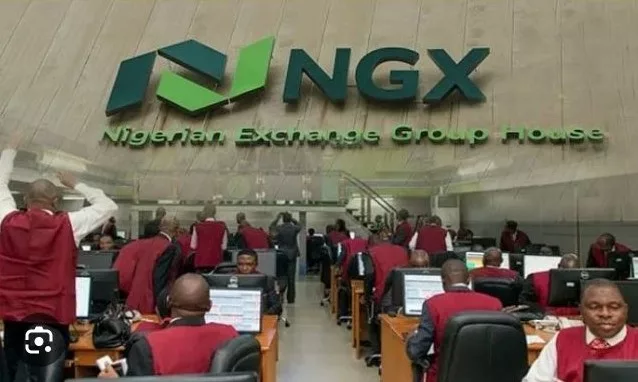
Shareholders in eight companies formerly or currently listed on the Nigerian Exchange (NGX) are facing significant financial uncertainty following regulatory interventions that have affected businesses with a combined quoted equity value of about N45.8 billion.
The affected companies are Aso Savings & Loans Plc, Universal Insurance Plc, STACO Insurance Plc, Goldlink Insurance Plc, Niger Insurance Plc, Standard Alliance Insurance Plc, Resort Savings & Loans Plc and Union Homes Savings & Loans Plc.
The companies operate mainly in the insurance and mortgage finance sectors and have been affected by licence revocations, liquidation-related actions, delistings and trading restrictions imposed by sector regulators.

Aso Savings & Loans had the largest quoted value among the affected companies, with a market capitalisation of about N15.8 billion before the Central Bank of Nigeria (CBN) revoked its licence in December 2025.
Universal Insurance had a quoted value of about N12 billion before trading in its shares was suspended on the NGX with effect from August 20, 2026.
STACO Insurance was valued at about N4.5 billion, while Union Homes and Resort Savings & Loans had quoted values of approximately N3 billion and N2.3 billion respectively.

Niger Insurance and Standard Alliance Insurance had a combined quoted value of about N4.1 billion before regulatory action was taken against them.
The developments have raised concerns among investors over the fate of their holdings when a listed company loses the licence that enables it to operate.
One of the earlier cases involved Niger Insurance, whose operating licence was cancelled by the National Insurance Commission (NAICOM) in June 2022 over insolvency and failure to meet verified claims. The company had about 7.7 billion shares outstanding, valued at approximately N1.5 billion before its delisting.
Standard Alliance Insurance suffered a similar regulatory setback in June 2022, with about 12.9 billion shares valued at N2.6 billion at the time.
In the mortgage banking sector, the CBN revoked the licence of Resort Savings & Loans in May 2023, while the company was subsequently delisted from the NGX in July 2024.
Aso Savings & Loans and Union Homes also lost their licences in December 2025 following regulatory concerns, including inadequate capital and other breaches.
The latest wave of regulatory action followed NAICOM’s recapitalisation exercise, which resulted in the revocation of the licences of Goldlink, STACO and Universal Insurance after they failed to meet the new minimum capital requirements.
The interventions came amid major recapitalisation programmes in Nigeria’s financial services industry, including the CBN’s banking sector exercise and NAICOM’s insurance-sector reforms.
The CBN commenced its banking recapitalisation programme in March 2024, requiring banks to meet higher capital thresholds. Nigerian banks subsequently raised a combined N4.65 trillion, with domestic investors contributing N3.37 trillion, representing 72.55 per cent, while foreign investors contributed N1.28 trillion.
The exercise gave shareholders in stronger banks opportunities to participate in rights issues, public offers and private placements. However, weaker institutions faced pressure to raise additional capital, merge, be acquired or undertake other restructuring measures.
Banks that failed to meet the applicable requirements risked regulatory sanctions, including licence withdrawal.
In the insurance industry, NAICOM concluded a 12-month recapitalisation exercise under the Nigerian Insurance Industry Reform Act (NIIRA) 2025.
The commission said the industry raised N1.079 trillion in fresh capital, while 48 insurance companies and two reinsurance firms met the new requirements and were relicensed.
Companies that failed to meet the thresholds had their licences revoked.
For investors in compliant insurers, the recapitalisation was expected to strengthen balance sheets and improve the capacity of companies to meet claims and pursue growth.
For shareholders of companies such as Goldlink, STACO and Universal Insurance, however, failure to meet the requirements exposed their investments to restricted trading, possible delisting and uncertain recovery prospects.
What Happens To Shareholders?
The Executive Commissioner, Operations, of the Securities and Exchange Commission (SEC), Bola Ajomale, said shareholders are co-owners of a business and therefore participate in both its risks and rewards.
He explained that shareholders, unlike depositors, are directly exposed to the performance of the companies in which they invest and can choose whether to sell, retain or increase their holdings.
Ajomale also clarified that the Investor Protection Fund was not established to compensate investors simply because a company failed.
According to him, the fund is intended to provide support where investors’ money is trapped with a defaulting SEC-registered market operator, such as a stockbroking firm.
The Managing Director of Globalview Capital Limited, Aruna Kebira, said ordinary shareholders are usually at the bottom of the payment hierarchy during liquidation because creditors and preferred shareholders are settled ahead of them.
He explained that a company could be delisted voluntarily or by the Exchange for failing to satisfy post-listing requirements, including timely submission of financial results.
“Once delisted, they remain shareholders and are still entitled to dividends, but they will have to look for buyers through the company secretariat or hold onto the shares,” Kebira said.
He advised investors to prioritise companies with strong fundamentals, sound management and a consistent history of dividend payments rather than choosing stocks simply because they trade at low prices.
The National Chairman of the New Dimension Shareholders Association, Patrick Ajudua, said many investors fail to understand the distinction between depositors and shareholders.
“They lose their investment in the company. That is very clear. For every case of a company folding up, the minority shareholder is always at the bottom,” Ajudua said.
He added that the Nigeria Deposit Insurance Corporation (NDIC) primarily protects depositors, while shareholders occupy a different position during liquidation.
“Depositors are different from shareholders completely. They are two different classes. Once it comes to liquidation, the shareholder will be at the back. There is no two ways about it,” he said.
The Managing Director/Chief Executive Officer of APT Securities and Funds Limited, Mallam Garba Kurfi, said the consequences of licence withdrawal could differ depending on the sector involved.
“When a licence is withdrawn by the CBN, such company is dead on arrival. The ordinary shareholder has lost everything because the life of the company is the licence,” Kurfi said.
He, however, noted that withdrawal of an insurance licence does not automatically amount to liquidation.
“But if NAICOM withdraws the licence, you cannot say the company is liquidated. The company can no longer practise as an insurance company, but it still has assets and liabilities. If another insurance company decides to buy it up, they will compensate the shareholders,” he said.
Kurfi further explained that delisting does not automatically extinguish shareholders’ ownership.
According to him, investors in delisted companies may still be able to trade their holdings through the NASD OTC market, where several securities formerly listed on the NGX are traded.
 We do everything possible to supply quality news and information to all our valuable readers day in, day out and we are committed to keep doing this.
Your kind donation will help our continuous research efforts.
-Advertisement-

-Want to get the news as it breaks?-