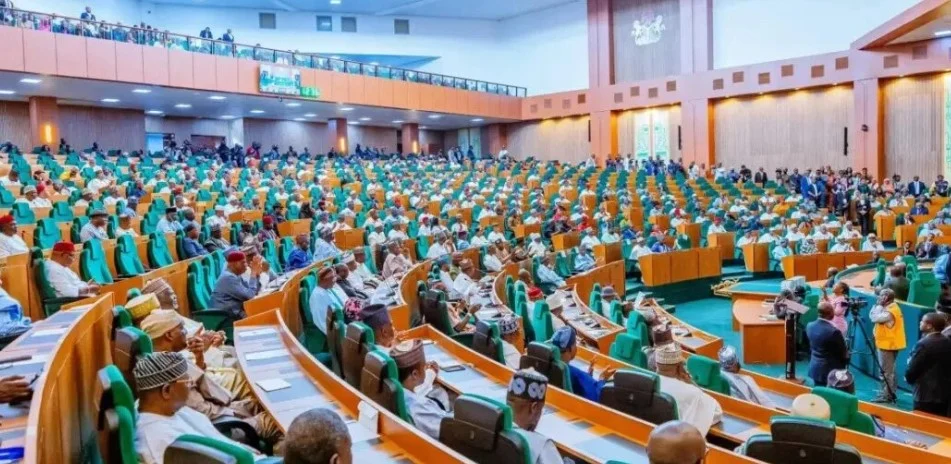
The House of Representatives has called for tougher food safety laws and stricter enforcement to protect Nigerians from toxic chemicals, adulterated food and unsafe agricultural practices.
The House Committee on Nutrition and Food Security made the call in Abuja on Friday during a media briefing to mark the 2026 World Food Day, warning that gaps in enforceable legislation could worsen malnutrition, food insecurity and diseases linked to unsafe food production.


The committee’s position was contained in a speech delivered by its clerk, Dr Agenti Milicent Millicent, on behalf of its chairman, Chike Okafor. The briefing was organised by the Centre for Food Safety and Agriculture Research in conjunction with LoveWorld Ministry of Food Technology and Sovereignty, under the theme, “Innovate Today, Nourish Tomorrow.”
“We have many policies, but few enforceable laws,” the chairman said, urging lawmakers to take stronger legislative action against the country’s food and nutrition challenges.
He said every Nigerian, from unborn children to farmers, should have access to safe, nutritious and affordable food.

The committee expressed concern over persistent cases of malnutrition, stunting, wasting and anaemia, as well as poor exclusive breastfeeding practices. It warned that unsafe food production and the indiscriminate use of chemicals could contribute to serious public health problems, including kidney and liver diseases.
It called for laws to protect local food systems, ensure proper utilisation of nutrition funds and shield children from aggressive marketing of unhealthy foods.
Lawmakers pursue nutrition bills
Okafor disclosed that the committee was working on a bill to establish the Nutritionist Registration Council of Nigeria to regulate the profession.
It is also supporting a National Nutrition Bill sponsored by the Presidency through the Office of the Vice-President. According to the committee, the proposed legislation has reached an advanced stage ahead of its transmission to the National Assembly.
The committee said tackling Nigeria’s nutrition challenges would require coordinated action by federal and state governments, lawmakers, civil society organisations and development partners.
It added that nutrition and food security committees had been established in 32 state Houses of Assembly following a legislative retreat in Owerri, Imo State.
The initiative later led to the formation of the National Legislative Network of Nutrition and Food Security, inaugurated by the Speaker of the House of Representatives on July 22, 2024.
Committee investigates farm intervention funds
The lawmakers also disclosed that they were investigating the alleged misuse of government agricultural intervention funds by agencies, schemes and programmes operating outside the Federal Ministry of Agriculture.
As part of the probe, the committee said it had engaged the Central Bank of Nigeria, the National Agricultural Development Board and other relevant agencies over concerns surrounding agricultural interventions.
The investigation includes issues relating to the ginger blight outbreak, which devastated production in parts of the country.
The committee, however, did not disclose its findings or establish a link between the outbreak and any specific agricultural input.
Speaking at the event, food safety advocate Dr Adebayo Segun called for a thorough investigation of agricultural intervention programmes and the chemicals used in food production.
He warned that poorly regulated agricultural inputs could undermine public health and food security, while advocating greater consideration of organic farming and natural seeds.
“Food safety concerns everyone, regardless of their religious affiliations or background,” he said.
Segun also urged Nigerians, where practical, to cultivate edible crops rather than ornamental plants.
The committee maintained that Nigeria had the arable land, water resources and human capital needed to tackle hunger and malnutrition, provided stakeholders worked together to strengthen food safety and the agricultural value chain.
 We do everything possible to supply quality news and information to all our valuable readers day in, day out and we are committed to keep doing this.
Your kind donation will help our continuous research efforts.
-Advertisement-

-Want to get the news as it breaks?-