Adefioye Iyunade


President Muhammadu Buhari said any attempt by his regime to return to the era of subsidising Premium Motor Spirit, popularly known as petrol, would lead to “several negative consequences.”
The president who stated this at the opening of the First Year Ministerial Performance Review Retreat at the Presidential Villa, Abuja said one of the dangers of retaining fuel subsidy is the return to the era of long queues at filling stations where Nigerians spent days and nights before they could buy petrol.
But in their separate reactions, the Trade Union Congress and the Academic Staff Union of Universities faulted the President, saying his regime should fulfil its promise to repair the country’s refineries.

Following the economic downturn caused by the COVID-19 in March, the Federal Government deregulated the downstream sector of the nation’s oil and gas sector, allowing petrol prices to be determined by market forces.
In March, the government reduced the pump price of petrol from N145 per litre to N125 per litre following the collapse of global oil prices.
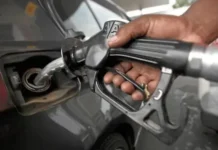
But in the last three months, the pump price of petrol has increased. Last week, marketers adjusted their pump prices to between N158 and N162 from N148 to N150 in August.
The scarcity of the petrol, especially in December and January, had rocked the country for many years, causing long queues of desperate motorists at filling stations.
Following the severe fuel scarcity, the country experienced in the first quarter and parts of the second quarter of 2016, the Federal Government on May 11, 2016, increased the petrol price to N145 per litre from N86, putting an end to fuel subsidy to marketers, in what was described as partial liberalisation of the sector.
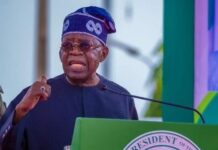
Buhari, who was represented by Vice-President Yemi Osinbajo at a ministerial retreat, said one of the effects of deregulation which his regime adopted at the beginning of the COVID-19 lockdown in March and when global oil prices collapsed was that PMS prices would change with changes in global oil prices.
Explaining the increase in fuel price, Buhari said when global prices rose, it led to an increase in the price of petrol locally.
The President said, “There are several negative consequences if the government should even attempt to go back to the business of fixing or subsidising the PMS price.
“First of all, it would mean a return to the costly subsidy regime. Today, we have 60 per cent less revenue, we just cannot afford the cost.
The second danger is the potential return of fuel queues – which has thankfully, become a thing of the past under this administration.
“Nigerians no longer have to endure long queues just to buy petrol, often at highly inflated prices.
“Also, as I hinted earlier, there is no provision for fuel subsidy in the revised 2020 budget, simply because we are not able to afford it, if reasonable provisions must be made for health, education and other social services.”
Buhari, however, assured Nigerians that his regime was mindful of the pains that higher prices meant, saying their sacrifices were not being taken for granted.
He said, “We will also remain alert to our responsibilities to ensure that marketers do not exploit citizens by raising pump price arbitrarily.”
 We do everything possible to supply quality news and information to all our valuable readers day in, day out and we are committed to keep doing this.
Your kind donation will help our continuous research efforts.
-Advertisement-

-Want to get the news as it breaks?-