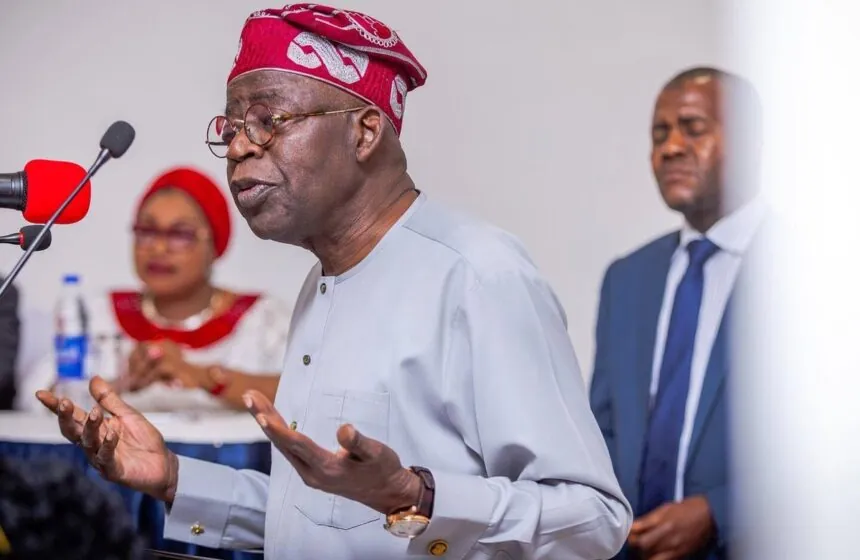

President Bola Ahmed Tinubu has directed all Ministries, Departments and Agencies (MDAs) in Nigeria to fully embrace digital systems, declaring that the era of manual processes and inefficiency in the civil service must come to an end.
Speaking on Wednesday at the opening of the International Civil Service Conference 2026 in Abuja, Tinubu—represented by the Secretary to the Government of the Federation, George Akume—said the federal civil service must evolve into a faster, more transparent, and results-driven institution under ongoing reforms.
He explained that Nigeria’s public service is already undergoing significant transformation, with improved efficiency and growing adoption of technology across government operations.


“The results we see today speak to the resilience, commitment and adaptability of our workforce,” the president said, adding that reforms under the Renewed Hope Agenda are beginning to show measurable impact.
Tinubu revealed that 38 ministries and extra-ministerial departments are already operating fully paperless systems with end-to-end electronic workflows, describing it as a major milestone in governance reform.
“When we spoke of digitalisation in 2025, some may have considered it an ambition for the distant future. Today, with 38 ministries and extra-ministerial departments operating on a secure, paperless and end-to-end electronic workflow system, we are sending a clear message: Nigeria is building a public service that enables progress,” he stated.

He stressed that bureaucracy must no longer slow governance but instead drive innovation, accountability, and improved service delivery.
Tinubu also noted that the ongoing Personnel Audit and Skills Gap Analysis in the civil service is nearing completion. According to him, the exercise will help identify capacity gaps, strengthen workforce competence, and ensure staff are placed in roles suited to their skills in line with modern governance needs.
“We are identifying gaps, strengthening competencies and ensuring that the right people are placed in the right roles, equipped with the digital skills and professional discipline required for 21st-century governance,” he said.
The president further linked the reforms to Nigeria’s broader digital infrastructure initiative under Project BRIDGE (Building Resilient Digital Infrastructure for Growth), which he said would enhance connectivity, create jobs, and improve public service delivery.
He urged all MDAs to sustain and expand digital adoption, insisting that government operations must become more data-driven and citizen-focused.
“The era of manual inefficiency must give way to a culture of speed, transparency, data-driven decision-making and citizen-centred service,” Tinubu added.
Also speaking, the Head of the Civil Service of the Federation, Didi Esther Walson-Jack, said ongoing reforms under the Federal Civil Service Strategy and Implementation Plan (2021–2025) have significantly improved productivity and introduced digital tools that are reshaping government operations.
She highlighted innovations such as “Service-Wise GPT” as part of efforts to modernise the civil service, improve decision-making, and make service delivery more efficient and citizen-focused.
The conference ended with renewed commitments from government officials to deepen reforms and strengthen the capacity of Nigeria’s civil service for long-term development goals.
 We do everything possible to supply quality news and information to all our valuable readers day in, day out and we are committed to keep doing this.
Your kind donation will help our continuous research efforts.
-Advertisement-

-Want to get the news as it breaks?-