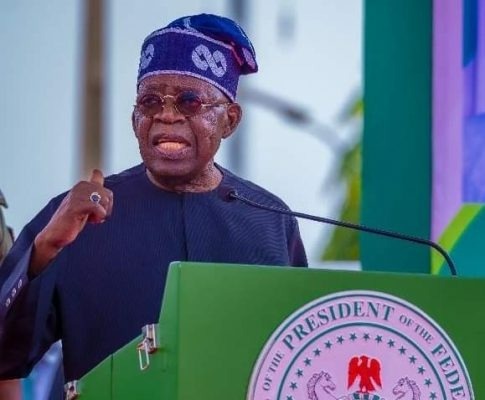

President Bola Tinubu has called for increased concessional climate financing and reduced borrowing costs for developing countries, warning that global climate finance commitments must translate into affordable funding for vulnerable economies.
Tinubu said the high cost of capital was undermining developing countries’ ability to implement climate programmes, strengthen resilience and accelerate the transition to cleaner energy.


The President made the call in Nigeria’s national statement delivered by the Minister of Environment, Balarabe Lawal, at the resumed high-level segment of the 31st United Nations Climate Change Conference (COP31) in Antalya, Türkiye, on Tuesday.
He urged the international community to ensure that the global ambition of mobilising at least $1.3tn annually in climate finance by 2035 resulted in accessible funding for countries most vulnerable to climate change.
Tinubu also called for the Fund for Responding to Loss and Damage to provide timely and meaningful assistance to countries suffering the consequences of climate-related disasters.

He said climate action must align with the development priorities of individual countries, particularly in energy access, food security, industrialisation, employment and improved livelihoods.
On Nigeria’s energy transition, the President said the country remained committed to expanding renewable energy while maintaining energy security and improving access to affordable and reliable electricity.
He stressed that natural gas would continue to serve as an important transition fuel within Nigeria’s energy mix.
“For Nigeria, the energy transition must be just, inclusive and responsive to national circumstances. Nigeria remains committed to expanding renewable energy deployment while safeguarding energy security and improving access to affordable and reliable electricity. Natural gas will continue to serve as an important transition fuel within our energy mix,” he said.
Tinubu highlighted Nigeria’s adaptation efforts, including the submission of its National Adaptation Plan in September 2026.
He said the plan outlined interventions in climate-resilient agriculture, early-warning systems and disaster preparedness for vulnerable communities.
According to him, the framework incorporates climate risk analysis, economic appraisal, sector strategies and financing approaches to strengthen the country’s response to climate-related challenges.
On private investment in clean energy, Tinubu disclosed that Nigeria commercially launched a $300m Distributed Renewable Energy Fund in September to mobilise capital for expanding access to reliable electricity.
He added that the Federal Government was strengthening the national carbon market framework and exploring opportunities under Article 6 of the Paris Agreement to raise additional funding for domestic climate action.
Article 6 provides a framework for countries to cooperate through carbon markets and other mechanisms to achieve their emissions-reduction targets.
However, Tinubu maintained that domestic initiatives alone could not provide the scale of financing required to tackle climate change.
“National initiatives alone cannot deliver the scale of transformation required. The global ambition to mobilise at least US$1.3 trillion annually in climate finance by 2035 must translate into accessible and affordable resources, particularly for developing countries,” he said.
He urged world leaders to make COP31 a turning point in implementing climate commitments, insisting that climate ambition must be matched with adequate financing and measurable results.
COP31, hosted by Türkiye in Antalya, has brought together governments, development institutions, climate negotiators, businesses and civil society organisations to discuss climate financing, adaptation, energy transition and the implementation of the Paris Agreement.
The resumed high-level segment, holding from November 17 to 18, provides an opportunity for ministers and senior government representatives to present their countries’ positions and address outstanding climate priorities.
The conference is scheduled to close on November 20, with negotiations focusing on climate finance, adaptation funding, the transition away from fossil fuels and the expansion of renewable energy.
 We do everything possible to supply quality news and information to all our valuable readers day in, day out and we are committed to keep doing this.
Your kind donation will help our continuous research efforts.
-Advertisement-

-Want to get the news as it breaks?-