



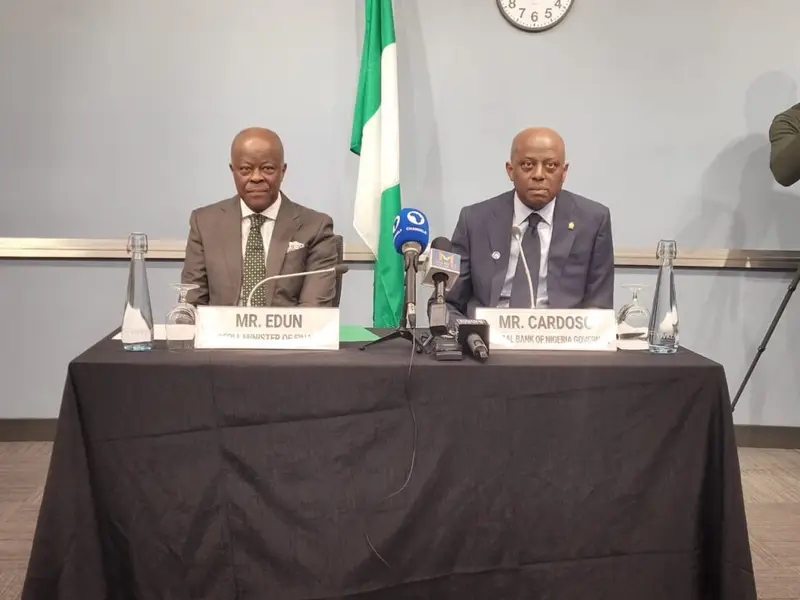

The Minister of Finance and Coordinating Minister of the Economy, Wale Edun, has said that President Bola Tinubu’s ongoing economic reforms are durable, self-sustaining, and designed to shift Nigeria from economic survival to long-term growth.
Speaking at a press briefing during the World Bank and International Monetary Fund (IMF) Spring Meetings in Washington, D.C., Edun said the reforms introduced since mid-2023 have helped stabilise the economy and improve its resilience to external shocks.
He noted that the global economic environment remains uncertain, with rising trade tensions, tighter financial conditions, and geopolitical risks affecting many economies.


“Building prosperity through policy reflects Nigeria’s commitment to credible and disciplined macroeconomic reforms,” Edun said.
According to him, key policy changes such as market-based foreign exchange pricing and the removal of inefficient fuel subsidy regimes are already contributing to improved stability.
Edun said the economy is gradually transitioning from stabilisation to growth, with rising private sector confidence and increasing investment inflows.

“The economy has exceeded four per cent growth, while reserves are around 50 billion dollars. Inflation is gradually declining, while public debt remains within sustainable levels,” he stated.
He added that government interventions in agriculture and targeted social protection programmes are helping to cushion inflationary pressures driven by energy, food, and logistics costs.
READ ALSO: Ogun APC stakeholders present consensus candidate Yayi to Tinubu
The minister also pointed to major private sector investments, including the Dangote Refinery, as evidence of growing confidence in Nigeria’s economic direction.
He said the reforms are strengthening domestic production, supporting small and medium enterprises, and creating conditions for job growth across key sectors such as power, agriculture, infrastructure, and digital innovation.
Edun further noted that development partners and investors at the meetings had expressed renewed confidence in Nigeria’s reform agenda, particularly in energy, agribusiness, and infrastructure.
On financial reforms, Governor of the Central Bank of Nigeria (CBN), Olayemi Cardoso, said the banking sector recapitalisation programme has significantly strengthened financial stability.
He disclosed that 33 banks have met the new capital requirements, with a total of ₦4.65 trillion raised as of the March 31 deadline.
Cardoso said, “The programme recorded strong participation from both domestic and international investors, with 72.55 per cent of capital sourced locally and 27.45 per cent from international markets.”
He added that the recapitalisation will improve the sector’s ability to absorb shocks and support economic growth, noting that Nigeria remains committed to maintaining macroeconomic stability and attracting investment.
 We do everything possible to supply quality news and information to all our valuable readers day in, day out and we are committed to keep doing this.
Your kind donation will help our continuous research efforts.
-Advertisement-

-Want to get the news as it breaks?-