



An Economic expert, Dr Abidemi C. Adegboye of the Department of Economics, University of Lagos has described Nigeria’s productivity challenge as both a human tragedy and a defining opportunity.
Speaking on the theme Tackling the Issue of Low Productivity in Nigeria on Friday at the 2025 WorldStage Economic Summit (WES), the Guest Speaker said, “With political will, private sector leadership, and coordinated policy action, Nigeria can leverage its demographic dividend, harness technological change, and reverse the productivity malaise to achieve inclusive prosperity and regional leadership.”
Sharing data on the productivity crisis in the country Dr Adegboye said Nigeria’s GDP per worker in 2024 at $11,800 is far below the global average of $49,000 while productivity growth at 1.25% (1990-2024) was just 0.22% since 2010, far below 3.5% average required to absorb the 3.5 million annual labour market entrants.


While average Nigerian worker earns $7/hour as against South Africa’s $30, he said this represented only 7% of global average productivity level.
While Nigeria is Africa’s largest economy by population (230+ million) with over 60% of population under age 25 (demographic dividend potential) and oil accounting for 80% of exports but at less than 10% of GDP, the Real GDP growth of 3.9% in H1 2025 was driven by services and ICT.
He said the productivity paradox of Nigeria is a scale and potential coexisting with inefficiency and stagnation as 40% of population in agriculture cannot feed 230 million people when compare with 2% of US farmers feeding 350+ million (productivity differential) and 63% of Nigerians (133 million) are multidimensionally poor.

He identified the sectoral productivity gaps in Nigeria’s economy, in Agriculture with 40% of employment, 22% of GDP (lowest productivity); Manufacturing remaining stagnant at 12% of GDP for decades while Service sector which expanded to 50%+ of GDP is dominated by informal activities with only 20% of workers in formal, high-productivity sectors.
He stated that productivity matters a lot to the economy as it’s the primary determinant of long-run living standards, engine of structural transformation and poverty reduction, driver of real wage increases and shared prosperity, and critical for absorbing 3.5-4 million annual labor market entrants
He lamented that the economic toll of low productivity include foregone GDP of $4-6 billion annually (2-3% potential growth lost), real wages declined 40% since 2019 in formal sector, youth unemployment at 15.2% (ages 15-24), while each 1% productivity shortfall erodes 0.5% fiscal revenues
He also listed the major productivity drivers which Nigeria must address to include innovation, physical capital, infrastructure, human capital, health, demographics, and supporting environment.
On current challenging state of productivity divers in Nigeria he said on innovation R&D spending is at 0.2-0.3% of GDP (peers: 1-2%); Physical Capital- power outages cost $29 billion annually (6% of GDP); Infrastructure- logistics costs 40% as against global average of 10%; Human Capital- only 10-12% of workforce has tertiary education; Health- Human Capital Index 0.36 (child reaches 36% of potential); Demographics- youth bulge offers opportunity if well-equipped; Institutions -weak rule of law and corruption control; Macroeconomic stability- volatility deters investment; Gender equality- women 70% of informal workers; Trade- limited integration into global value chains; FDI- inflows hampered by institutional weaknesses; Finance- credit constraints stifle SME growth.
For the country to achieve a desirable economic productivity he said it will require comprehensive policy framework, economic diversification, infrastructure investment, human capital development, technology and innovation, financial access and inclusion, agricultural modernization, and inclusive growth.
As for human capital development, he said there should be scale digital skills hubs to train 10 million youth by 2030; Health interventions for malaria eradication, nutrition programs; Dual apprenticeship system partnerships with private sector; and Diaspora knowledge transfer via NiDCOM
On technology and innovation, he said there should be tax incentives for startups and technology transfer hubs as 5.8% GDP contribution by Fintech shows sectoral potential; need to extend digital tools to agriculture and manufacturing while innovation clusters around universities need firm upgrading
For financial access and inclusion, he called for the expansion of CBN interventions- NIRSAL, Development Bank of Nigeria; Targeting women and youth entrepreneurs with blended finance; Fintech lending platforms to deepen credit access; need to address barriers- collateral requirements, high interest rates.
On agricultural modernization, he said with Agro-industrial processing zones in Kaduna, Cross River, Oyo, there should be target of 15-20% productivity increases through value addition; create decent jobs and reduce food insecurity while agriculture employs 40% should have direct poverty reduction impact
To ensure inclusive growth, he called for gender-inclusive reforms to address land and credit access barriers; climate-resilient investments for agricultural sustainability; Social protection to cushion reform impacts; and bridge urban-rural productivity gaps through targeted policies.
He concluded that, “The challenge of low productivity in Nigeria is far-reaching in terms its causes and implications. The persistent productivity crisis therefore represents both a major developmental hurdle and a defining opportunity for structural transformation. As this study documents, the nation’s vast human and natural resource endowments have been stymied by structural constraints, sectoral inefficiencies and lagging innovation. These have resulted in historically low output per worker and slow poverty reduction efforts despite episodic GDP growth. Central to these challenges is a pattern of misallocated capital, weak infrastructure, skills mismatch and institutional fragility that perpetuates deep segmentations in the economy.
“The findings from the study highlight that sustainable economic advancement for Nigeria must be anchored on wide-ranging productivity reforms. Real change towards tackling low productivity in the country demands coherent strategies that combine short-term stabilisation measures with long-term investments. Specifically, investment must target human capital, technological capacity and supportive institutional frameworks. Policies to broaden sectoral diversification are also vital to absorbing the expanding youth workforce into productive and higher-income employment. Thus, critical steps in the productivity drive must include upgrading of infrastructure, advancing digital penetration, scaling quality of education thorugh skill-building, promoting inclusive policies for women and vulnerable groups and fostering pro-competitive regulatory environments that incentivise innovation and formalisation.
“Ultimately, the future trajectory of aggregate productivity growth in Nigeria depends on forging a strong consensus around the productivity agenda as the foundation for shared prosperity, social inclusion and long-term economic resilience. Without substantive shifts, especially in education quality, energy supply, financial access and governance efficacy, GDP expansion will remain hollow and millions risk being left behind in the growth process. If Nigeria leverages its demographic dividend and harnesses technological change it can decisively reverse the current productivity malaise, reduce poverty and chart a path toward middle-income status and regional economic leadership.”
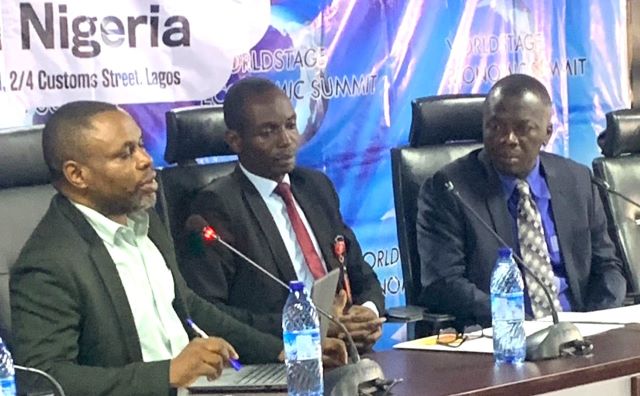
Other speakers at the summit held at the Nigerian Exchange, Lagos include Dr. Olasupo Olusi, Managing Director/CEO, Bank of Industry (BoI) and Mr. Olanipekun Olukoyede, Executive Chairman, Economic and Financial Crimes Commission (EFCC).
 We do everything possible to supply quality news and information to all our valuable readers day in, day out and we are committed to keep doing this.
Your kind donation will help our continuous research efforts.
-Advertisement-

-Want to get the news as it breaks?-